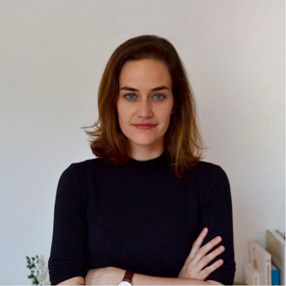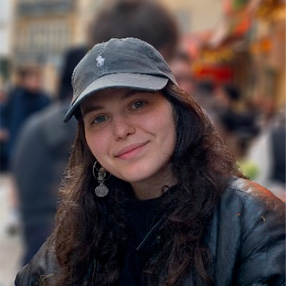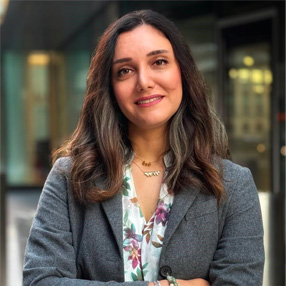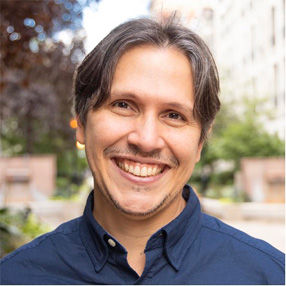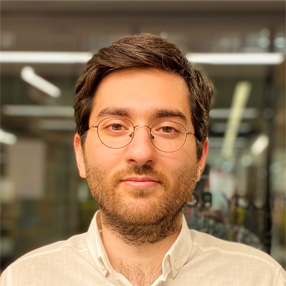

Ariane Ouellet-Pelletier

Title of the research: Architectures of Secondary Life. A Symptomatic Atlas of an Ideology of Nature in Quebec: A Process of Surveying and Unveiling Through Research-Creation.

under the supervision of Dr. Thomas-Bernard Kenniff

Abstract: This research-creation project proposes to define the architectures of “secondary life” as a theoretical category encompassing various forms of housing associated with an escape into nature: villas, cottages, hunting and fishing clubs, summer camps, and other related forms. Beyond the desire to escape the city, it posits the hypothesis that these architectures are symptoms of an ideology of nature, sustained by a collective imagination in which nature is fantasized as a place of transmutation: the setting that allows one to imagine and enact the ideal of a second life. The research proceeds through an inventory, involving three processes—documentation, representation, and projection—that enable the collection, comparison, and interpretation of architectural, iconographic, and discursive traces drawn from archives, cultural representations, and fieldwork. By surveying, assembling, and arranging these fragments in constellations, the research seeks to reveal their recurrences, resonances, and resurgences in order to gradually construct a theory of this imaginary.

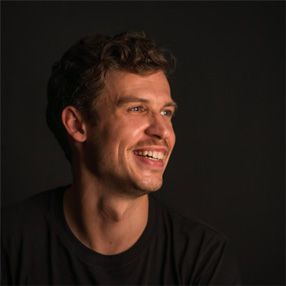
Ange Sauvage

Title of the research: Repurposing Existing Buildings: Stories of Adaptation and Compatibility of Uses

under the supervision of Dr. Bechara Helal

Abstract: This research explores the adaptive reuse of unlisted buildings. It examines the compatibility between the architectural and cultural values inherited from the buildings’ past uses and their new purposes. How does a change in use reveal these values, and is it possible to define compatible uses? By combining comparative analysis with project-based experimentation, this research aims to better understand the challenges associated with the transformation of existing buildings and to examine the compatibility between a building’s existing use and its new purpose. The objective is to propose an intervention approach using a decision-making framework that will ensure the best possible alignment between the existing structure and its future uses, and to provide designers with tools for intervention from a resilience perspective—striking a balance between the durability of the built structure and the building’s capacity to support new uses. 

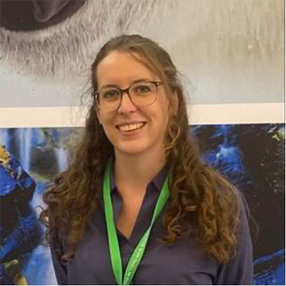
Sarah Chamberland-Fontaine

Title of the research: Caring for Urban Nature: Understanding How Biodiversity in Cities is Designed, Experienced, Shaped, and Shared by Residents

under the supervision of Dr. Carly Ziter

Abstract: My research focuses on urban biodiversity from a socio-ecological perspective. I am working on various projects that share a common focus on public participation and how people are reclaiming public space to approach greening in new ways. I use a variety of methodologies, including participatory video games, co-creation workshops, interviews, and traditional field data collection in plant ecology.

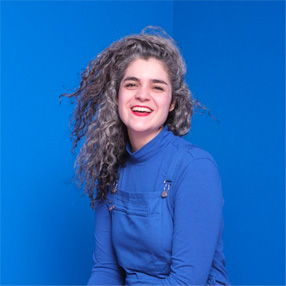
Madly Fuss

Title of the research: Pirate Design and Feminist Counter-Narratives: A Comparative Study of the Relational Ecosystems Surrounding Practices of Reappropriation of Technical Skills in Chosen Mixed-Gender Settings in Quebec and France

under the supervision of Dr. Thomas-Bernard Kenniff and Anne-Lyse Renon

Abstract: Located on the fringes of the dominant industrial and institutional design circuits, practices of reappropriation of technical skills by and for women and gender minorities have been on the rise for the past decade in Quebec and France. Through a comparative study of these feminist technical cultures, this research project examines the affective dimensions of these alternative forms of situated design, which we propose to term “pirate design.” By drawing on feminist theories, critical design, and affect theory, this research analyzes the relational ecosystems that structure these practices: networks, knowledge transmission, solidarity, and forms of governance. It pays particular attention to the role of affects and their corporeality as operative forces in processes of learning and collective autonomy. Based on an action-research/creation methodology co-constructed with participating communities, this research aims to propose a sensitive, intersectional, and ecofeminist framework for interpreting design.

Juliane Alexandre Colmado

Title of the research: Phonotope: The Sonic Space for Defining (Non-)Silenced Architecture

under the supervision of Dr. Denis Bilodeau

Abstract: This dissertation focuses on defining the perceptual, social, and architectural dimensions of the sound place (identified as a phonotope) in order to extract its qualitative properties. The goal is to advocate for the lived sound experience as an element in the design of built environments by integrating experimental and theoretical knowledge drawn from the field of music. Observation of the social dynamics resulting from the planning of the sound territory tends to call into question the relevance of current noise abatement policies.

Lucy Fandel

Title of the research: Moving the Fields: A Place-based Dance and Field Ecology Exchange

under the supervision of Dr. MJ Thompson, Dr. Carly Ziter and Dr. Camille Renarhd

Abstract: Through the practices of choreography, performance and teaching, my research-creation explores how embodied observation field techniques in site-responsive choreography and ecology can be placed in dialogue to find new imaginative relationships with the environment. My artistic approach often involves working outside, patiently, and collaboratively, weaving together embodied, social and land-based imaginations in the hopes of connecting the personal with the political and environmental, and expanding artistic and scientific citizenship.At the intersection of arts outreach, dance and ecology, my doctoral research includes the creation of choreography in field sites and of place-based dance skill-building activities addressed to ecologists with the Ziter Urban Landscape Ecology Lab at Concordia. 

www.lucyfandel.com

(photo credit: Maureen Rouge)

Negar Rahimi

Title of the research: A Framework for Façade Retrofitting Decision-Making to Decarbonize Buildings

under the supervision of Prof. Ursula Eicker, Prof. Carmela Cucuzzella and Prof. Hua Ge

Abstract: Façades are central to building decarbonization, yet façade knowledge remains fragmented across three disconnected domains: architectural theory, data modelling, and retrofit decision-making. This thesis addresses that gap through three integrated contributions. First, it develops a structured categorization of contemporary façades, a three-part architectural taxonomy (Utilitarian, Formal, Image) validated against 11 Canadian buildings, alongside a technical classification of five sustainable façade systems (Smart Skin, Kinetic, Vertical Greenery, Solar, Double-Skin). Second, it builds a Façade Data Model (FDM) in UML/Ecore, structuring 33 façade parameters into a simulation-ready, standards-aligned schema. Third, it synthesizes both into a five-stage, multi-criteria retrofit decision-making framework, demonstrated through energy simulations across 90 Montreal social-housing buildings. Results show retrofit effectiveness depends more on envelope compactness than glazing ratio alone. Together, these contributions bridge architecture and data science, offering a reusable pathway from façade categorization to data-driven retrofit decisions, while transparently identifying where further empirical validation is still needed.

Maurício Guimarães de Oliveira

Title of the research: Architectural Education as a Form of Mediation: A Comparative Study of Architectural Education and Its Relationship to the Profession in Brazil and Canada

under the supervision of Izabel Amaral

Abstract: This study examines how architects are trained by analyzing the institutional frameworks and tensions between universities (pedagogy), professional organizations, and accrediting bodies in Brazil and Canada. Drawing on a theoretical framework that integrates the work of Bruno Latour (actor-network theory and mediation), Donald Schön (epistemology of practice), Pierre Bourdieu (concepts of field and habitus), and Cécile Vigour (comparative method), the dissertation challenges the notion of a neutral or uniform educational pathway. It examines how Brazilian Curriculum Guidelines and Canadian Education Standards act as mediators shaping distinct professional profiles. The main objective is to develop a transferable analytical and methodological tool, based on the pedagogy–profession–accreditation triangle, in order to make the mechanisms of architectural education in different national contexts comparable and intelligible.

Ahad Farnood

Title of the research: AI-Driven System Dynamics-GIS Framework for Sustainable Urban Development Decision-Making and Low-Carbon Mobility Planning: The Case of Montreal Island

under the supervision of Prof. Ursula Eicker, Prof. Carmela Cucuzzella and Prof. Govind Gopakumar

Abstract: My research focuses on developing data-informed decision-support approaches for sustainable urban development. My PhD integrates System Dynamics, Geographic Information Systems (GIS), and artificial intelligence to assess the sustainability implications of alternative urban development scenarios and policy interventions. Using Montréal as the main case study, the research examines how different planning and policy scenarios may influence accessibility, mobility, land-use patterns, infrastructure needs, and carbon emissions. A central component of the work is the development of a decision-support framework that enables planners, policymakers, and other decision-makers to compare scenarios, assess trade-offs, and evaluate the likely outcomes of different policy choices before implementation. The research therefore connects sustainability assessment, scenario analysis, and policy evaluation within a single framework, with the broader objective of supporting more evidence-based, transparent, and sustainable urban planning and decision-making.

Eliane Noujaim

Title of the research: Building the Public School System in Lebanon (1943–1975): Planning, Architecture, and the National Project

under the supervision of Dr. Olivier Vallerand

Abstract: This dissertation examines the development of a modern school architecture in Lebanon between independence and the start of the civil war, within a historically pluralistic educational system. It first explores the earliest manifestations of this modernity, particularly in the private sector, before analyzing the gradual emergence of a state policy on school development. Beginning in the 1960s, state reform, knowledge of the territory, and educational planning led to the conception of public schools as a network of facilities that could be planned on a national scale, culminating in the development of standardized architectural systems. Qab Elias’s study contrasts this rationality with its architectural manifestation and its transformations. Finally, the research examines the circulation and reappropriation of certain principles of this architecture within the private sector. It thus highlights the relationships, discrepancies, and transfers between state action, educational pluralism, and architectural modernity in the creation of Lebanese school spaces.