
Non classé

Tiphaine Abenia – Lauréate de la Bourse Palladio 2017 – en

Félicitations à Tiphaine Abenia, lauréate de la Bourse Palladio 2017 (Pour son travail de thèse intitulé “Le projet d’architecture contemporain à l’épreuve du reclassement : catégorisation des potentiels de la structure urbaine abandonnée”, Tiphaine Abenia (directeurs : Jean-Pierre Chupin et Daniel Estevez) (La bourse de la Fondation Palladio soutient des doctorants et jeunes docteurs, français et étrangers, dont les recherches agissent significativement sur la construction de la ville. Cérémonie : 7 novembre 2017, Pavillon de l’Arsenal, Paris. ))
New Book (Translation): Competing for Excellence in Architecture (editorials from the Canadian Competitions Catalogue, 2006 – 2016) Edited by Jean-Pierre Chupin
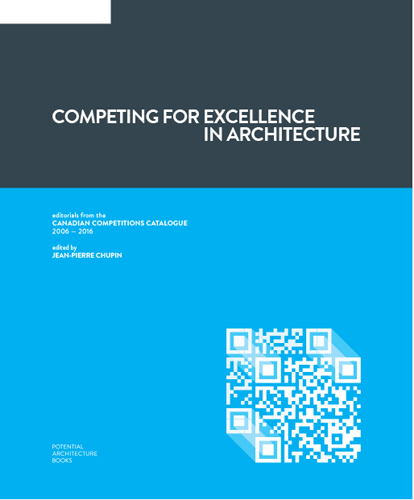
Montreal, Potential Architecture Books, 322 pages, October 2017 ISBN 978-0-9921317-5-3
A travel guide for those in search of architectural quality, this book can be browsed in many ways. Written in a clear and concise manner by about thirty authors, it features a collection of editorials from the Canadian Competitions Catalogue (CCC), a large online digital archive open to the public since 2006. The editorials explore more than sixty Canadian architecture competitions held in the last seventy years. Especially in recent years, both public and private institutions have organized competitions across Canada, producing hundreds of architectural, urban planning, and landscape design projects. Together these proposals, most of which remain unbuilt, constitute a fantastic treasure in our tangible and intangible common heritage. Given that competition organizers, designers, juries, and critics never operate alone, there is no doubt whatsoever that this book results from the collaboration of a myriad of people, contributing to and competing for excellence in architecture.
test – en
Mercredi 22 mars – 17h30. Conférence publique de Reinhold Martin (Columbia University NY), # 1120 de la Faculté de l’aménagement de l’Université de Montréal.
Make your maps of excellence on www.MONTREAL-ARCHIMAP.ca

Discover the cartographic device MONTREAL-ARCHIMAP. The team of the Research Chair on Competitions and Contemporary Practices in Architecture embarked on the design and implementation of a cartographic application highlighting contemporary architecture in Montreal for the 375th anniversary of Montreal. (Nicholas Roquet and Jean-Pierre Chupin in collaboration with Humaneco.ca).


Doctoral Thesis Defence – – Louis Destombes (Director Jean-Pierre Chupin) – January 15th 2018

Résumé: Cette recherche porte sur le rôle des écarts entre les dessins d’architecture et les édifices qu’ils représentent en analysant le transfert des projets de la figuration à l’édification. Ce phénomène est abordé à la fois en tant que problématique disciplinaire, dans la perspective théorique et historique de la modernité architecturale, et en tant que problème pratique, à travers le tournant numérique de la conception architecturale.
L’hypothèse des traductions constructives du projet d’architecture (Evans, 1986), qui attribue une fonction heuristique à ces écarts, est déployée au moyen d’un rapprochement analogique entre conception architecturale et traduction littéraire. Ce parallèle permet de mobiliser les théories de la traduction de l’Allemagne romantique (Berman, 1984) pour problématiser le phénomène du transfert du projet au sein de la discipline architecturale. Interprétés en termes d’attitudes possibles des concepteurs face au transfert du projet, les principes théoriques modernes de la tectonique (Frampton, 1995) et de la construction comme représentation (Levine, 2009) assurent l’ancrage historique de cette problématique.
Supports privilégiés pour élaborer et prescrire les dispositifs constructifs, les détails constituent les principaux indicateurs permettant une observation pragmatique de ces attitudes au sein des pratiques professionnelles. L’hypothèse des traductions constructives est testée à travers deux études de cas portant sur la genèse de projets réalisés par les agences Chevalier Morales Architectes au Québec et Jakob+MacFarlane en France. Les opérations de traduction identifiées à travers ces projets témoignent de tensions constructives où le détail apparaît comme une catégorie de la conception architecturale numérique. Ces analyses permettent d’envisager une actualisation des théories modernes du détail à l’aulne de l’évolution contemporaine des méthodologies de conception.
Directeur : Jean-Pierre Chupin
4 PhD students @LEAP receive support grant

Doctoral candidates: Adrienne Costa (UdeM), Mandana Bafghinia (UdeM), Sherif Goubran (Concordia) and Alessandra Mariani (UQAM) each receive a LEAP support grant in March 2017 thanks to our FRQSC infrastructure
New book : « Competing for Excellence in Architecture – Editorials from the Canadian Competitions Catalogue (2006-2016) »
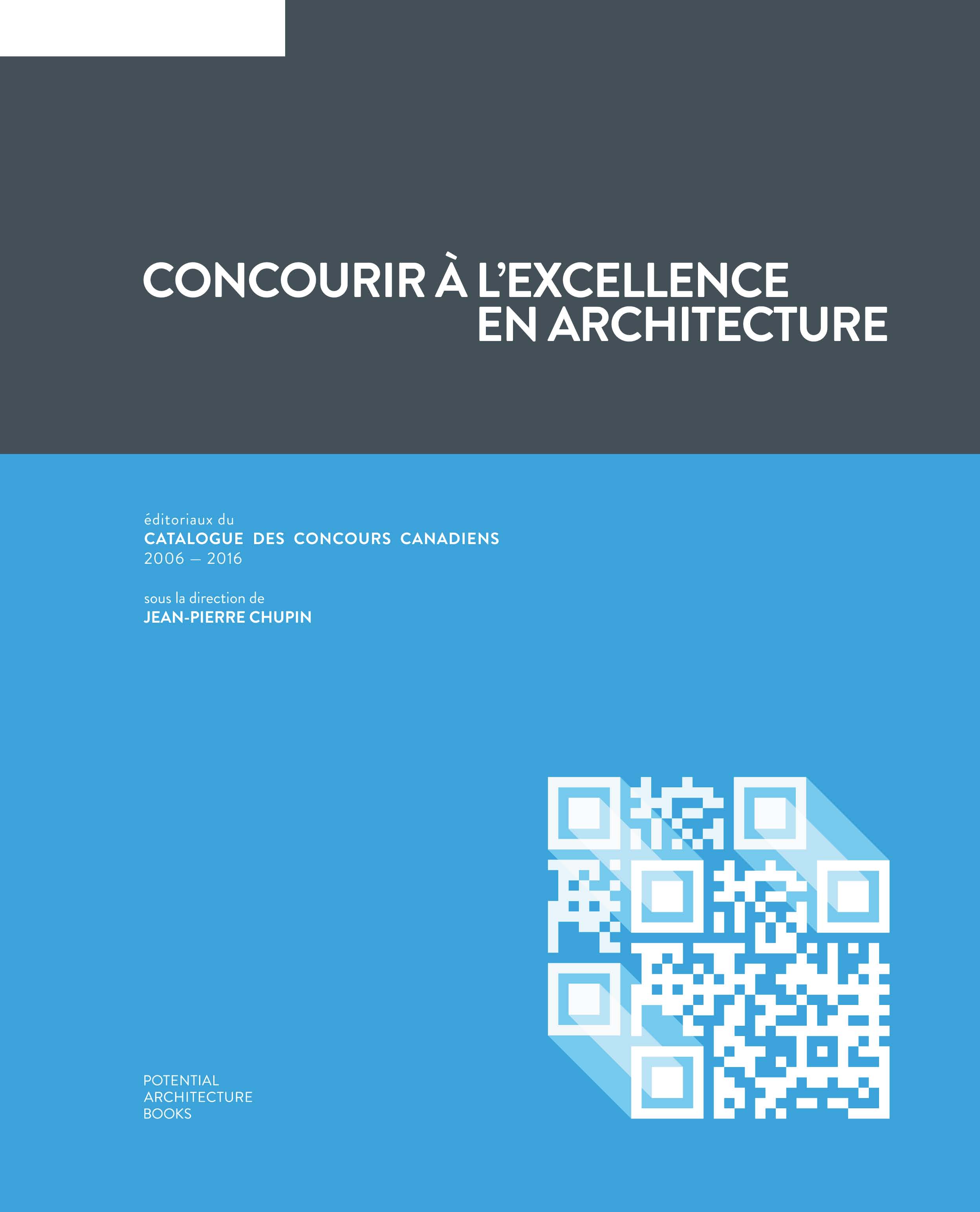
A travel guide for those in search of architectural quality, this book can be browsed in many ways. Written in a clear and concise manner by about thirty authors, it features a collection of editorials from the Canadian Competitions Catalogue (CCC), a large online digital archive open to the public since 2006. The editorials explore more than sixty Canadian architecture competitions held in the last seventy years. Especially in recent years, both public and private institutions have organized competitions across Canada, producing hundreds of architectural, urban planning, and landscape design projects. Together these proposals, most of which remain unbuilt, constitute a fantastic treasure in our tangible and intangible common heritage. Given that competition organizers, designers, juries, and critics never operate alone, there is no doubt whatsoever that this book results from the collaboration of a myriad of people, contributing to and competing for excellence in architecture.