LOG BOOK


Lunchtime Lecture by Raquel Fernandez: “Collective Housing for Women in Canada: An Intersectional Feminist Approach to Housing”October 12, 2026
Date: October 21, 2026 at 12 p.m. Location: Online, Zoom registration Abstract: Against the backdrop of a housing crisis, my dissertation examines collective housing for women in Canada. Cooperatives, nonprofit organizations (NPOs), and other forms of collective housing offer different ways of living together, sharing spaces, and organizing community life. However, how are these residential arrangements perceived and experienced by the residents? My research explores how the built environment, daily practices, and governance influence experiences of safety, belonging, care, and agency. I view these projects as spaces that are at once physical, social, and political, recognizing that collective housing cannot be understood solely through its architectural design or management. The layout of common and private spaces, management methods, and interactions among residents all influence the experience of living there. This approach allows us to examine the possibilities and limitations of these projects, as well as the conditions that foster their development and sustainability. This perspective aligns with research that encourages the simultaneous study of the architectural, organizational, and social dimensions of collective housing (Griffith et al., 2024). I also view care as an essential daily activity for building and sustaining community life, the distribution of which continues to be shaped by gender relations (Arrigoitia et al., 2023; Morrow & Parker, 2020). |
Three LEAP researchers participate in the launch of the “Vocabulaire du Design”October 5, 2026
Carmela Cucuzzella, Thomas-Bernard Kenniff, and Jean-Pierre Chupin, contributors to the new book Vocabulaire du Design, will participate in its launch event. Date: November 11, 2026 at 5:30pm Location: Room DE 6550, School of Design, UQAM |
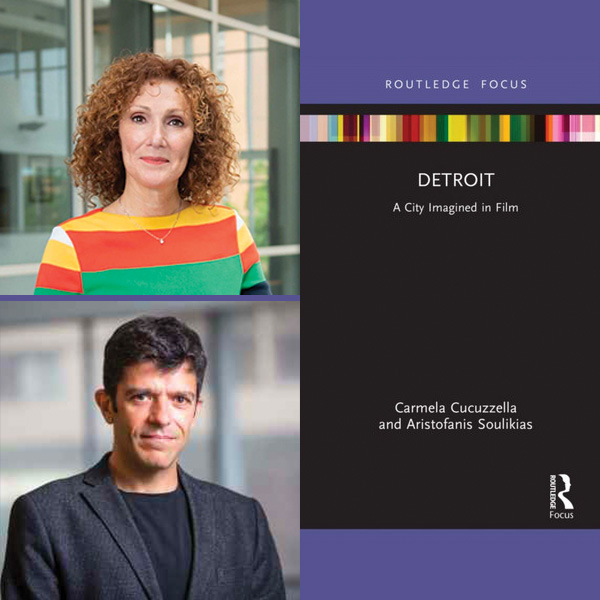
A Researcher and a PhD student publish a book on the Cinematic Imagery of DetroitSeptember 4, 2026
Long associated with the automotive industry, the skyscrapers of the industrial heyday, and images of urban decline, Detroit holds a unique place in the American imagination. A city of stark contrasts, it has been, in turn, a symbol of prosperity, a hotbed of labor struggles and civil rights movements, and an embodiment of deindustrialization and urban violence. For nearly a century, cinema has captured its many facets to tell its story. It is this relationship between the city and the representations it inspires that Detroit: A City Imagined in Film explores. The authors analyze a body of films shot in Detroit or set there, from 1928 to the present. The book shows how cinema helps shape the city’s lived experience, mold perceptions of it, and, at times, reinforce the narratives that influence its future. Through these films, Detroit emerges as much more than a backdrop. It becomes a character, a symbol, and an imaginary space onto which the hopes, fears, and contradictions of American society are projected. Carmela Cucuzzella, a professor at the University of Montreal’s School of Design, who co-authored the book with doctoral candidate Aristofanis Soulikias, shares more about this city—which, in film, constantly oscillates between ruin and rebirth—in an interview for UdeMnouvelles. |
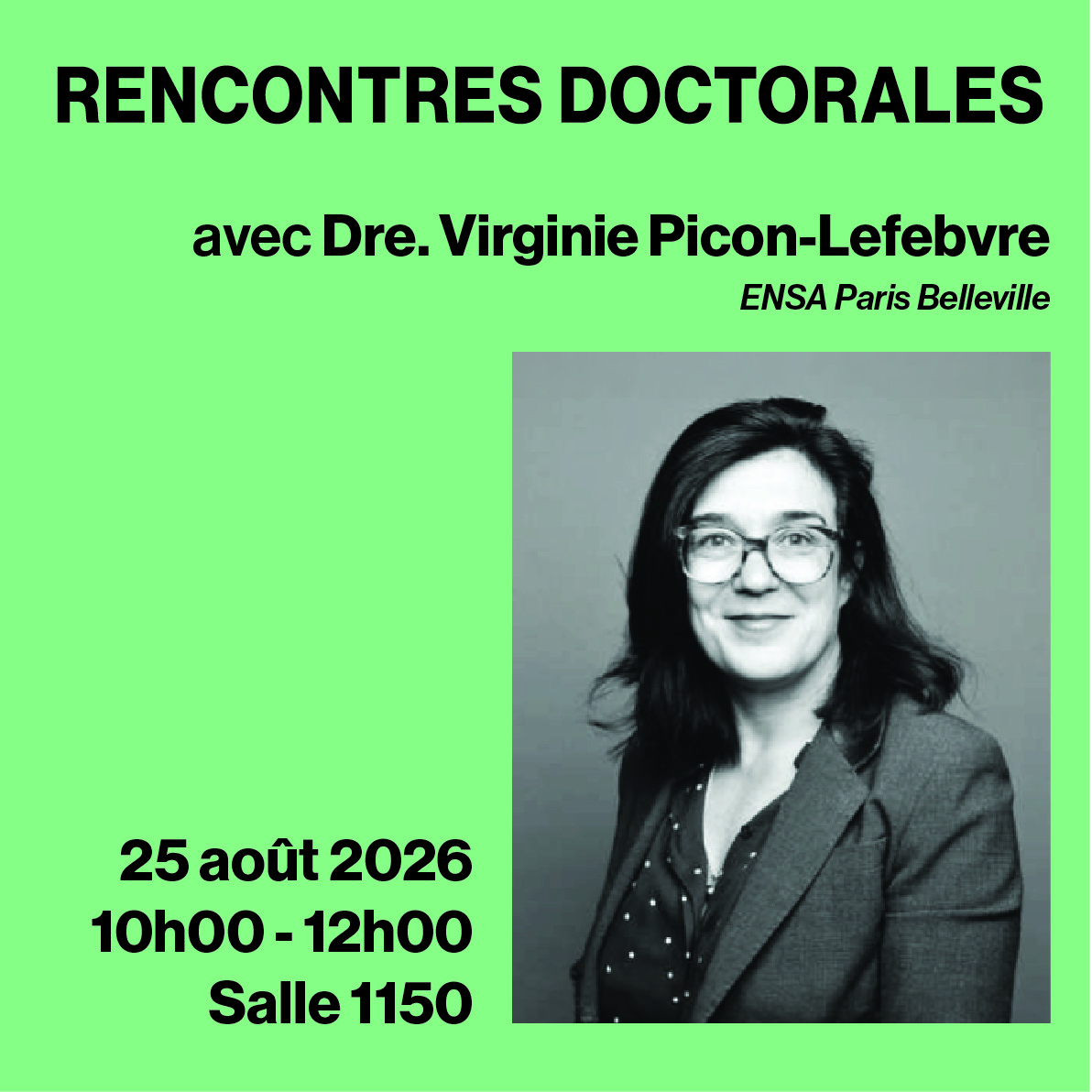
Doctoral LEAP Seminar with Virginie Picon-LefebvreAugust 17, 2026
Date and time: August 25, 2026 from 10:00 am to 12:00 pm. Avec Virginie Picon-Lefebvre, professor and researcher at the ENSA Paris Belleville |
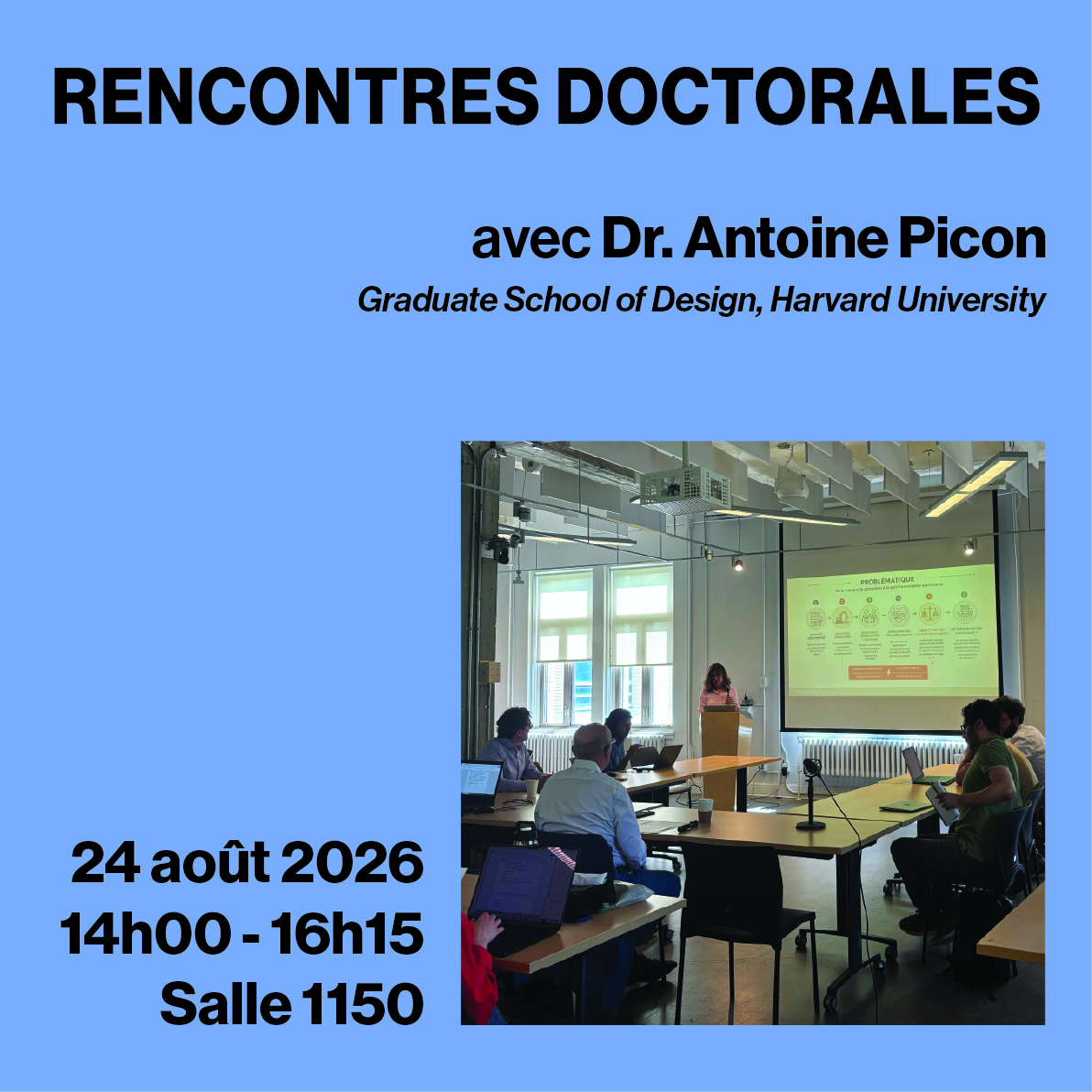
Doctoral LEAP Seminar with Antoine PiconAugust 11, 2026
Date and time: August 24, 2026 from 2:00 to 4:15 pm. With Antoine Picon, professor of the Histoire of Architecture and Technology, and director of the doctoral programs of the Graduate School of Design de l'Université de Harvard |
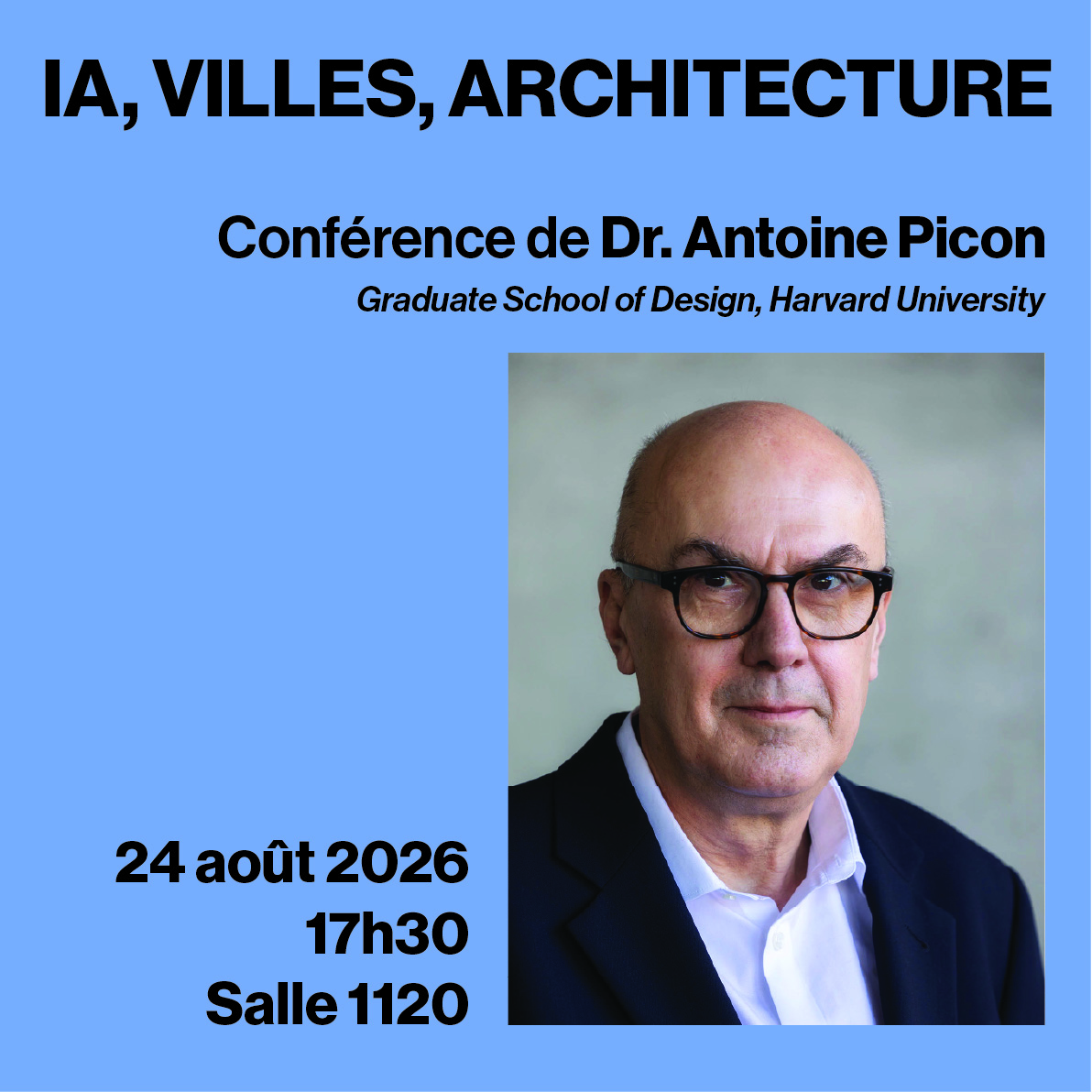
AI, Cities, ArchitectureAugust 11, 2026
Lecture by Antoine Picon Date : Monday, August 18th at 5.30pm Location : Université de Montréal, Faculté de l’Aménagement, Amphi 1120 Antoine Picon is an engineer, architect and historian of technology at Harvard University’s Graduate School of Design. He is a world-renowned authority on theoretical issues relating to the built environment, and the author of some thirty books and nearly 400 academic articles. Antoine Picon has delivered several lectures and seminars at the Faculty of Planning. Professor Antoine Picon will be awarded an honorary doctorate by the University of Montreal at the Faculty of Planning’s graduation ceremony. |
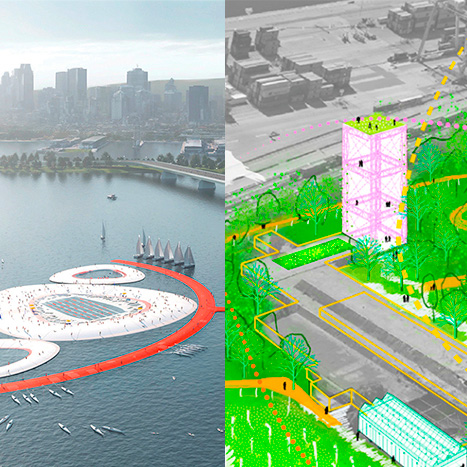
Update to the Canadian Competitions Catalogue: Editorial by Yolene Handabaka for the ‘Reuse of the Olympic Roof’ competitionJune 23, 2026
In this CCC update, we are publishing the 54 proposals submitted to the competition for the reuse of the Olympic roof in 2024. Know more about the competition... This editorial by Yolene Handabaka Ames, a PhD student in architecture, examines both the symbolic and environmental implications of this open-air project involving an icon of Quebec modernity – does it become a monument when its materials outlive the architecture itself? |
“A semantic inventory of preconceived barriers to quality in Canada’s built environment”: New article in “Cities” by Jean-Pierre Chupin and Morteza HazbeiJune 23, 2026
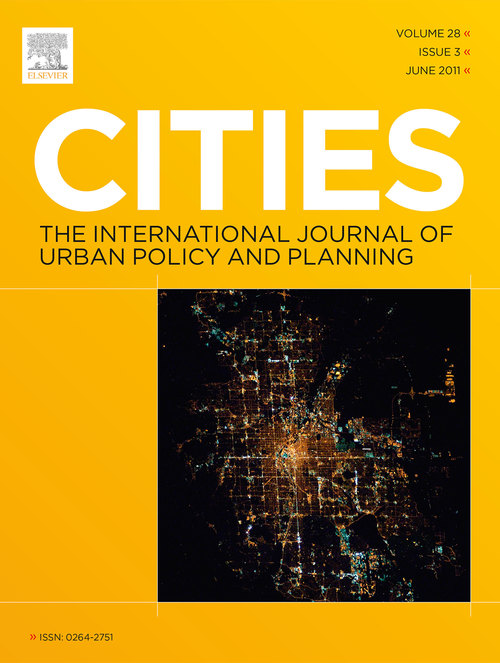
« A semantic inventory of preconceived barriers to quality in Canada’s built environment », new article in the 175th volume of the journal Cities which will be published in August 2026. / Abstract Traditional definitions of quality in architecture and the built environment have been increasingly challenged over the past decades, particularly through critical perspectives on spatial justice, equity, diversity, inclusion, and postcolonialism. Standardized definitions may reassure decision-makers but ignore evolving values reshaping quality. A Canadian SSHRC-funded research partnership is used as a testbed to examine how diverse stakeholders challenge conventional definitions of quality and propose new dimensions. This partnership functions as a living lab, bringing together representatives of citizens, municipalities, professionals, and academics to examine barriers to quality beyond traditional expertise. Drawing on the partnership's open-access reports, the paper asks: What barriers to built environment quality do participants perceive when they convene around “partnership roundtables”? To address this question, the study develops a semantic inventory of key themes and barriers to quality using two methods: (1) a qualitative content analysis of the 2022 Montreal Convention reports, and (2) analysis of the extracted themes using a researcher-developed framework—disciplinary, managerial, and critical—to examine shifts in definitions of quality. A total of 96 “barriers to quality” were identified and grouped into seven themes. The most discussed included a) Communication and Engagement, b) Sustainability and Inclusivity (EDIA), and c) Programming, Design, Building, and Management. The findings show that the themes align mainly with critical definitions of quality, with little to no disciplinary representation. This suggests that citizens and public-sector stakeholders seek a broader redefinition of quality, and that these expectations are at odds with the traditional disciplinary values of architecture and related disciplines. |
WHAT IS NOT ACCESSIBLE IS NOT PUBLIC: New research funded by SSHRC (INSIGHT) aims to better understand and address the lack of accessibility in buildings and public spaces in CanadaMay 5, 2026
Coordinated by the Canada Research Chair in Architecture, Competition and Quality at the Université de Montréal (Prof. Jean-Pierre Chupin), this project has received $412,000 in funding from the SSHRC’s INSIGHT programme (2026–2031). The interdisciplinary approach brings together researchers in interior design from the University of Montreal (Dr Olivier Vallerand, Prof. Carmela Cucuzzella), in landscape architecture from the University of Toronto (Prof. Rob M. Wright) and in urban planning from Toronto Metropolitan University (Dr Samantha Biglieri). / Abstract It is now clear that not all public buildings will be accessible by 2040, despite the adoption of the Canadian Accessibility Act (SC 2019, ch.10). By perpetuating barriers that effectively exclude people with disabilities, these spaces cannot fulfil their ‘public’ role. In contrast to the progress made in environmental and sustainability issues, the lack of understanding of the spatial implications of experiences related to disability and special needs remains a major obstacle to educational, practical and policy responses across all disciplines of the built environment. Our previous research has demonstrated how awards for excellence and competitions influence definitions of quality in architecture, interior design, landscape architecture and urban planning. We hypothesise that competitions and awards still reflect cultural and behavioural biases and do not meet the requirements of the Accessibility Act. Representations of users remain rooted in a worldview where the human body is idealised and standardised by simplistic images from which neurodiversity is conspicuously absent. We propose to make these ideological and procedural barriers explicit by theorising them through a series of comparative analyses of competition entries and awards for excellence in the Canadian context. Using two databases compiled by our team (the Canadian Competition Catalogue and ArchiQualiData), the research focuses on around forty examples of public spaces at various scales identified within Canadian institutions, such as: cultural buildings, libraries, sports centres, state schools, public parks and civic centres. Paradoxically, these contexts raise questions of accessibility to varying degrees, even though they meet the requirements of current norms and standards. The research involves a qualitative comparative analysis of the projects and theoretical frameworks, as well as an inventory of educational approaches and shortcomings, and the collection of experiences reported by a reference group across four key areas:
To address this complex phenomenon, the team combines multidisciplinary expertise in the fields of architectural theory, design thinking, gender and queer studies, urban studies and landscape research. Our team has gained international recognition for its work on competitions and awards for excellence. Two grants from the Canada Foundation for Innovation have enabled the establishment of digital documentation infrastructure that will be used for the comparative and qualitative cross-referencing of specialized data available via open access. This study aims to contribute to a better understanding of the limitations of accessibility norms, standards and policies. It calls for greater awareness in the education of designers, in the training of civil servants responsible for public procurement, and, more generally, in raising awareness among members of competition and award juries across all areas of the built environment. / For more information: Public Exclusions: Understanding and Addressing the Inaccessibility of Public Buildings and Places in the Canadian Context Social Sciences and Humanities Research Council of Canada INSIGHT Grant (#435-2026-1072):
|
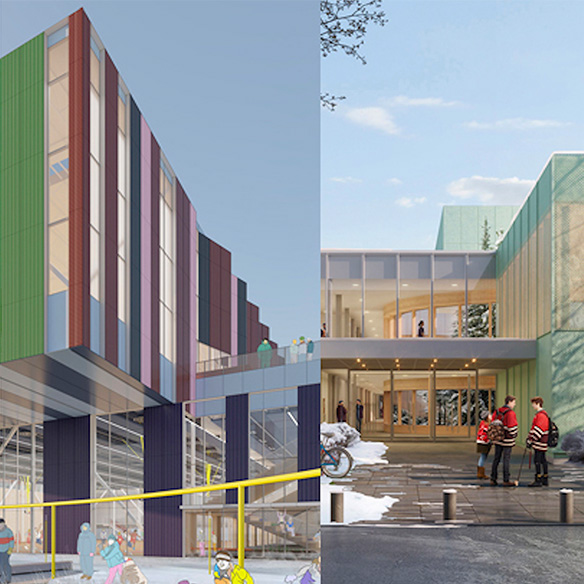
CCC Update with an editorial by Yolene Handabaka Ames | Competition proposals for the Gadbois Centre (2023), the Beaconsfield Multifunctional Cultural Centre (2024), and “Réimaginer la rue commercante” (2021)April 13, 2026
The Canadian Competition Catalog is regularly updated by the Canada Research Chair in Architecture, Competitions, and Quality (CRC-ACQUA) at the University of Montreal. Recent additions include three projects involving cultural centers and urban landscapes, as well as more than forty projects designed in Quebec. / 1 – The competition for the Centre Gadbois (2023), won by Prisme + ADHOC Inc. The Centre Gadbois occupies a paradoxical place in Montreal’s collective imagination. Built in 1960 as part of the city’s effort to make sports accessible to all, it has since been transformed by gradual additions, surviving in the shadow of the Turcot Interchange while serving generations of athletes and citizens. As Montreal reimagined this iconic facility, the design competition for its renovation and partial reconstruction became more than just a technical exercise: it was a reflection on how memory, landscape, and community can be reintegrated into the very fabric of architecture. Thus, the new Centre Gadbois would highlight the heritage elements of the original building, integrate into the surrounding urban fabric, and offer the community better access to sports and recreation. Excerpt from an editorial by Yolene Handabaka Ames, a doctoral student in architecture at the University of Montreal: “The objective of the two-stage multidisciplinary architecture competition, launched by the City of Montreal in 2023, was to design the renovation and partial reconstruction of the Centre Gadbois, a building of heritage significance and a major community sports facility located in the Sud-Ouest borough, near the Turcot Interchange and the Lachine Canal National Historic Site. The competition brief was ambitious. It called for minimal demolition and the restoration of key elements of the 1960 structure, the reorganization of a complex interior, and the creation of a central civic space. Urban integration was essential: the building had to open up to Gadbois Park, the Saint-Pierre woonerf, and the canal, while addressing the negative impacts of the road infrastructure. The environmental transition was equally central, with LEED Silver certification as the benchmark and broader goals aligned with Montreal’s 2030 Agenda. Beyond the technical aspects, the project was designed to embody inclusivity through the ADS+ principles, ensuring that Gadbois would be accessible to all citizens. » Yolene Handabaka Ames / 2 – The competition for the new multifunctional cultural center in Beaconsfield (2024), won by Lemay + Bouthillette Parizeau + Elema The competition for a new multifunctional cultural center in the City of Beaconsfield is a multidisciplinary architectural competition aimed at providing the municipality with an architectural and public development project that combines a library with spaces to support cultural activities. / 3 – The “Réimaginer la rue commerçante” Competition (2021), won by Étienne Bernier Architecture + Julien Delannoy The urban design ideas competition for the redevelopment of Notre-Dame Street in Lachine aims to encourage the submission of innovative proposals that will enrich the discussion on the future of this thoroughfare. The competition results will be compiled into a “book of possibilities” that will serve as a basis for discussion during the consultation process with local stakeholders (residents, merchants, elected officials, civil servants, developers, etc.) to plan the improvements that will be implemented following the infrastructure work scheduled for the coming years. |
New book publication edited by Denis Bilodeau (UdeM) and Louis Martin (UQAM): La critique à l’œuvre. Fragments d’un discours architecturalApril 7, 2026
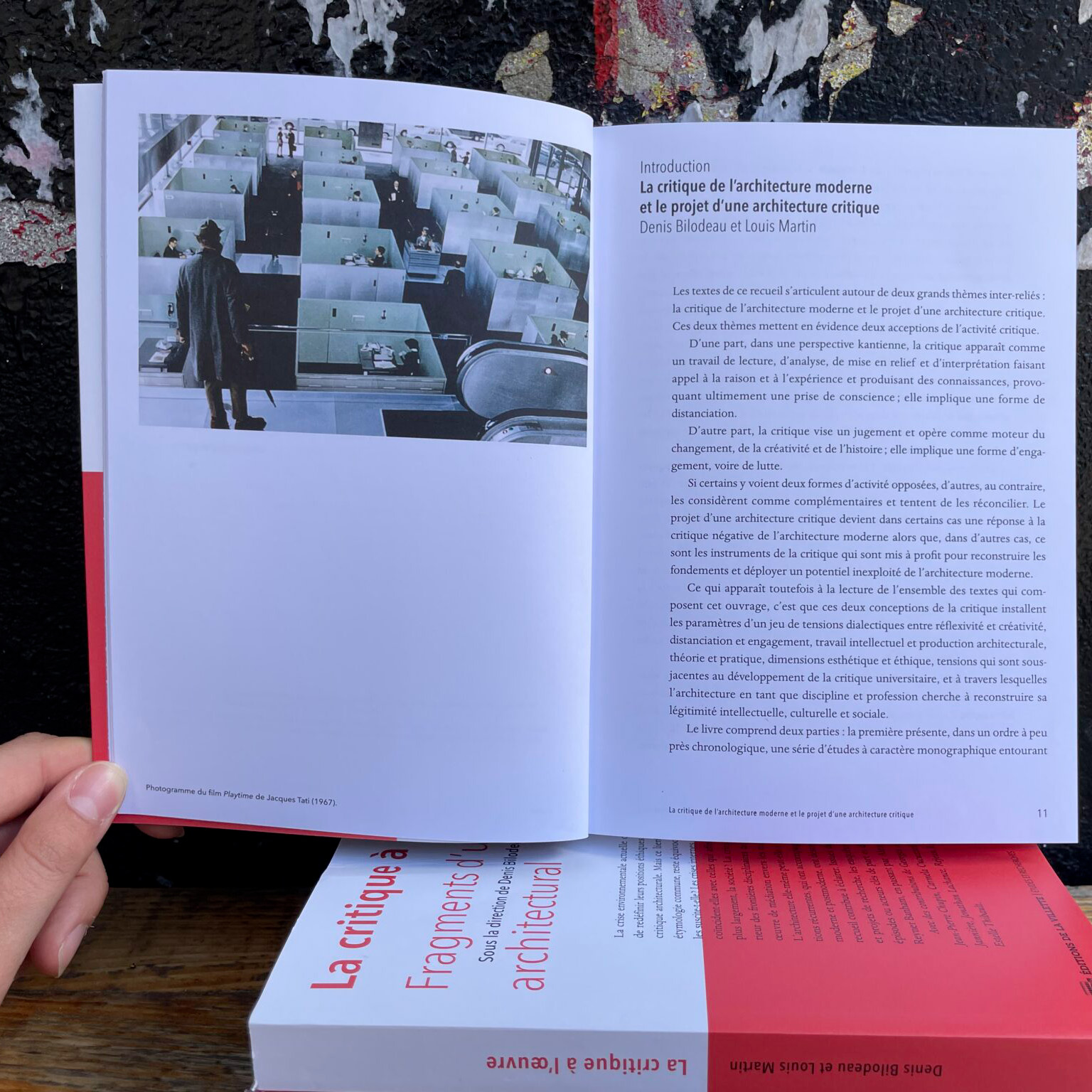
La critique à l’œuvre. Fragments d’un discours architectural
Edited by Denis Bilodeau and Louis Martin
Paris: Éditions de la Villette, 2025
The current environmental crisis confronts architects with the need to redefine their ethical positions, giving a renewed role to architectural criticism. But this link between crisis and criticism, beyond a common etymology, remains equivocal. Does criticism react to crises, or does it provoke them? Do the internal crises that regularly plague criticism coincide with those affecting architecture, its institutions and, more broadly, society? Is the purpose of criticism to act within the disciplinary boundaries of architecture or, on the contrary, to mediate the worlds it is supposed to transform? Can architecture itself arm itself with critical potential? These recurring questions, which have accompanied the development of modern and postmodern architecture, now have a long history that the present collection helps to illuminate. Stemming from a number of symposia, study days and research projects, the investigations it brings together detail certain episodes or key players on both sides of the Atlantic, from Bruno Zevi to Reyner Banham, via Alexander Tzonis and Kenneth Frampton.
With contributions from:
 |
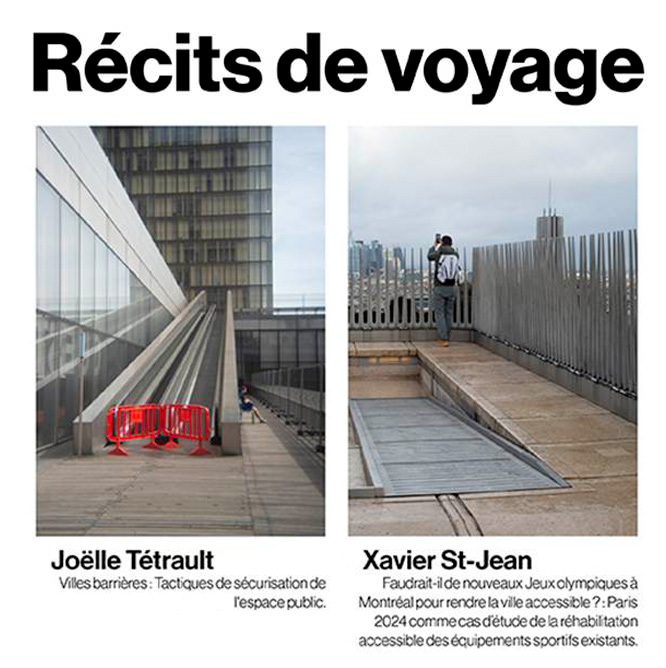
Travel NarrativesApril 2, 2026
Date: Tuesday, April 7, 2026 Event moderated by Paloma Castonguay-Rufino, PhD candidate at the Canada Research Chair in Architecture, Competition, and Quality (CRC-ACQUA) and the Laboratoire d'Étude de l'Architecture Potentielle (LEAP) Travel narratives serve as tools for capturing the various aspects of the travel experience, as a form of cultural immersion. In the field of architecture, they are accompanied by various means of capturing these experiences through texts, sketches, architectural details, photographs, collages, etc. Thus, the travel narrative allows us to explore a culture and its contexts through a personal and intimate perspective, as well as an architectural vision. Maria Moreno Ramirez Xavier St-Jean, former student member of CRC-ACQUA and LEAP Frédérick Langevin Joëlle Tétrault, former student member of CRC-ACQUA and LEAP |
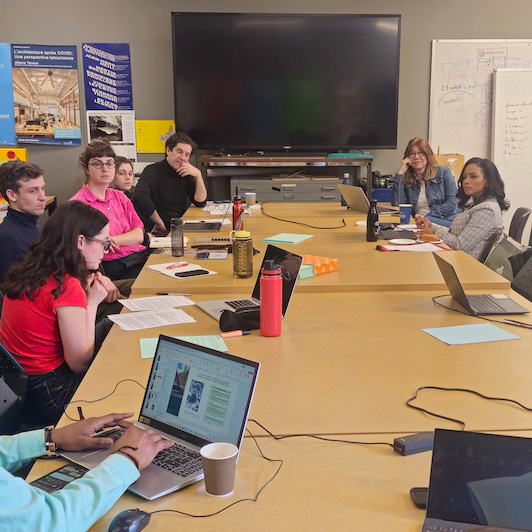
Graduate Seminar with Dr Marie Cecile KotykMarch 18, 2026
Date and time: March 18, 2026 from 1:30 to 5:00 pm. / With Dr. Marie Cecile Kotyk, Assistant Professor, School of Architecture, Planning and Landscape Architecture (SAPL), University of Calgary and member of the Design Justice Research Chair And in discussion with Dr. Jean-Pierre Chupin, Professor, School of Architecture, Université de Montréal / Presenting PhD Students: Juliane Alexandre Colmado, étudiante au doctorat individualisé en architecture, Université de Montréal The Phonotope : shaping sound for a (un-)silenced architecture Olivia Daigneault Deschênes, étudiante au doctorat individualisé en architecture, Université de Montréal From Tlachiuak, Montreal (Tiohtià :ke) to Lucha y Siesta, Roma : Architecture as complicit in emancipatory struggles Yolene Handabaka Ames, étudiante au doctorat individualisé en architecture, Université de Montréal Between demolition and adaptative reuse : social value as a lever of bottom-up heritage-making Paloma Castonguay-Rufino, étudiante au doctorat individualisé en architecture, Université Montréal From post-industrial obsolescence to civic space : reconversion cultures and the architectural reuse of industrial heritage in Canada Shantanu Biswas Linkon, étudiant au doctorat individualisé en architecture, Université de Montréal Indexing social value in architecture : comparing community centers and libraries both in Bangladesh and Canada through inclusiveness and spatial justice Raquel Fernandez, étudiante au doctorat individualisé en architecture, Université de Montréal Women’s collective housing : a feminist approach to housing Cyrille Jérôme Tchango Ngamaleu , étudiant au doctorat individualisé en architecture, Université de Montréal The intention to support care through architecture : a comparative study of the tectonics of the Maggie Centers’ Pavilions |
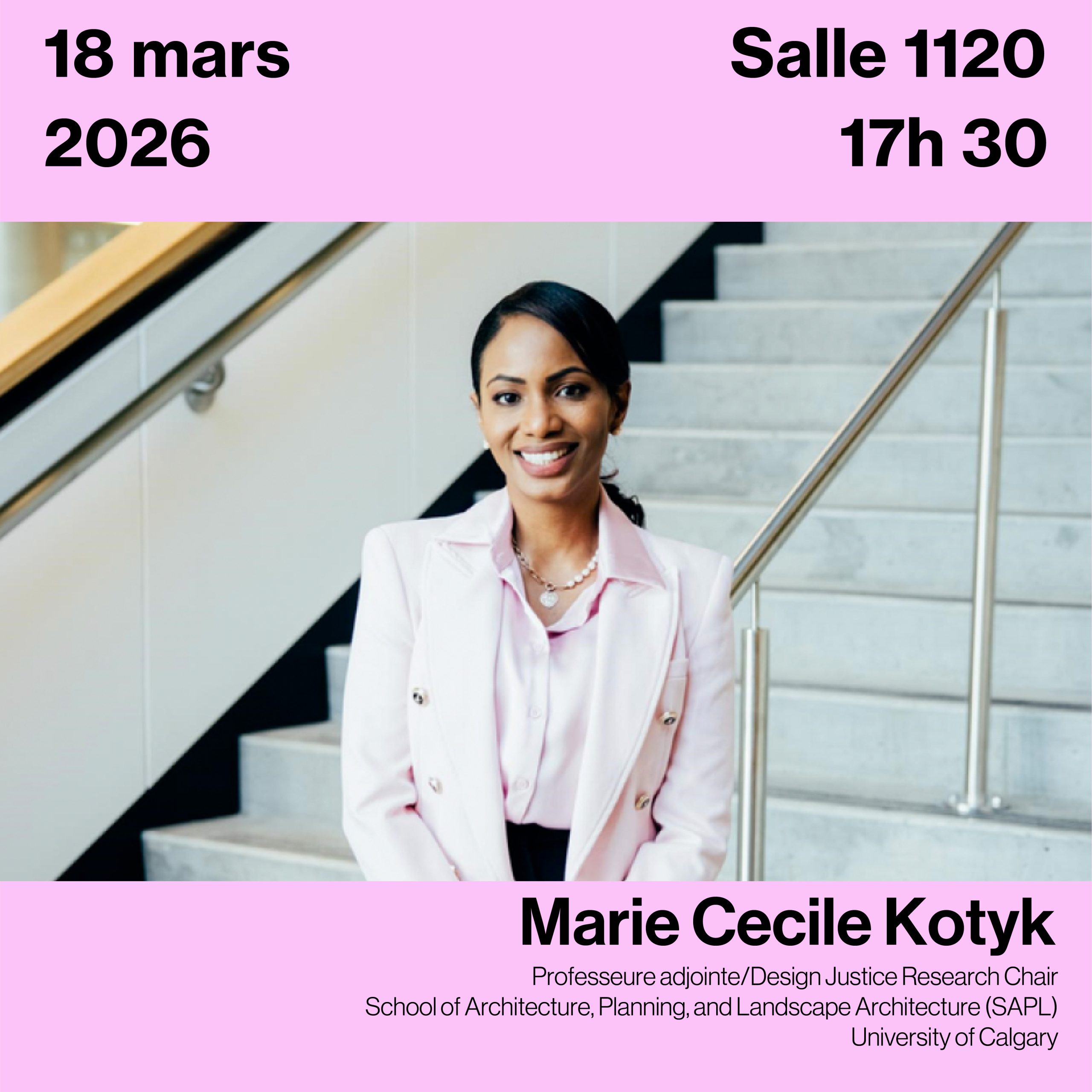
From Design Injustice to Design Justice: Why the Built Environment Must ChangeFebruary 27, 2026
Lecture by Marie Cecile Kotyk, University of Calgary Date : Wednesday, March 18th at 5.30pm Location : Université de Montréal, Faculté de l’Aménagement, Amphi 1120 Lecture series of the LEAP and the École d’architecture Architecture and urban planning have historically produced inequalities, but designing projects from a “spatial justice” perspective makes it possible to envision more equitable, inclusive, and community-oriented built environments. Design is never neutral. From outright discrimination through urban renewal to hostile architecture and exclusive zoning, the built environment has historically been used to reinforce inequalities in access to housing, safety, mobility, and opportunity. This presentation introduces the concept of “justice through design” as a critical framework for confronting this legacy and transforming the way we plan, design, and govern cities. Historical examples, contemporary case studies, and community initiatives in the areas of housing, public spaces, climate resilience, and education show how design can shift from perpetuating injustice to actively redistributing power. Based on lived experience and participatory practice, the lecture explains why justice in design is not optional, but essential to creating inclusive, equitable, and just communities. Dr. Marie Cecile Kotyk Assistant Professor / Design Justice Research Chair School of Architecture, Planning, and Landscape Architecture (SAPL) University of Calgary 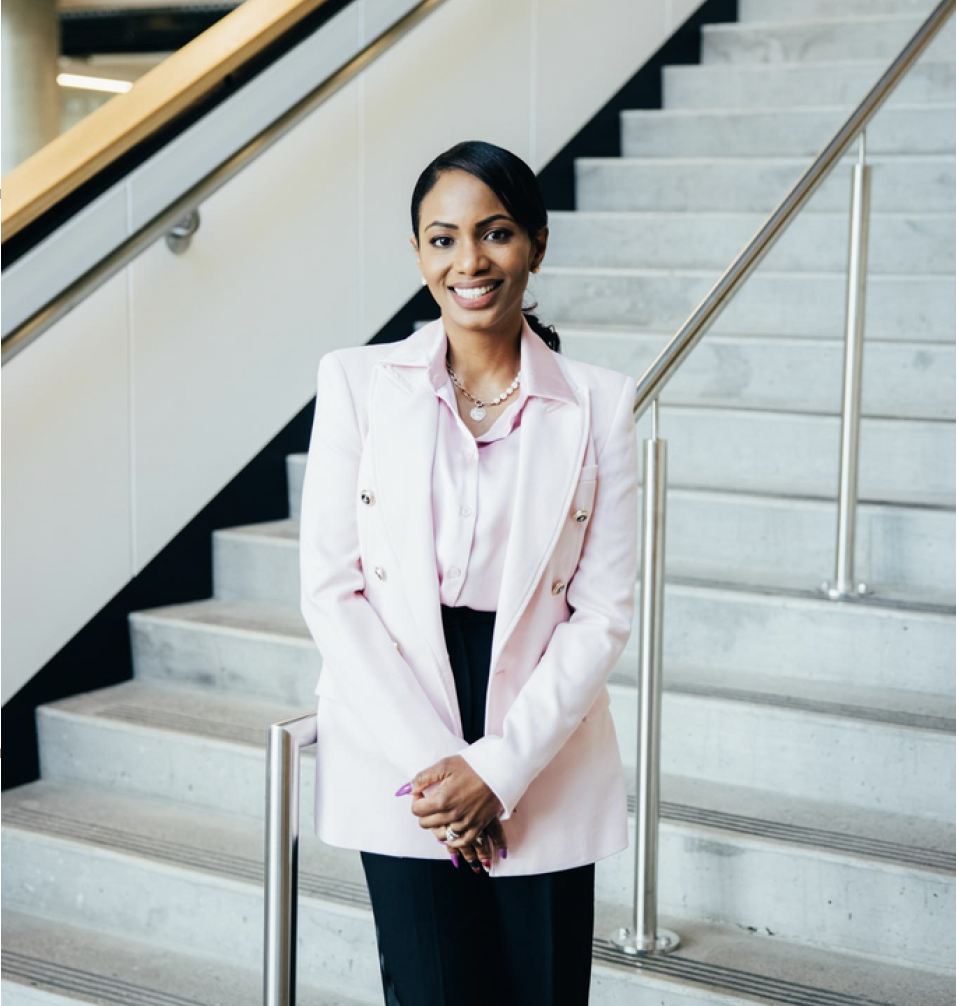
Marie Cecile Kotyk is an award-winning urban planner, housing professional, and spatial justice researcher with over 15 years of experience promoting equity in the public and nonprofit sectors. As a leading figure in community-based research and spatial justice, her work addresses the systemic forces that produce racial inequalities in the built environment, particularly for Black, Indigenous, and structurally marginalized communities. Her doctoral research led to the creation of the Black Housing Equity Framework, which aims to combat anti-Black racism in housing policy and design. Through her leadership in creating the UDesign Justice initiative at the University of Calgary, Dr. Kotyk is establishing a transdisciplinary center that brings together academics, community members, and practitioners to co-create equity-focused solutions for spatial, social, and systemic transformation. Contact : Jean-Pierre Chupin, Chaire de recherche du Canada en architecture, concours et qualité (CRC-ACQUA) + Laboratoire d’étude de l’architecture potentielle (LEAP) |
For an inclusive festive city: Article published on the Entretiens Jacques Cartier study day held in LyonNovember 18, 2025
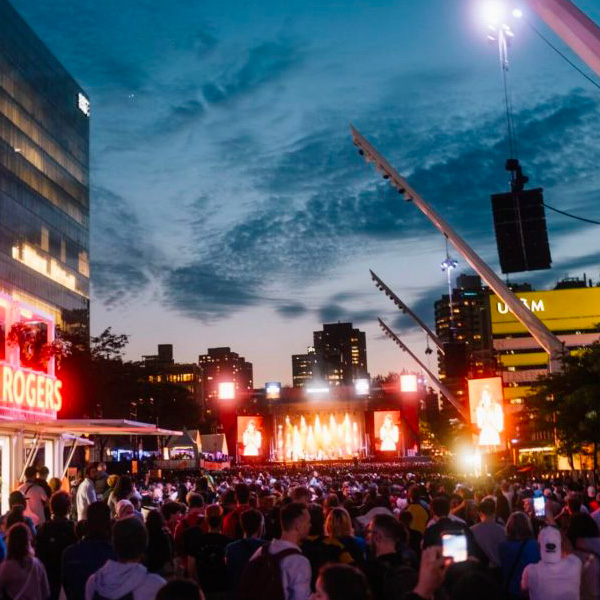
Professor Jean-Pierre Chupin and student Laurène Smith presented UdeM's research on the concept of inclusion in festive activities at the Entretiens Jacques Cartier conference in Lyon.
"Montreal and Lyon are both known as festive cities, hosting multiple events each year. But not everyone has the right to celebrate. “Festivals are places of contradiction. They are celebrations that are supposed to be open to everyone, yet they exclude people,” says Laurène Smith, a master's student in architecture under the supervision of Professor Jean-Pierre Chupin at the University of Montreal.
In an attempt to answer the question “Is the festive city inclusive?” and to discuss their research, these representatives from the UdeM School of Architecture participated in the Entretiens Jacques Cartier 2025, which took place this year in Lyon from October 6 to 8. “Last year, I organized a series of round tables on universal accessibility awareness for the Entretiens. As a continuation of this reflection, the organization Cité anthropocène suggested that we look at the festive city,” summarizes the professor, who works on the issue of inclusion in the organization of cities..."
Read more on the UdeMNouvelles website.
This event, dedicated to festive cities and their mechanisms of inclusion or exclusion, was also documented by the Cité Antropocène and McGill's Night-time Design Research Group. These resources provide further insights from the collaborating institutions:
|
Join the online public debate on quality in Canada!October 22, 2025
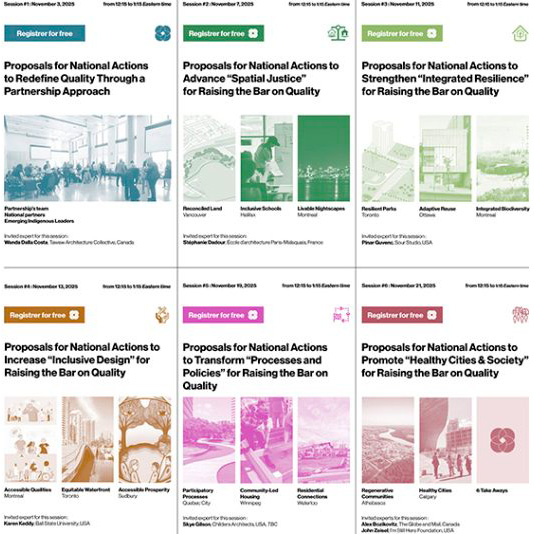
Six one-hour sessions from November 3 to 21 (12:15 p.m. ET) (GMT-4)
Topics: 1 – Redefining quality in a partnership approach (Nov. 3) 2 – Advancing spatial justice (Nov. 7) 3 – Building more integrated resilience (Nov. 11) 4 – Accelerating inclusive design (Nov. 13) 5 – Transforming processes and policies (Nov. 19) 6 – Promoting urban health (Nov. 21)
It is with great pleasure that we invite the public to join the Public Forum on Quality organized by the SSHRC Partnership on Quality. In November, no less than 6 one-hour sessions will stimulate cross-site thematic clusters addressed to Canadians and beyond. Research sites have been asked to select their most impactful proposed national action to raise the bar on quality. But they will only get 3 minutes to present their proposal in a pitch designed to convince you, the public, of its urgency, modalities and seeked impact. For each session, Canadian and international invited experts will join members of the steering committee to share comments during a maximum of 10 minutes per proposed action. Everything will happen very quickly, and your reactions will be welcome. For this public forum on Quality, we aim to target the wider public. We invite everyone to join as many of the sessions you find interesting, you do not have to be affiliated to the research project to join this event, the broader public is very much welcome. This event is public and is completely free.
Please register to as many sessions as you can. Registration is free but mandatory to receive the appropriate link. Follow this link to register: https://forms.office.com/r/q7mJqsyENh |
Exhibition “Quality Issues in Canada’s Built Environment” and Launch of ArchiQualiData.caSeptember 18, 2025
As part of a research partnership funded by the Social Sciences and Humanities Research Council of Canada and numerous partners, the Canada Research Chair in Architecture, Competition and Quality at the Université de Montréal, under the direction of Professor Jean-Pierre Chupin, brought together 14 universities and more than 60 academics. Together, they convinced the Rick Hansen Foundation, Public Services and Procurement Canada, the Royal Architectural Institute of Canada, and more than 60 citizen groups, professional organizations, and municipal services to form 15 collaborative research teams, including a team of young Indigenous leaders.
In May 2025, these cross-sector groups presented an initial status report on their roadmaps toward more equitable, sustainable, and socially valuable quality at the annual convention at the University of Toronto and then, in June, at Place Bonaventure during the RAIC’s annual conference.
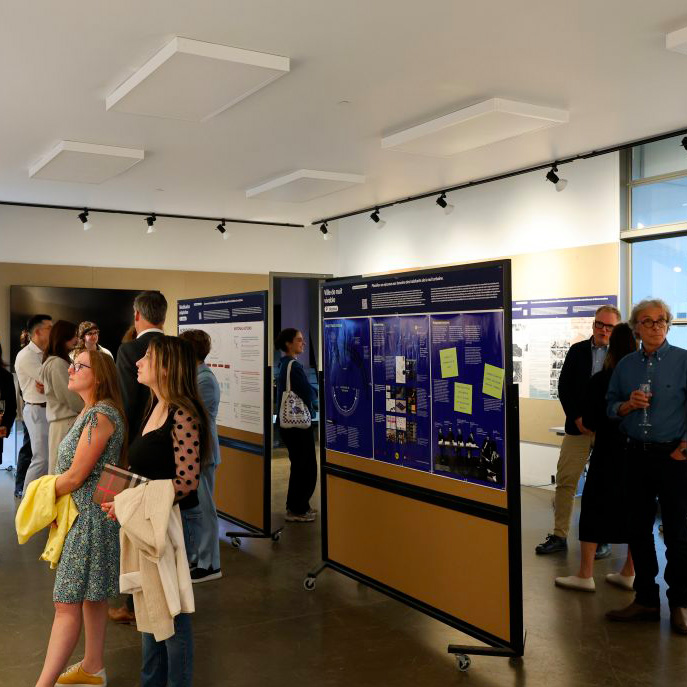
In Room 2081 of the Faculty of Environmental Design, from August 29 to September 19, 2025, this exhibition of work in progress provides an overview of research undertaken since 2022 and which will continue until 2027. This is an ongoing national project and not a finished product. Videos made by students accompany the panels, which summarize the major issues of quality, the steps taken, and the actions proposed.
A roadmap outlines key elements such as the initial problem, overall objectives, resources, process steps, and proposed short-, medium-, and long-term actions. There are many gray areas in our current definitions of quality: accessible quality, adaptive reuse, participatory processes, resilient parks, inclusive schools, integrated biodiversity, etc. Following a bottom-up process, these stakeholder teams conduct analyses and consultations in specific contexts, addressing issues that challenge current definitions of quality in architecture, landscape, design, and urban planning. The research highlights the importance of collecting lived experiences to break down silos while updating expertise.
The exhibition vernissage, held on September 10, 2025, also marked the launch of ArchiQualiData.ca, the resource platform on quality, experience, and awards of excellence in architecture, landscape architecture, interior design, and urban design in Canada.
 |
Public conference presented by Florian Hertweck: Urbanize, Demolish, Repair. Architecture in the Age of Ecological ReproducibilityAugust 28, 2025
Conference by Florian Hertweck, Université du Luxembourg
Date: Tuesday, September 16th at 5:30 pm.
Location: Amphitheatre 1120, Faculté de l’aménagement, Université de Montréal
Lecture series of the Laboratoire d’étude de l’architecture potentielle
URBANIZE, DEMOLISH, REPAIRArchitecture in the Age of Ecological Reproducibility Summary: In the face of climate change and resource scarcity, two practices that have been commonplace in spatial development until now seem obsolete: the expansion of urban areas and the demolition of existing buildings in order to build denser and more modern structures. Does this spell the end of architecture? This conference explores how it is still possible to produce architecture under these conditions and on what theoretical basis a socio-ecological architecture can be founded. Florian Hertweck is a professor of architecture at the University of Luxembourg and co-founder of Less Yellow architecture urbanisme. He has led consortiums of architects, urban planners, and researchers for the Luxembourg in Transition and Greater Geneva Consultation foresight programs. He is a member of the Luxembourg Higher Council for Spatial Planning and the scientific committee of the German Institute for Energy Transition Research (IKEM). Among other projects, he designed the Luxembourg pavilion for the 16th Architecture Biennale and the exhibition The Great Repair at the Akademie der Künste in Berlin and the Pavillon de l'Arsenal in Paris. He is also an organizing member of the European initiative HouseEurope! against demolition and for renovation. Hertweck is the author of numerous publications on the socio-ecological production of space, the most recent of which are The Great Repair. Politics of the Repair Society (Spector Books 2023) and Architecture on Common Ground. Positions and Models on the Question of Land (Lars Müller Publishers 2020).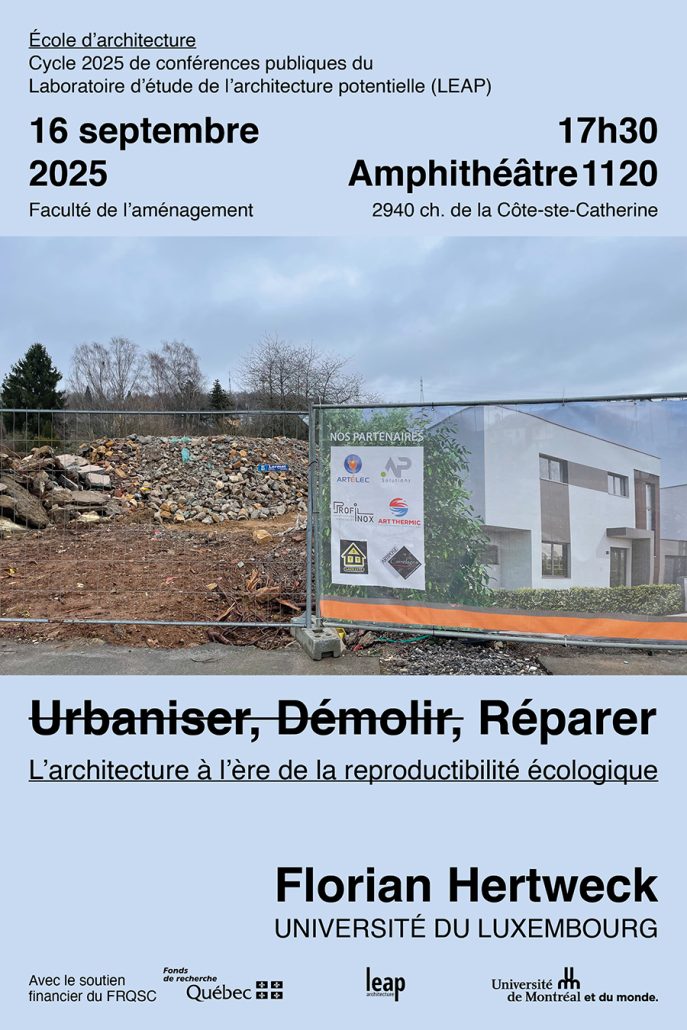 |
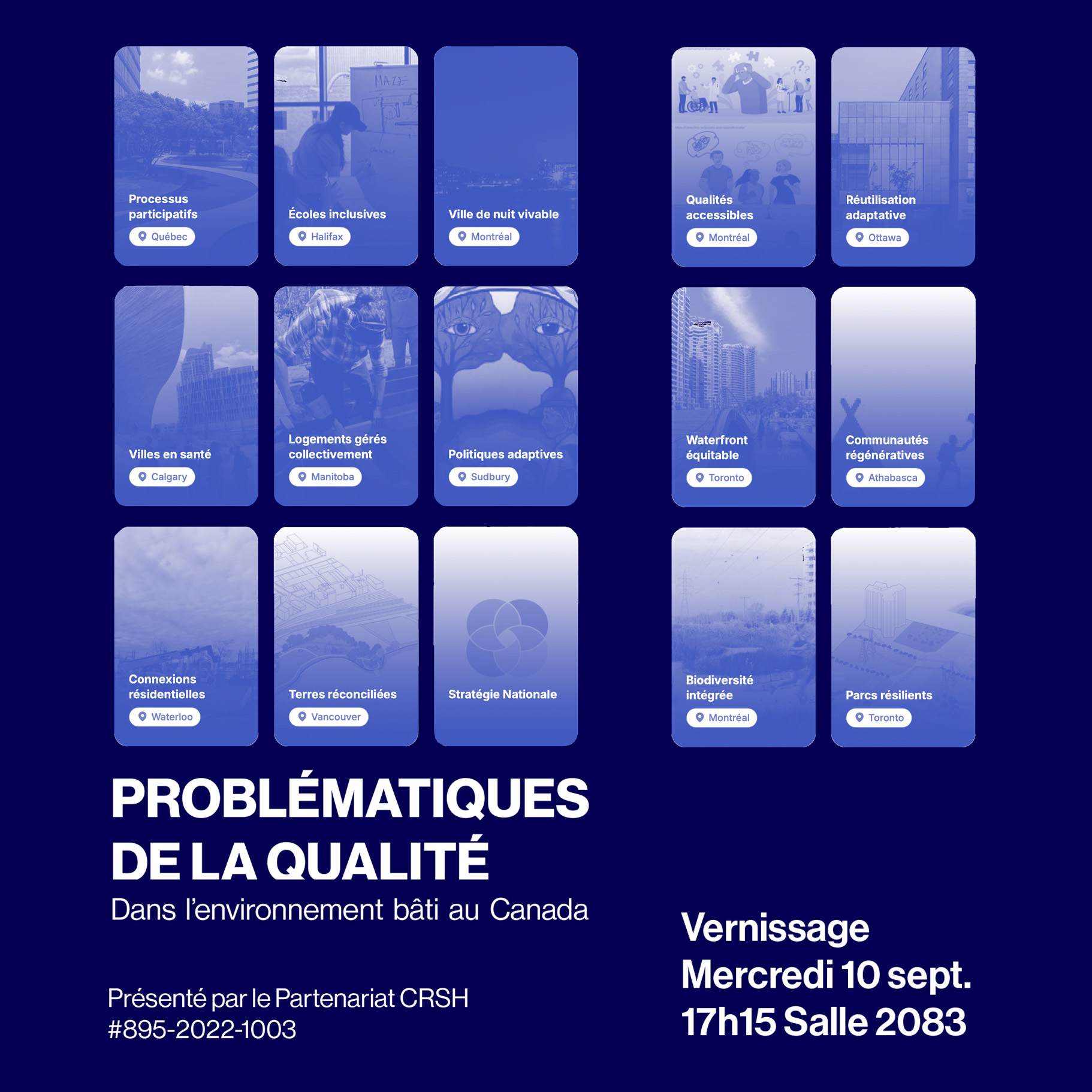
Exhibition: “Quality Issues in Canada’s Built Environment”August 28, 2025
Traveling exhibition showcasing the work in progress on roadmaps developed by 15 cross-sector teams from coast to coast
As part of a research partnership funded by the Social Sciences and Humanities Research Council of Canada and numerous partners, the Canada Research Chair in Architecture, Competition and Quality at the Université de Montréal, under the direction of Professor Jean-Pierre Chupin, brought together 14 universities and more than 60 academics. Together, they convinced the Rick Hansen Foundation, Public Services and Procurement Canada, the Royal Architectural Institute of Canada, and more than 60 citizen groups, professional organizations, and municipal services to form 15 collaborative research teams, including a team of young Indigenous leaders.
In May 2025, these cross-sector groups presented an initial status report on their roadmaps toward more equitable, sustainable, and socially valuable quality at the annual convention at the University of Toronto and then, in June, at Place Bonaventure during the RAIC's annual conference.
In Room 2081 of the Faculty of Environmental Design, from August 29 to September 19, 2025, this exhibition of work in progress provides an overview of research undertaken since 2022 and which will continue until 2027. This is an ongoing national project and not a finished product. Videos made by students accompany the panels, which summarize the major issues of quality, the steps taken, and the actions proposed.
A roadmap outlines key elements such as the initial problem, overall objectives, resources, process steps, and proposed short-, medium-, and long-term actions. There are many gray areas in our current definitions of quality: accessible quality, adaptive reuse, participatory processes, resilient parks, inclusive schools, integrated biodiversity, etc. Following a bottom-up process, these stakeholder teams conduct analyses and consultations in specific contexts, addressing issues that challenge current definitions of quality in architecture, landscape, design, and urban planning. The research highlights the importance of collecting lived experiences to break down silos while updating expertise.
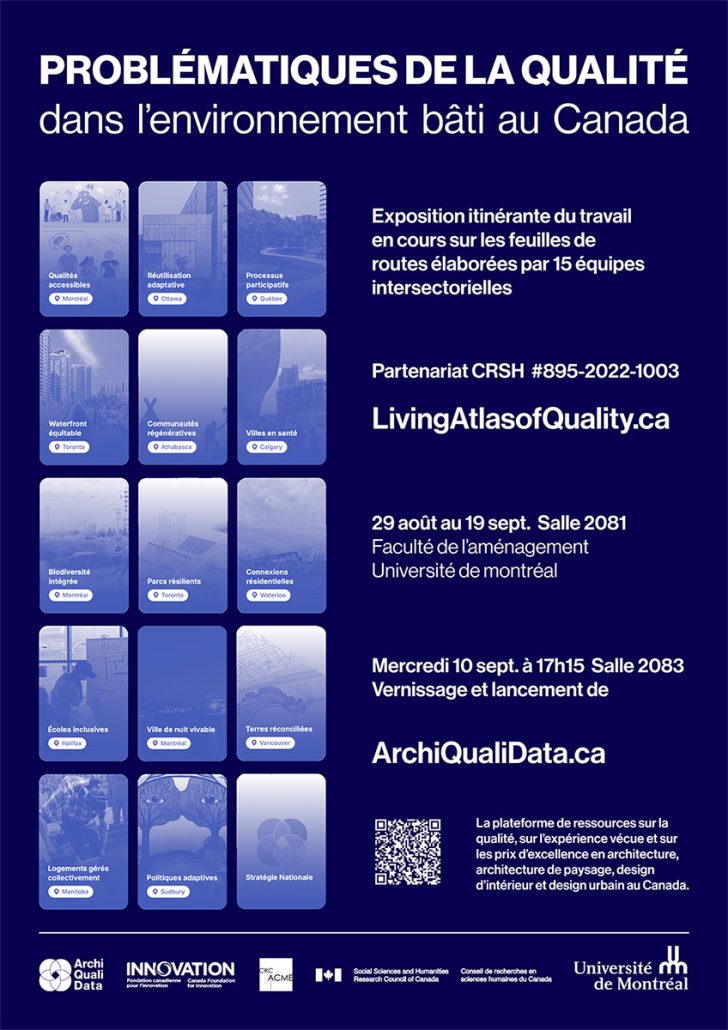 Don't miss the launch of the ArchiQualiData.ca platform on September 10 at 5:15 p.m. Don't miss the launch of the ArchiQualiData.ca platform on September 10 at 5:15 p.m. |
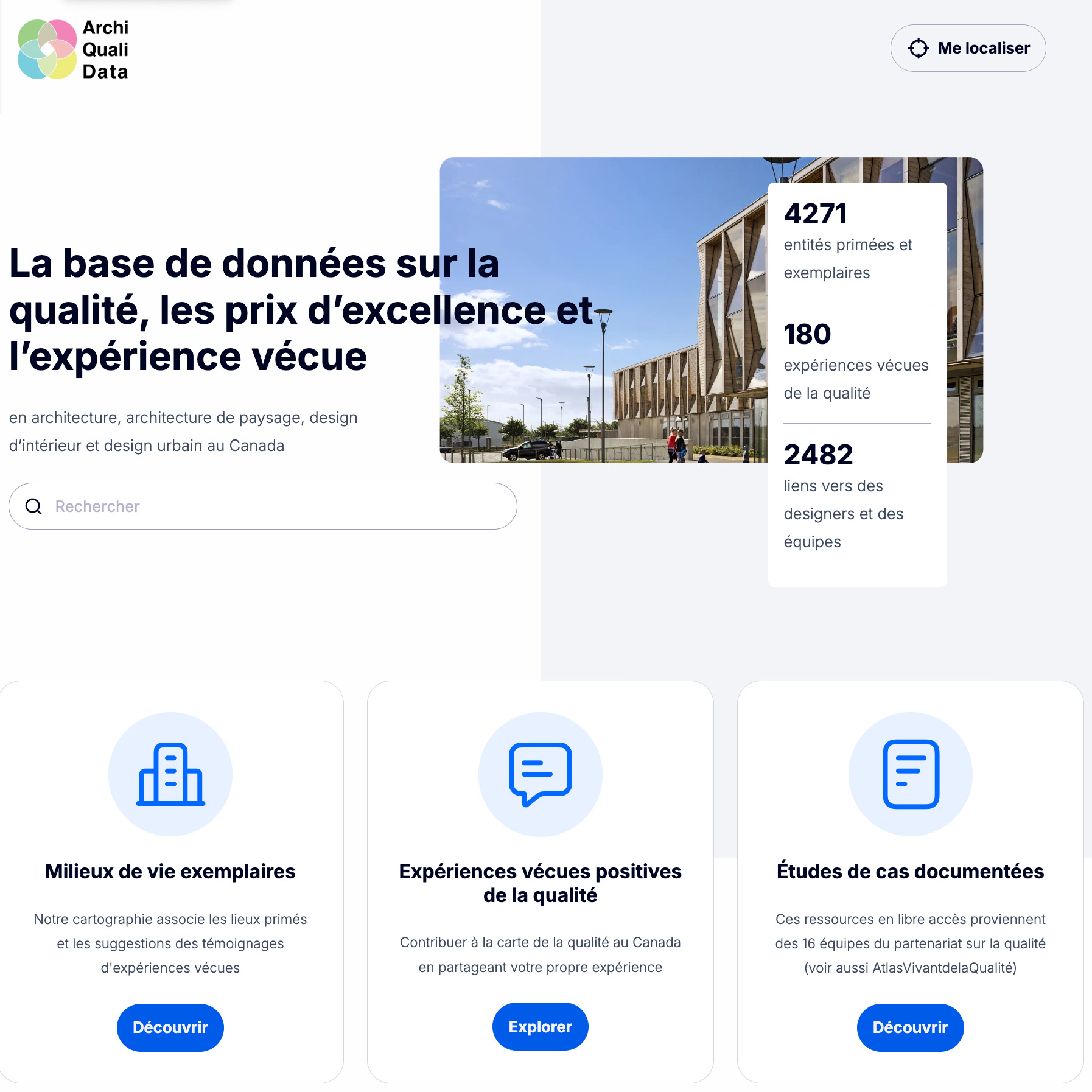
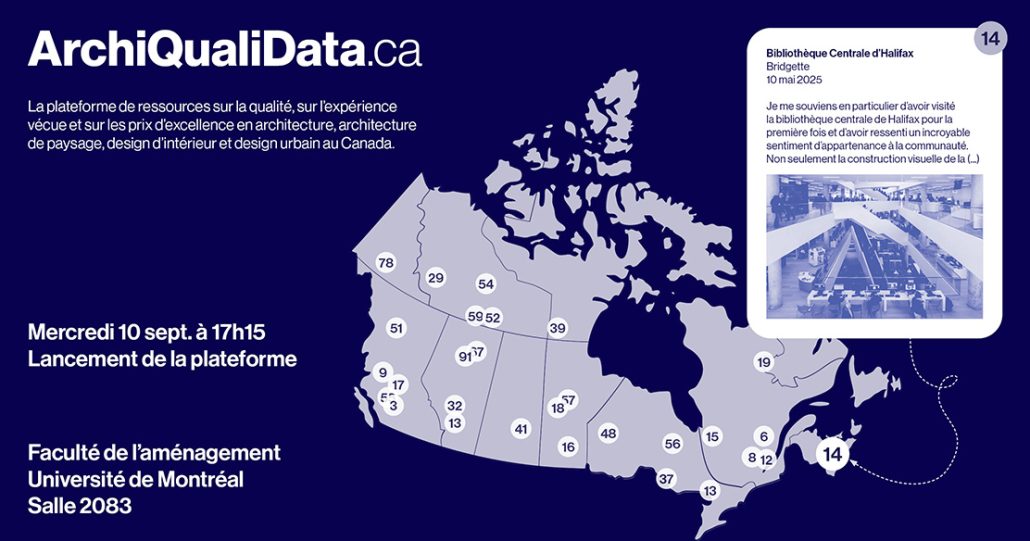
Launch of the ArchiQualiData.ca platform!August 28, 2025
On Wednesday, September 10, at 5:15 p.m. in rooms 2081 and 2083 of the Faculty of Environmental Design, the Canada Research Chair in Architecture, Competition, and Quality, led by Professor Jean-Pierre Chupin at the University of Montreal, will present the large open-access digital platform: ArchiQualiData.
ArchiQualiData is being launched as part of the traveling exhibition “Quality Issues in Canada's Built Environment,” on display from August 29 to September 19.
ArchiQualiData is the resource platform for quality, lived experience, and awards of excellence in architecture, landscape architecture, interior design, and urban design in Canada.
This major national collaboration has received funding from the Canada Foundation for Innovation, the Quebec Ministry of Education, the University of Montreal, the Canada Research Chairs Program, and the Social Sciences and Humanities Research Council of Canada.
ArchiQualiData is hosted on the secure servers of the Digital Research Alliance of Canada.
 |

Carly Ziter holds the Concordia University Research Chair in Urban Ecology and SustainabilityJuly 17, 2025
Carly Ziter holds the Concordia University Research Chair in Urban Ecology and Sustainability (2021-2026)
|
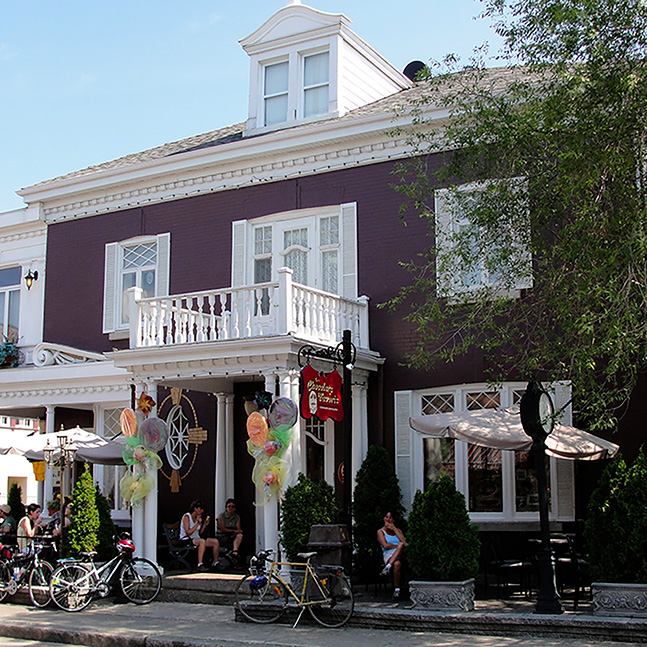
New article by Yolene Handabaka Ames: What’s behind the demolition of the Chocolats favoris building in Vieux-Lévis?July 14, 2025
New article published in Le Devoir by Yolene Handabaka Ames, student of the individualized doctorate in architecture at the École d'architecture de la Faculté de l'aménagement: What's behind the demolition of Chocolats favoris' building in Vieux-Lévis?
"The case of the imminent demolition of Chocolats favoris has been making headlines since October 2023, when a public notice of demolition request from the City of Lévis was posted on the building's façade.
The saga, which lasted almost two years, revealed recurring conservation issues surrounding Quebec's built heritage. So much so that the Lévis residence has become an emblematic case of what lies behind most heritage building demolition projects: the social value of a “living” heritage.
In autumn 2022, the house that had housed Chocolats favoris since 1996 was closed due to water infiltration and deteriorating masonry. After professional appraisals, letters signed by heritage advocates, requests for review and the active participation of Lévis residents at public hearings, demolition was approved on December 16. A request for a one-year moratorium did not change the building's fate either. On June 19, at a regular meeting of the municipal council, elected officials voted against accepting the request. The house of Chocolats favoris will soon fall under the demolition pick... "
Read more on Le Devoir’s website.
Photo by René Bélanger (Flickr).
|
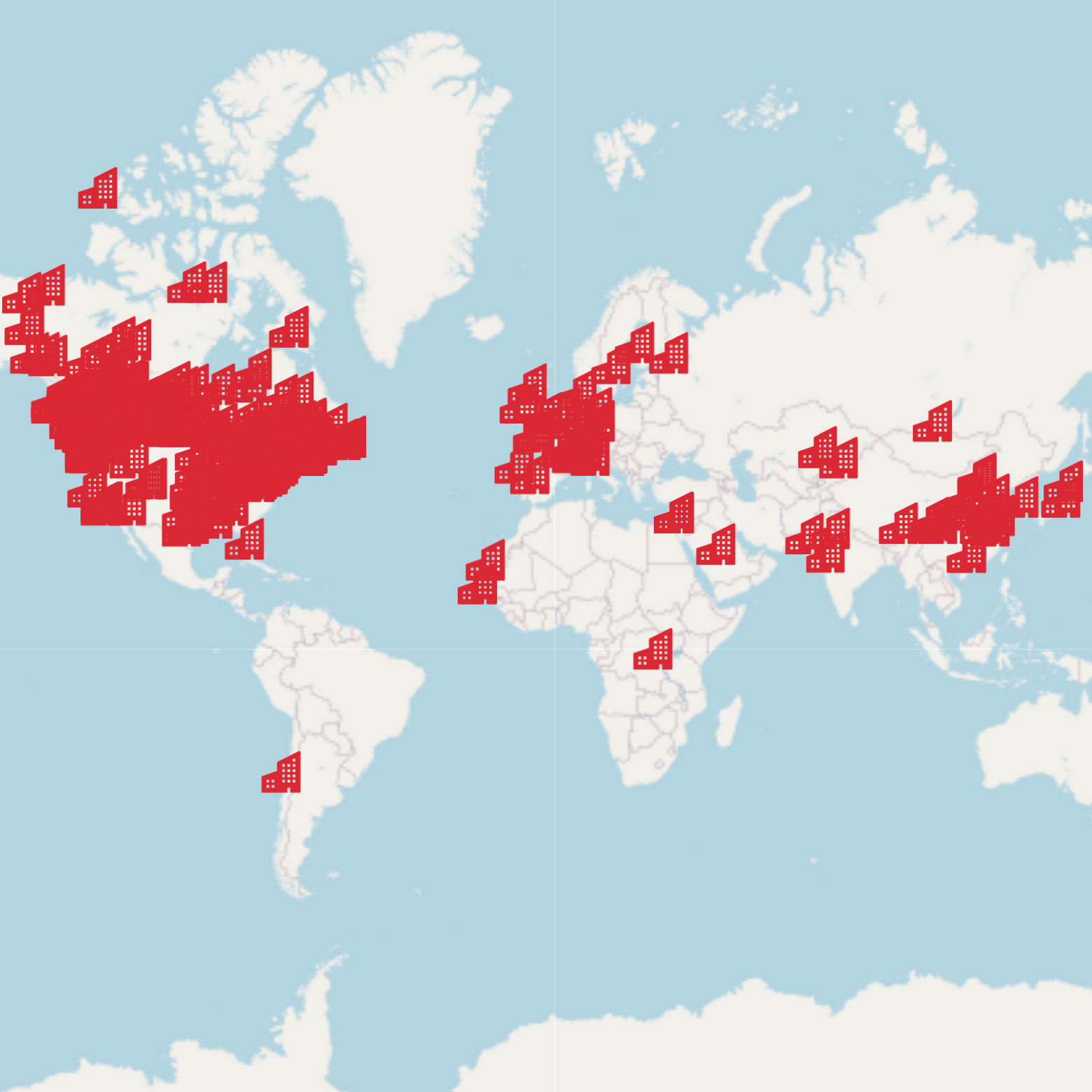
Discover the CANADIAN MAP OF AWARD-WINNING BUILDINGS AND PLACESJune 23, 2025
The Atlas of Research on Exemplarity in Architecture and the Built Environment (AREA-BE) is an open construction site!
AREA-BE is an initiative of the Canada Research Chair in Architecture, Competitions and Mediations for Excellence (CRC-ACME), held by Jean-Pierre Chupin, Ph.D. , architect MOAQ, MIRAC, DPLG, DipArch (2), Professor at Université de Montréal. This initiative is actively supported by a network of Canadian and international scholars.
The current website of the AREA (www.architecture-excellence.org) has been officially launched in November 2019 for information purposes.
The AREA website foreshadows an important documentation and research platform to be launched in 2021 / 2022
This long-term initiative is supported by the Canada Foundation for Innovation and the Social Sciences and Humanities Research Council of Canada through the Canada Research Chairs Program.
In the coming years, the establishment of an AREA partnership of researchers based in Canadian schools of architecture and research universities will ensure the reliability, regular updating and sustainability of this scientific platform regrouping resources, knowledge transfers and analyzes on best examples of architectural design, landscape design and urban design in Canada.
Thanks to the contribution of institutions delivering awards and to professional teams giving access to data on projects and buildings, researchers and students will be able to contribute to a better understanding of the current evolution of quality in the built environment. The data, information, analyzes, comparisons, visualizations that will be progressively delivered – in open access – on the AREA platform will take advantage of award-winning projects and buildings in Canada, from year to year, in order to identify and better understand best practices.
The AREA collective platform will be meant to provide scientific data in order to support education, policies, actions and mediations aiming at excellence in the built environment.
Jean-Pierre Chupin (Université de Montréal)
|
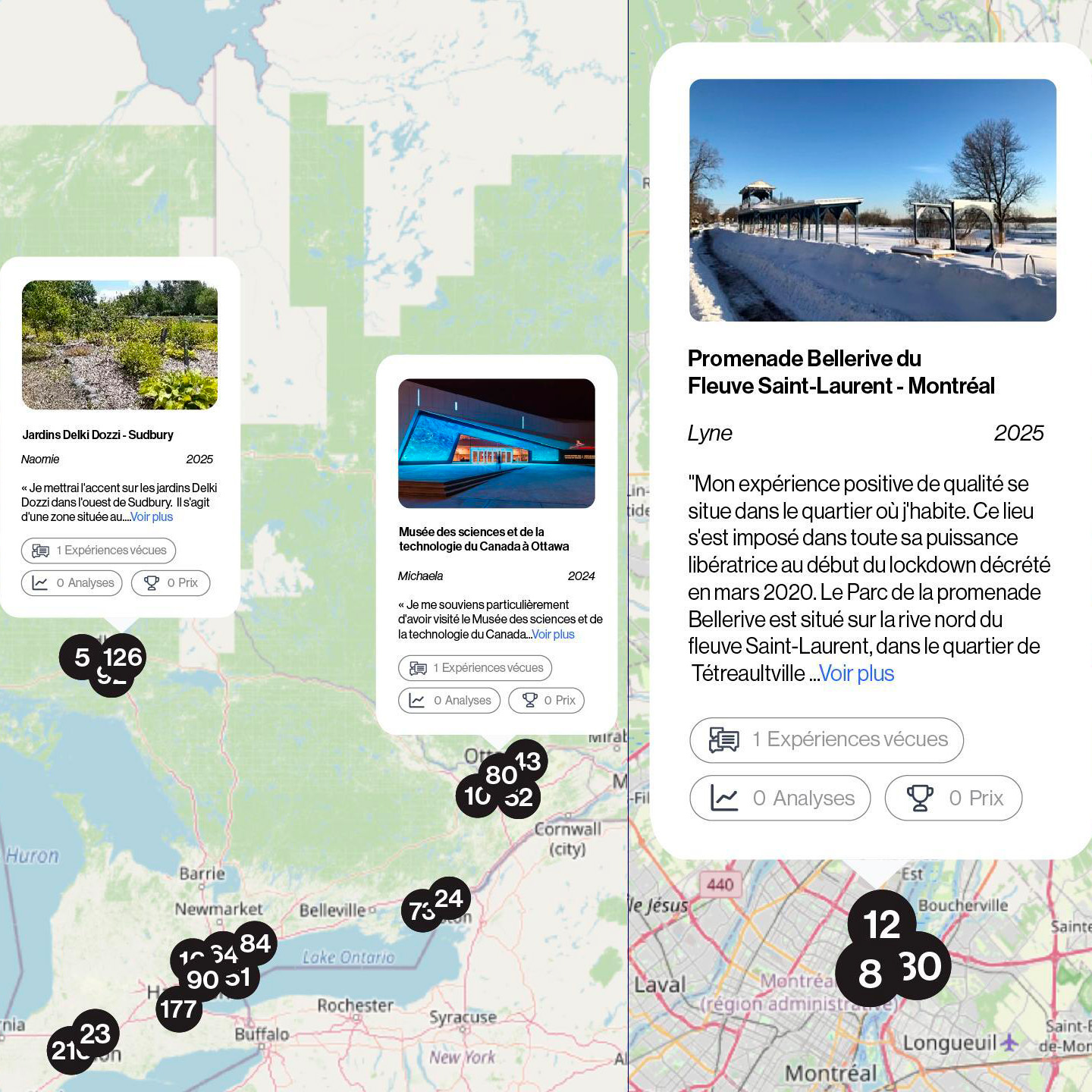
Discover ArchiQualiData! A new database bringing together lived experiences and case studies in Canada’s living environmentsJune 23, 2025
The ArchiQualiData database provides analyses and studies of exemplary and award-winning living environments, real-life experiences and case studies.
DISCOVER detailed studies conducted by researchers, providing unique insights into exceptional buildings and places.
ACCESS testimonials from people who have directly interacted with these entities, enriching understanding through authentic stories.
FIND precise information on each exemplary entity, thanks to a simple interface and advanced search system.
|

Final Program for the 2025 Toronto Convention Now Available!March 24, 2025
Toronto 2025 Convention Program : Toward a White Paper on Quality...DOWNLOAD THE PROGRAM IN PDF FORMAT The final program for the 2025 Annual Convention is now available. From April 30 to May 2 in Toronto, the event will bring together experts, researchers, and practitioners to advance a national strategy for quality in Canada’s built environment. We are happy to share with you this program and hope you are as excited as we are for those great speakers, roundtables discussions and site visits that will take place during the convention.
Jean-Pierre Chupin, PhD, Professor, Architect MOAQ, MIRAC. Holder of the Canada Research Chair in Architecture, Competitions and Mediations of Excellence at Université de Montréal and Principal Investigator of the SSHRC Research Partnership on Quality in Canada’s Built Environment. |
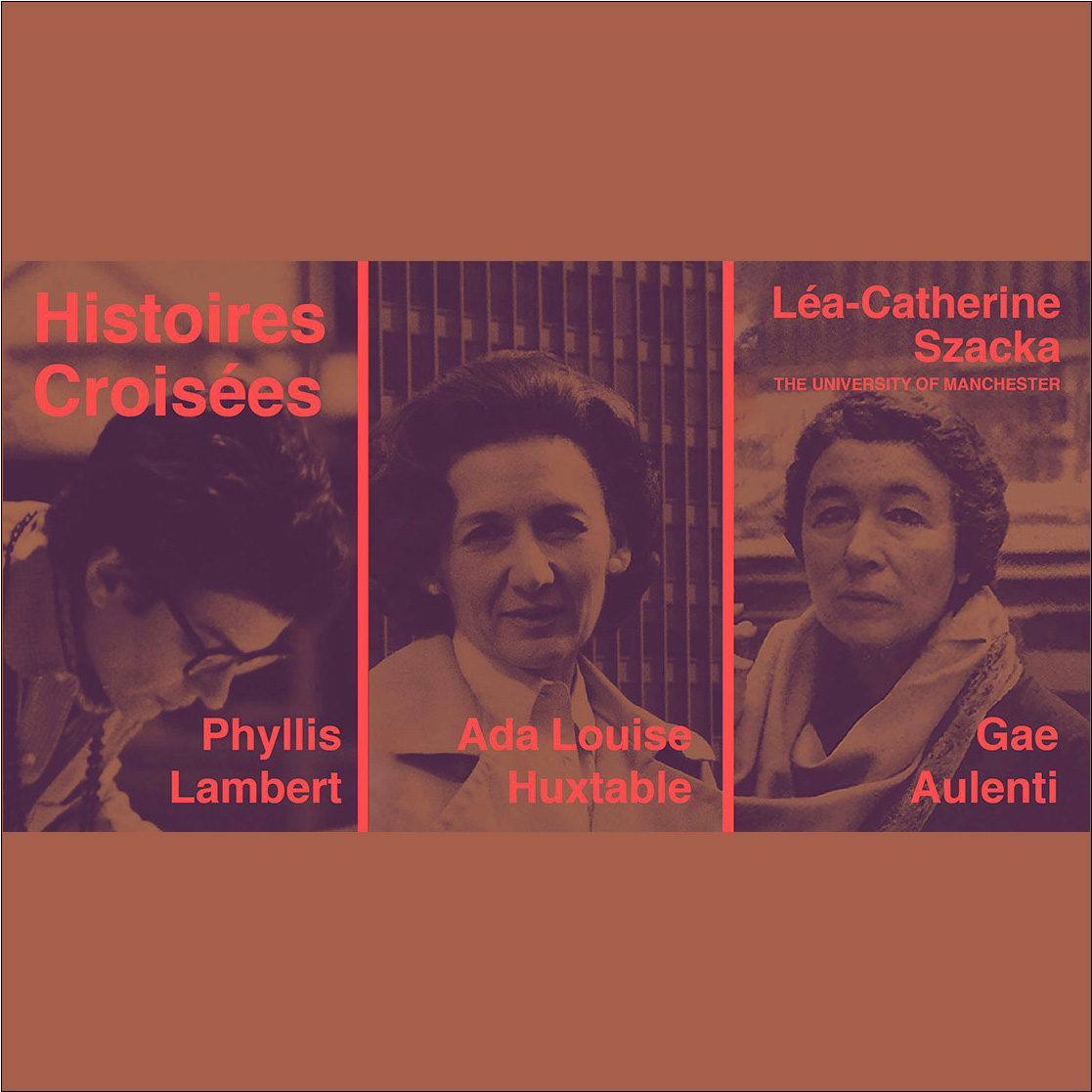
Public conference presented by Léa-Catherine Szacka: Crossed Histories, Phyllis Lambert, Ada Louise Huxtable and Gae Aulenti on architecture and the cityMarch 19, 2025
Conference by Léa-Catherine Szacka , University of Manchester
Date: Tuesday, April 1st at 5:30 pm.
Location: Amphitheatre 1120, Faculté de l’aménagement, Université de Montréal
Lecture series of the Laboratoire d’étude de l’architecture potentielle
Crossed HistoriesPhyllis Lambert, Ada Louise Huxtable and Gae Aulenti on architecture and the city Summary: Born in the 1920s, architects Gae Aulenti and Phyllis Lambert and critic Ada Louise Huxtable were among the most influential figures in post-war architecture and design. Pioneers in a largely male-dominated field at the time, and key players in the transition from modernism to postmodernism, they set out to conquer and shape public space. This talk retraces the history and careers of these three women, who are the focus of the exhibition Crossed Histories, presented until May 2025 at the Canadian Cultural Centre in Paris. Léa-Catherine Szacka: Senior Lecturer (Associate Professor) in Architectural Studies, University of Manchester Director of the Manchester Architecture Research Group (MARG) Vice-President, European Architectural History Network (EAHN) Co-Founder, PASZA - Platform for Architectural Research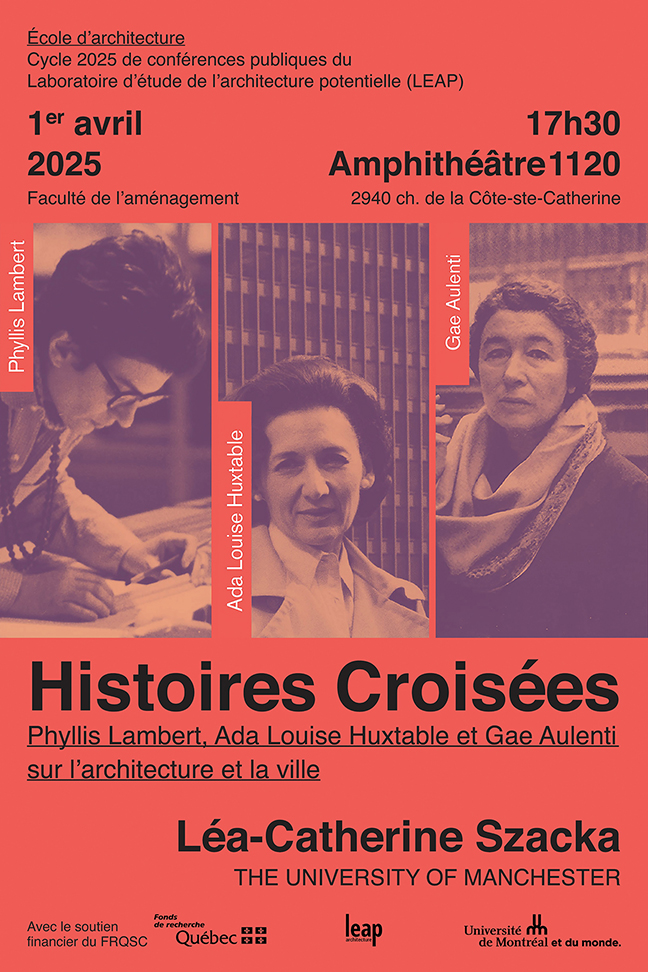 |
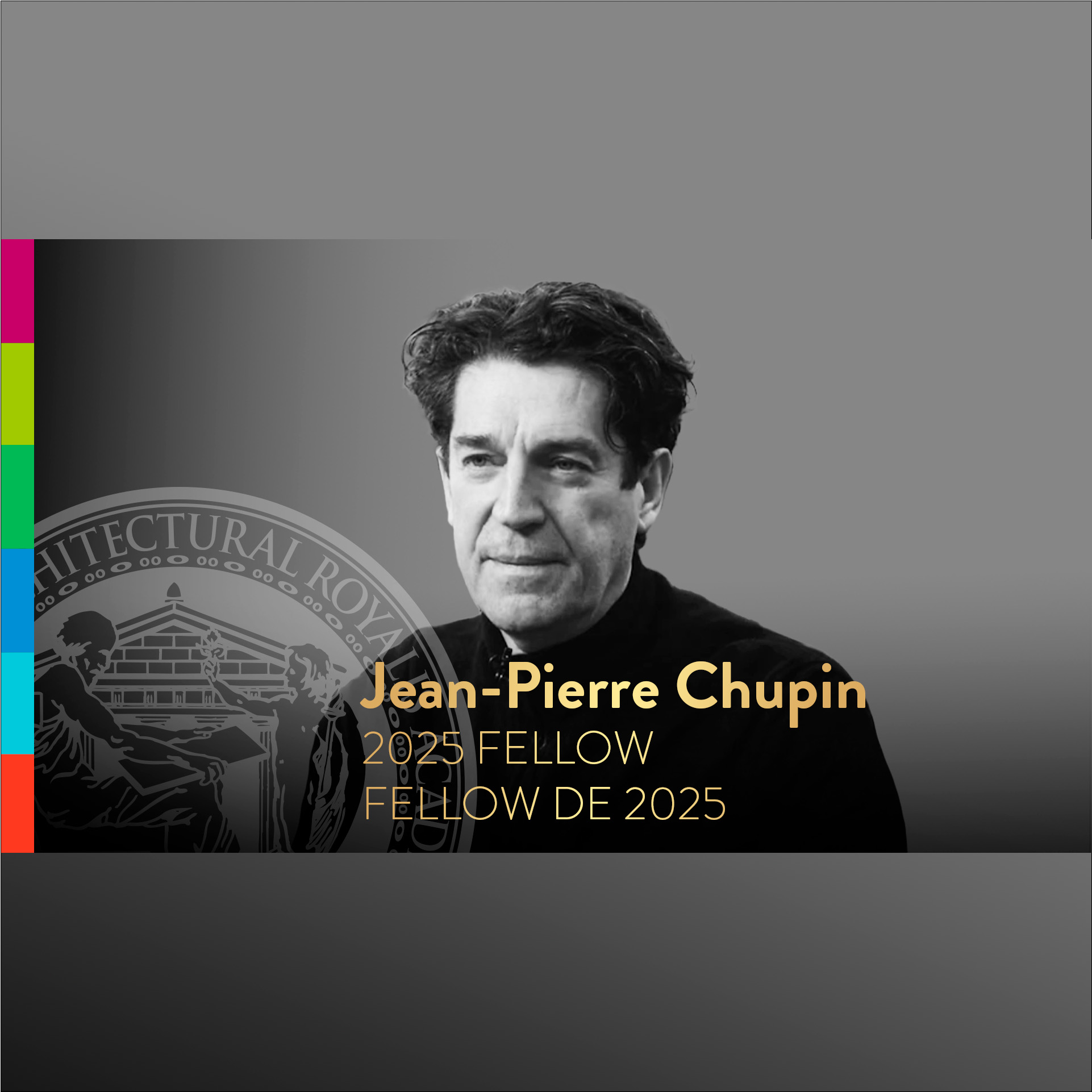
Jean-Pierre Chupin Named Fellow of the Royal Architectural Institute of Canada, Class of 2025March 10, 2025
Professor Chupin was nominated by Thierry Montpetit, FRAIC, and letters of support were submitted by five renowned Quebec architects: Anik Shooner, FIRAC, Nathalie Dion, FIRAC, Gilles Prud'homme, FIRAC, Maxime Frappier, FIRAC, and Renée Daoust, FIRAC, in the category of : Outstanding scholarly contributions supported by research, publications or teaching in the field of architecture, and, Outstanding contributions to the profession fostering excellence in architectural practice through leadership in public service or industry organizations.
Fellows will be formally inducted into the RAIC College on Tuesday, June 3, 2025 at an induction ceremony held in conjunction with the RAIC Conference on Architecture in Montreal, Quebec.
Visit the RAIC website to see the 43 new Fellows 2025.
|

Public conference presented by Jean-Louis Violeau: Architecture and its (Single) Users as Seen by Sociologist and Philosopher Jean BaudrillardMarch 7, 2025
Conference by Jean-Louis Violeau, École Nationale Supérieure d’Architecture de Nantes
Date: Tuesday, March 11th at 5:30 pm.
Location: Amphitheatre 1120, Faculté de l’aménagement, Université de Montréal
Lecture series of the Laboratoire d’étude de l’architecture potentielle
Architecture and its (Single) Users as Seen by Sociologist and Philosopher Jean BaudrillardSummary: How does one go about exploring Jean Baudrillard's intimate yet suspicious relationship with architecture? One begins, as one should, with Disney, moves on to the duck and the Venturis, stops at the figure of the (architectural) monster, moves on to Jean Nouvel and the ambiguities of transparency, and finally arrives at some contemporary projects, notably the highly condemned Europacity. Along the way, Baudrillard raises two questions: what has become of architectural postmodernism, and the persistence of the notion of the author in architecture. Baudrillard was more of an imaginary sociologist, intuitive and detached, an interpreter who amused himself by drawing the dotted lines of the present, overdoing it and regularly tending to paroxysms. Hence his interest in architectures that resist interpretation and seem to take on a life of their own, as if detached from their designers: the Twin Towers of the World Trade Center, the Biosphère II project, the Beaubourg, the Guggenheim Bilbao, and some of Jean Nouvel's architecture. Behind the scenes: obscure and ironic, every stage has its backstage, every scene is reversible, every project calls for its counter-project. The cursed part always bides its time. Culture for Beaubourg, globalization for the WTC, the planet for Biosphère II, the commodification of cities for the Guggenheim Bilbao... The ambivalence grows as these projects strive to saturate reality. What all these untamed concretions have in common, however, is that they seek first and foremost to bring the edge of difference to bear on generalized equivalence. In an age of no-fake and a shared quest for authenticity, this sociological perspective is meeting with renewed interest, particularly in the ambivalent choices and behaviors of digital children. The sociologist Jean-Louis Violeau is a professor at the Ecole Nationale Supérieure d'Architecture de Nantes and at the Urban School of Sciences Po Paris. He is a researcher at CRENAU (CNRS UMR AAU). He is a regular contributor to architectural magazines, in particular AMC-Le Moniteur architecture and L'Architecture d'aujourd'hui, as well as more general magazines such as Esprit, Place Publique Nantes-Saint-Nazaire and Urbanisme. He is also a member of the editorial board of the latter two magazines. His dissertation Les architectes et mai 68 was published in 2005 by Recherches, the distant heirs of the journal of the same name founded under the aegis of Félix Guattari and the CERFI. The sequel, his HDR (Habilitation à Diriger des Recherches) on Les architectes et mai 81, was published by Recherches in 2011.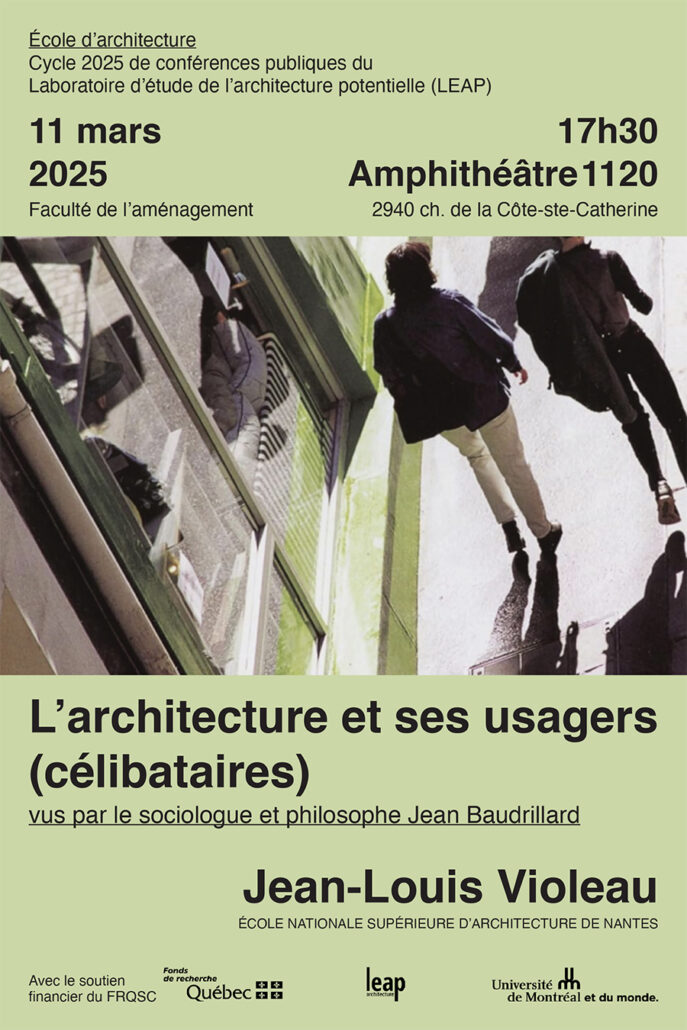 |
Video of the public debate on school architecture in the city center!January 18, 2025
“From business districts almost exclusively reserved for commercial and professional activities, Canadian downtowns are increasingly becoming living spaces. Yet there are few elementary schools, which are essential to inclusive urban development. And for good reason: the traditional model of the single-purpose, low-rise school building, with a large playground at ground level, is at odds with a high-density, high-value environment. The heart of metropolises attracts developers, all the more so as urban planning regulations allow them to erect high-rise buildings, a source of significant revenue. So what kind of school architecture can we imagine for our city centers? And what might it offer schoolchildren?” - A. Cormier, A. Paré and G. Adamczyk, En centre-ville : une architecture à hauteur d'enfant, Potential Architecture Books, Montreal, 2024
The Laboratoire d'étude de l'architecture potentielle (LEAP) recognizes the importance of the stakes involved in building schools downtown, and held a round table on this theme to mark the launch of the book En centre-ville : une architecture à hauteur d'enfant.
Moderator Jean-Pierre Chupin, Architect and Professor at the School of Architecture, Université de Montréal, Chair Holder of the Canada Research Chair in Architecture, Competitions and Mediations of Excellence and Director of the LEAP
Panelists
The round table is supported by the Social Sciences and Humanities Research Council of Canada (SSHRC), the Vice-rectorat à la recherche, à la découverte, à la création et à l'innovation de l'Université de Montréal (VRRCDI) and the Laboratoire d'étude de l'architecture potentielle (LEAP). |
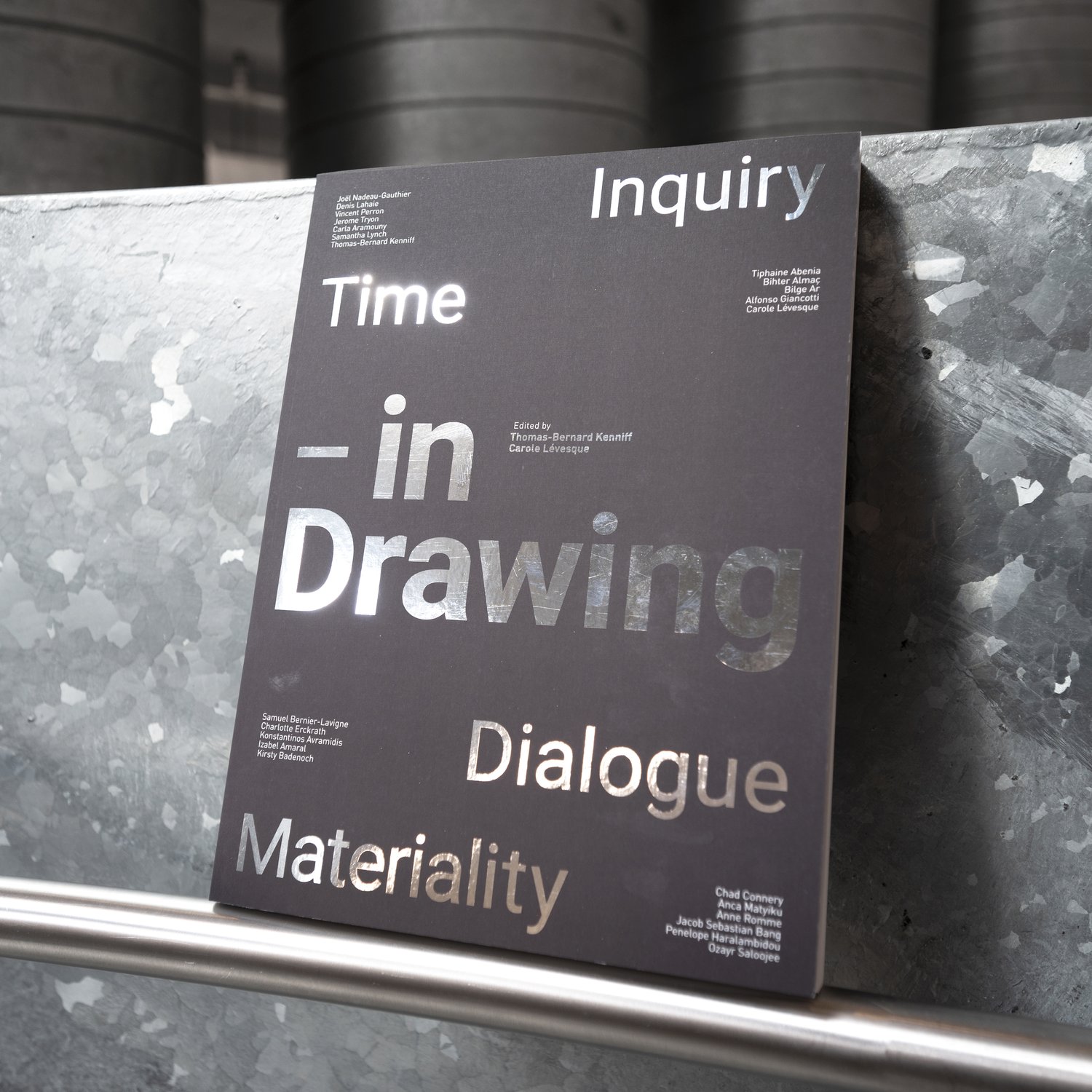
New book publication: —in Drawing. Inquiry, Time, Dialogue and MaterialityJanuary 17, 2025
—in Drawing. Inquiry, Time, Dialogue and Materiality
Edited by Thomas-Bernard Kenniff and Carole Lévesque
Montréal : Bureau d’étude de pratiques indisciplinées, 2024
Drawing is a form of research, a means to investigate, explore and gain a better understanding of an idea, a condition or a phenomenon. Drawing is a practice of representation, one that inquires, explores materiality, and establishes its own time and dialogue. This book brings together 23 authors who represent 18 critical and reflexive practices of drawing in design. The assembled texts engage drawing aesthetics (spatial, temporal, and material) and drawing ethics (investigating and making sense together) as well as four overarching themes: inquiry, time, dialogue and materiality —in drawing. Taken as a collective conversation on drawing practice, this book offers a shared reflection on the agency of drawing, on its potential to explore issues raised by our built and cultural environment, and on the ability of drawing to support and contribute to design research. It farmes drawing as a research practice, one that is both deeply rooted in its disciplinary context and openly challenging its limits and conventions. —in Drawing adds to a continuing conversation on design research methods and the ethics and aesthetics of representation. It seeks to further establish the significance of drawing as a legitimate mode of inquiry across design disciplines and beyond.
With contributions from:
|

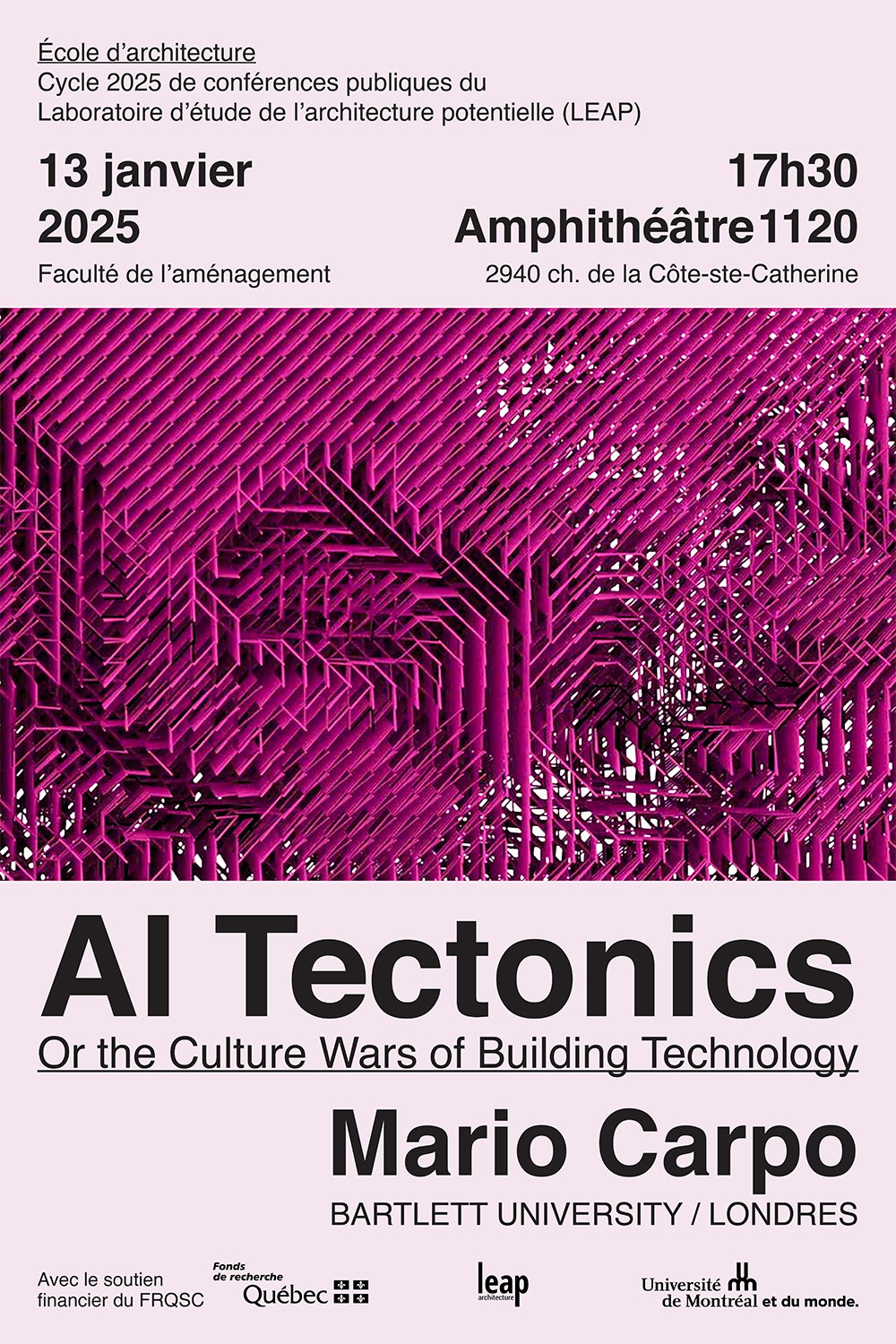
Public conference presented by Mario Carpo: AI Tectonics, or the Culture Wars of Building TechnologyDecember 17, 2024
Presented by Professor Mario Carpo, Bartlett University, London
Date: Monday, January 13th, 2025 at 5:30 p.m.
Location: Amphitheatre 1120, Faculté de l’aménagement, Université de Montréal
Public conference organised by the Laboratoire d’étude de l’architecture potentielle
 |
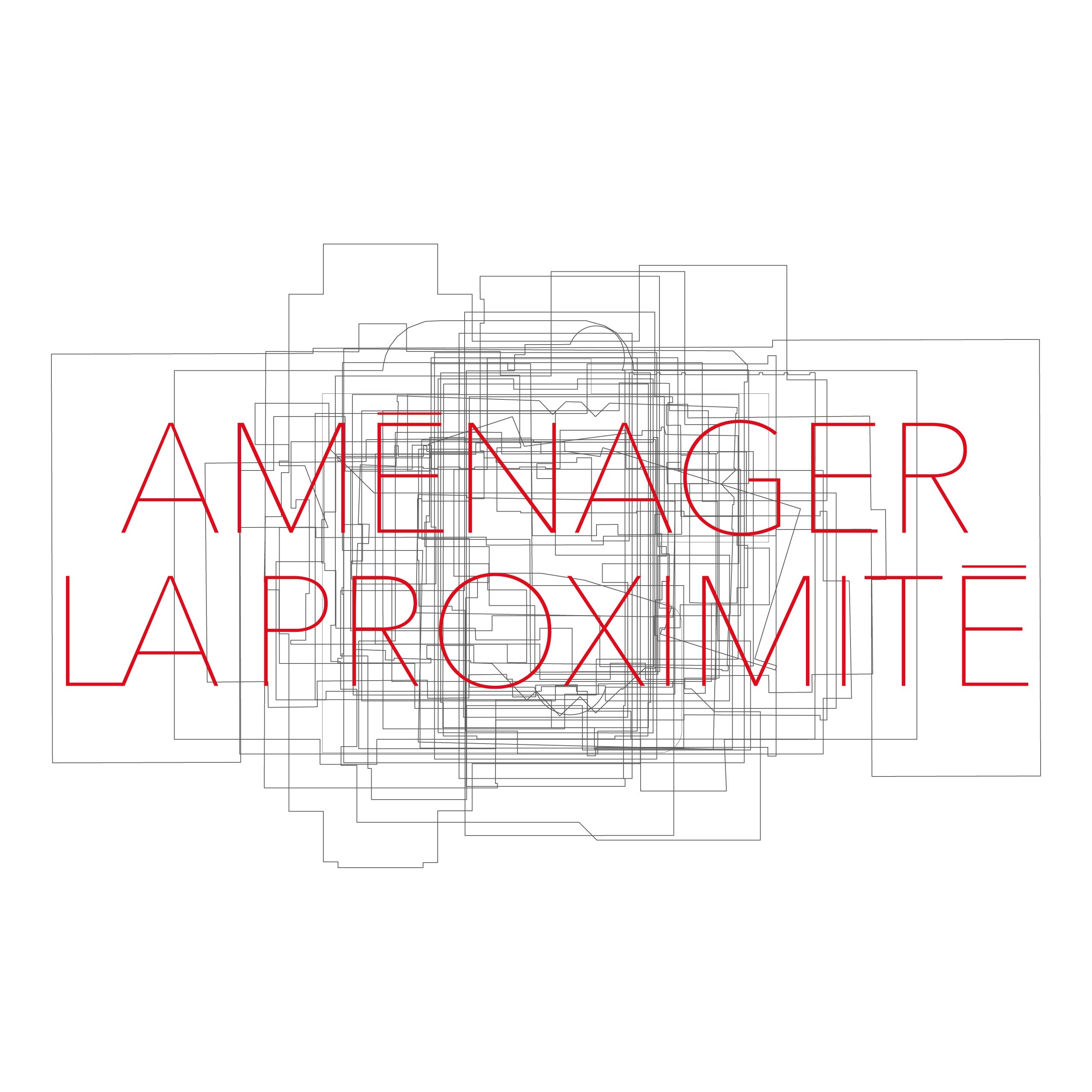
Journée d’étude : Aménager la proximité – enMay 24, 2024
Date : Le 21 mai 2024, 9h00 à 17h00
Lieu : École de design de l’UQAM, 1440, rue Sanguinet, Montréal
Aménager la proximité est une activité organisée dans le cadre du projet L’Architecture municipale comme interface citoyenne mené par le Bureau d’étude de pratiques indisciplinées (BēPI), à l’École de design de l’UQAM. Le projet est financé par le Conseil de recherches en sciences humaines du Canada (subvention Développement savoir) et soutenu par l’Union des municipalités du Québec. L’activité a également reçu l’appui du réseau Villes Régions Monde (VRM), du Laboratoire d’étude de l’architecture potentielle (LEAP) et de l’École de design de l’UQAM.
Description complète de la journée en PDF
Chercheur principal
|
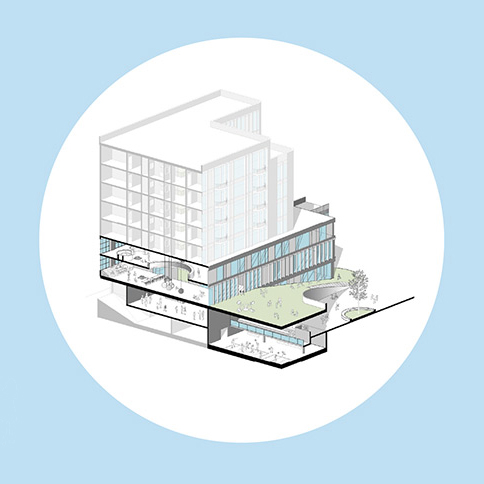
Table ronde tenue par le LEAP : Quelle architecture scolaire en centre-ville ? – enMay 24, 2024
Date : Mardi le 4 juin 2024, 18h00
Lieu : Salle 3110 de la Faculté de l’aménagement de l’Université de Montréal
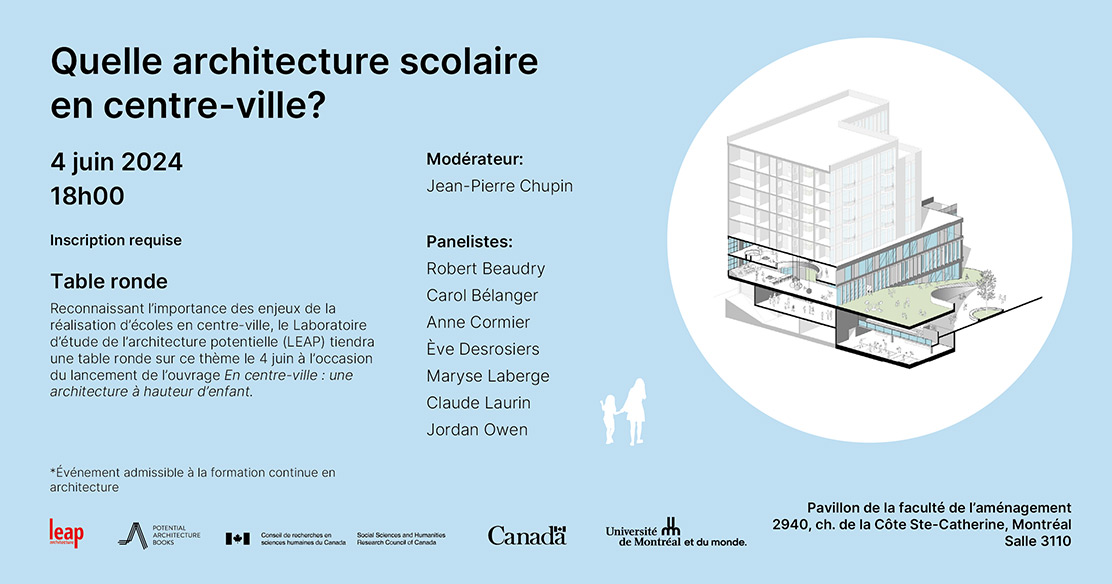
« De quartiers d’affaires presqu’exclusivement réservés aux activités commerciales et professionnelles, les centres-villes canadiens se transforment de plus en plus en lieux de vie. On y trouve cependant peu d’écoles primaires, pourtant essentielles à un développement urbain inclusif. Et pour cause : le modèle traditionnel de l’édifice scolaire à fonction unique, de faible hauteur et équipé d’une vaste cour de récréation au niveau du sol, s’inscrit en contradiction avec un environnement à forte densité et à valeur élevée. Le cœur des métropoles attire les promoteurs, d’autant plus que les règlements d’urbanisme leur permettent de réaliser des édifices de grande hauteur, source d’importants revenus. Dans ces conditions, quelle architecture scolaire pouvons-nous imaginer pour nos centres-villes ? Et que pourrait-elle offrir aux écoliers ? »
- A. Cormier, A. Paré et G. Adamczyk, En centre-ville : une architecture à hauteur d’enfant, Potential Architecture Books, Montréal, 2024
Reconnaissant l’importance des enjeux de la réalisation d’écoles en centre-ville, le Laboratoire d’étude de l’architecture potentielle (LEAP) tiendra une table ronde sur ce thème le 4 juin à l’occasion du lancement de l’ouvrage En centre-ville : une architecture à hauteur d’enfant.
Modérateur
 |
TERRAFIBRA ARCHITECTURESMay 20, 2024
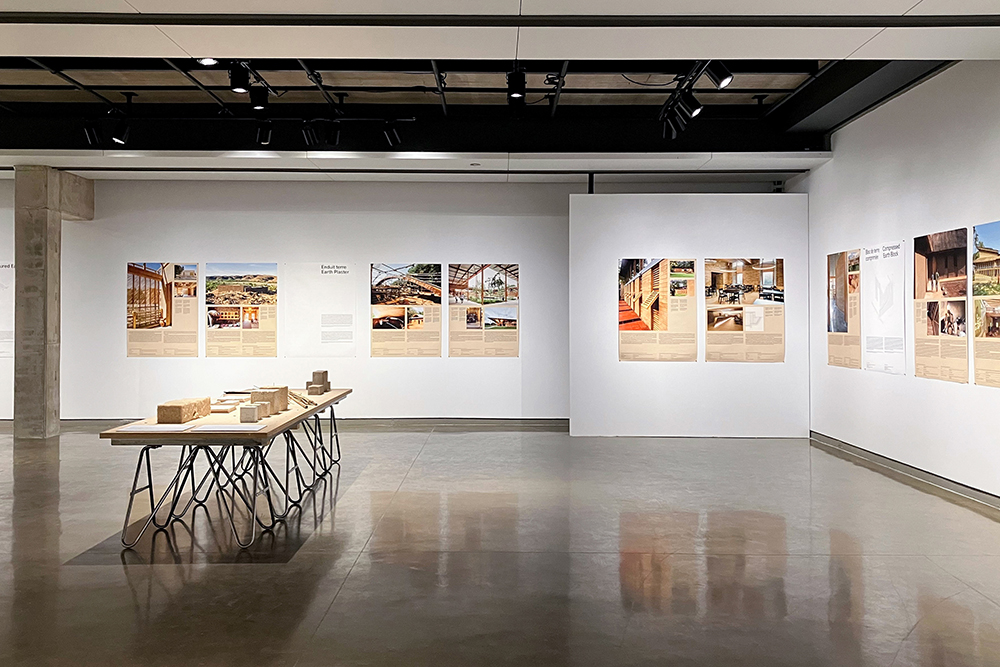
Conducted by the Pavillon de l'Arsenal, amàco and Les Grands Ateliers, the exhibition presents the 40 finalist buildings for the TERRAFIBRA Award, the world's first prize for contemporary architecture built with raw earth and plant fibers. In the face of climate change and the necessary adaptation of building systems, the use of biosourced and geosourced materials offers virtuous technical solutions. Combining earth and plant fibers emphasizes the mixed use of materials and reaffirms the importance of constructive intelligence, which aims to use the right quantity of the right material in the right place.
Curated by Dominique Gauzin-Müller, architect and researcher, and Anne Lambert, engineer and designer.
Exhibition presented by the Laboratoire d'étude de l'architecture potentielle and the École d'architecture de l'Université de Montréal.
Galerie de l’Université de Montréal
2940 Chemin de la Côte-Ste-Catherine
https://galerie.umontreal.ca/expositions-terrafibra-architectures.php
|
Jean-Pierre Chupin talks to Radio Canada about the Chandigarh principles and the derivatives of the Corbusé utopiaMarch 21, 2024
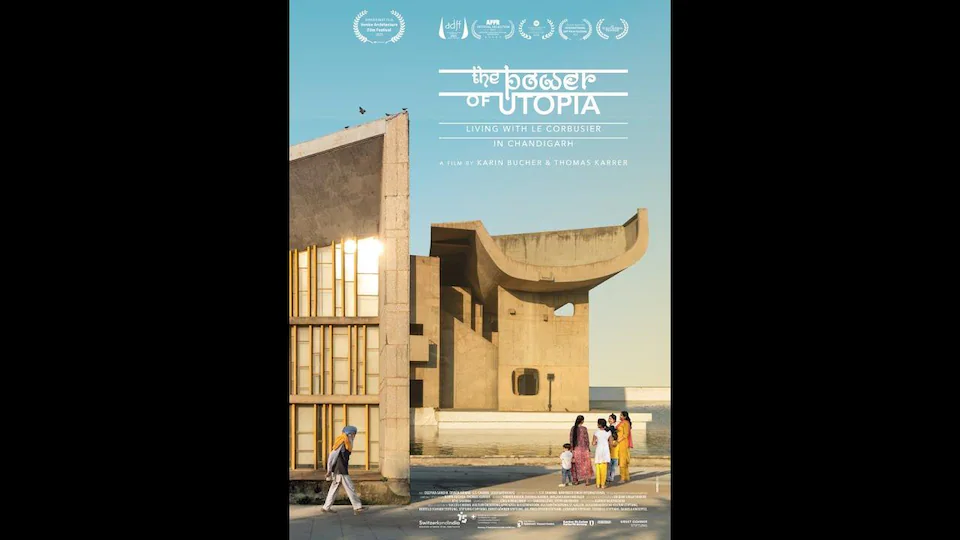
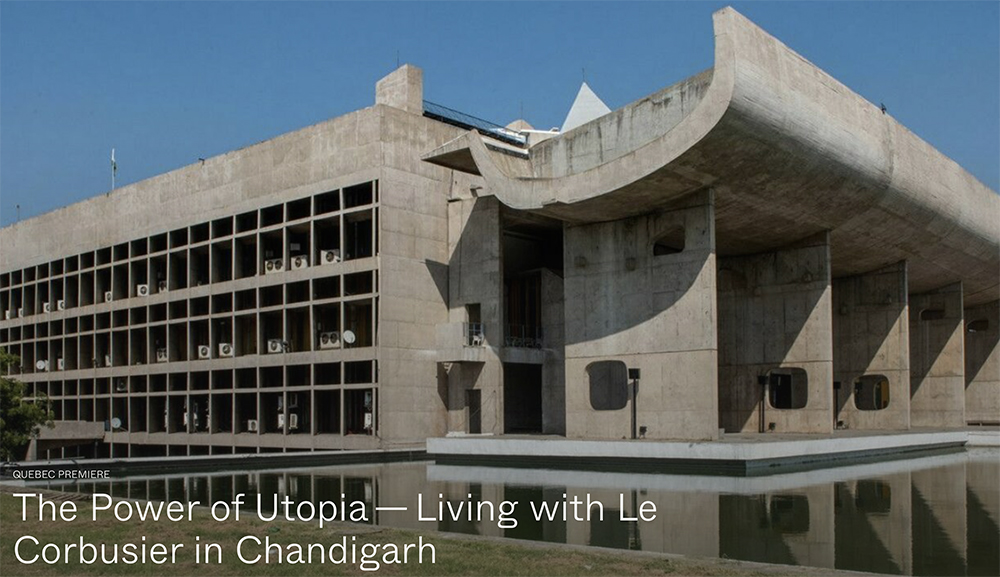
Jean-Pierre Chupin is invited to Radio Canada's Tout Terrain (Janic Tremblay) to reflect on the current state of affairs and the derivatives of Le Corbusier's concepts of architecture and the city in Chandigarh, India. On the occasion of the Festival international du film sur l'art (FIFA) in Montreal, the film The Power of Utopia - Living with Le Corbusier in Chandigarh will be shown. When architect Le Corbusier designed the city of Chandigarh, India, he imagined a city that would enable harmonious interaction between its inhabitants and the environment. For some, this represented progress and success, while for others it was a failure. Janic Tremblay discusses the case of Chandigarh and, more broadly, Le Corbusier's approach to architecture and urban planning with Jean-Pierre Chupin, Professor at the School of Architecture of the Université de Montréal and holder of the Canada Research Chair in Architecture, Competitions and the Mediations of Excellence. To listen to the episode on Sunday, March 10, 2024: |

How can we collect the diversity of lived experiences of quality?February 20, 2024
The City of Montreal has selected the Canada Research Chair in Architecture for research on the lived experience of quality by users of public buildings.
Jean-Pierre Chupin, Bechara Helal and Carmela Cucuzzella will develop a protocol for collecting lived experiences with doctoral students: Firdous Nizar, Paloma Castonguay-Rufino, Yolene Handabaka, Shantanu Biswas Linkon, Cyrille Tchango Ngamaleu of the Individualized PhD in Architecture program.
The proposal from the Canada Research Chair in Architecture, Competitions and Mediations of Excellence (CRC-ACME) team was selected in Stream 1 of the call “Developing a Stronger Design Culture, Together – 2nd Edition” (Call for Proposals 2023-2024).
Project: Protocol for investigating and qualitatively assessing the social value of public buildings through the collection of lived experiences by users
Description: Post-occupancy quality assessment protocol providing methods for collecting and analyzing testimonials about the experience of municipal sites and buildings, and creating a collection of stories and records of remarkable lived experiences. The aim is to gain a better understanding of the factors that influence the quality of the experience of municipal sites and buildings.
The project will enrich the strategies and actions for sustaining quality presented in the Quality Toolkit Design Montréal (section Quality Vision).
It will also contribute to achieving the results of the Montréal 2030 strategic plan, particularly with regard to the following priority:
Priority 19 – Provide all Montrealers with safe, quality living environments and a local response to their needs.
Learn more
Read more information on the program of Design Montréal
Consult the complete report
|

Deux doctorantes soutiennent leur thèse de doctorat individualisé en architecture (Mandana Bafghinia et Lucie Palombi) – enJanuary 25, 2024
Mandana Bafghinia, doctorante en cotutelle entre l’Université de Montréal et l’Université Lyon 2, sous la codirection de Jean-Pierre Chupin et de Manuel Appert a soutenu sa thèse :
The Skyscraper’s Summit, as a Beacon and a Viewing Platform: New York, Paris, Montreal, Shanghai
Le 14 décembre 2023
Directeurs de thèse :
Lucie Palombi, doctorante sous la direction de Jean-Pierre Chupin a soutenu sa thèse : De la textualité du projet professionnel en situation de concours en architecture: herméneutique et comparaison de textes liés à des projets lauréats de concours d’architecture au Québec entre 2010 et 2020 Le 15 janvier 2024 Directeur de thèse :
|
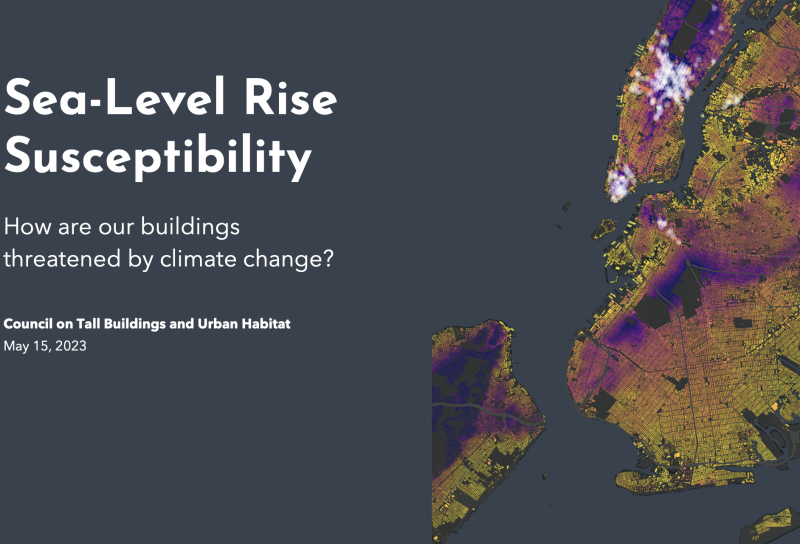
Cartographie de l’impact de la montée des océans sur les bâtiments de grande hauteur dans le monde – enJanuary 25, 2024
Mandana Bafghinia et Jean-Pierre Chupin assistés de l’étudiant à la maîtrise en urbanisme Conor DeSantis publient un rapport financé par le Council of Tall Buildings and Urban Habitats
Pour découvrir les cartographies :
https://storymaps.arcgis.com/stories/5dd6e81456e04204af90a3c209dfd76b
Pour consulter le rapport :
Bafghinia, M., Chupin, J.-P., Skyscrapers as a Complex Response to Rising Waters: Resilience and Adaptability. Report summarizing the result of the 2019 CTBUH Student Research Project published on the platform of the Council for Tall Buildings and Urban Habitat (2023) https://global.ctbuh.org/resources/papers/4600-Bafghinia_SkyscrapersAsAComplexResponse.pdf
|
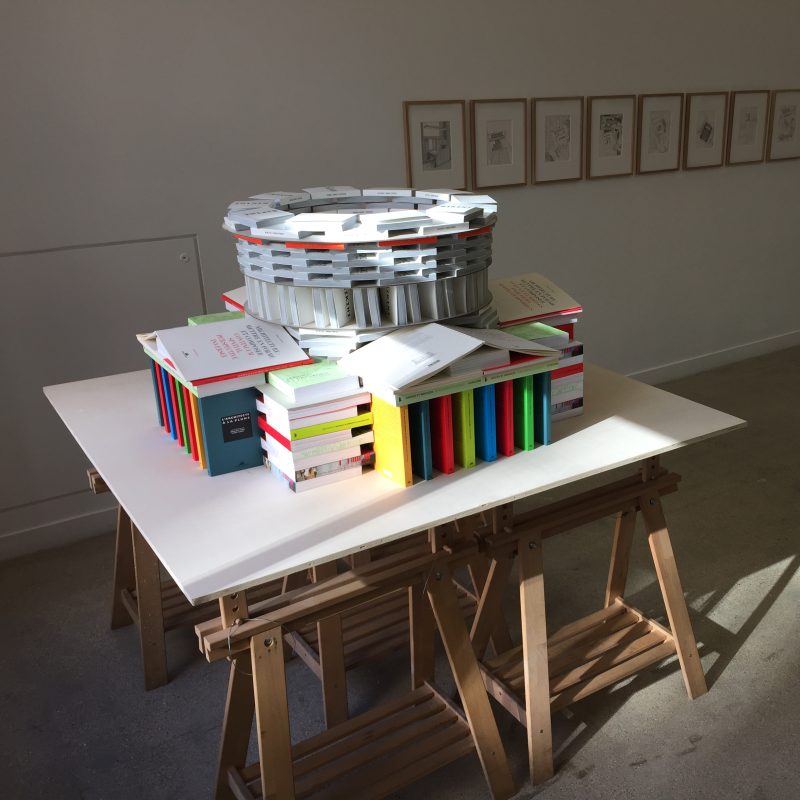
Conférence publique présentée par Pierre Chabard : Bâtir, éditer, penser. Sur la trajectoire de quelques architectes-éditeurs – enJanuary 17, 2024
Conférence de Pierre Chabard, Professeur et directeur des Éditions de la Villette.
Date : Mardi le 16 janvier 2024, 17h30
Lieu : Amphithéâtre 1120 de la Faculté de l’aménagement de l’Université de Montréal
Bâtir, éditer, penserSur la trajectoire de quelques architectes-éditeursRésumé: Si l’histoire de ceux qui écrivent les livres d’architecture est aujourd’hui bien documentée, elle tend souvent à occulter l’histoire de ceux qui les éditent. En enquêtant sur la trajectoire de quelques figures d’architectes et éditeurs francophones, Pierre Chabard examinera le rôle de cette pratique de l’édition dans la production de la culture architecturale et interrogera l’homologie entre l’acte d’éditer un livre et celui de concevoir un bâtiment. Pierre Chabard est architecte, historien et critique. Docteur en architecture, il est maître de conférences à l’Ensa Paris-la Villette. Contributeur de plusieurs revues d’art et d’architecture et auteur de plusieurs livres, il fut membre de la revue Le Visiteur (2001-2003), avant de cofonder Criticat (2007-2018). Depuis 2019, il dirige les Éditions de la Villette.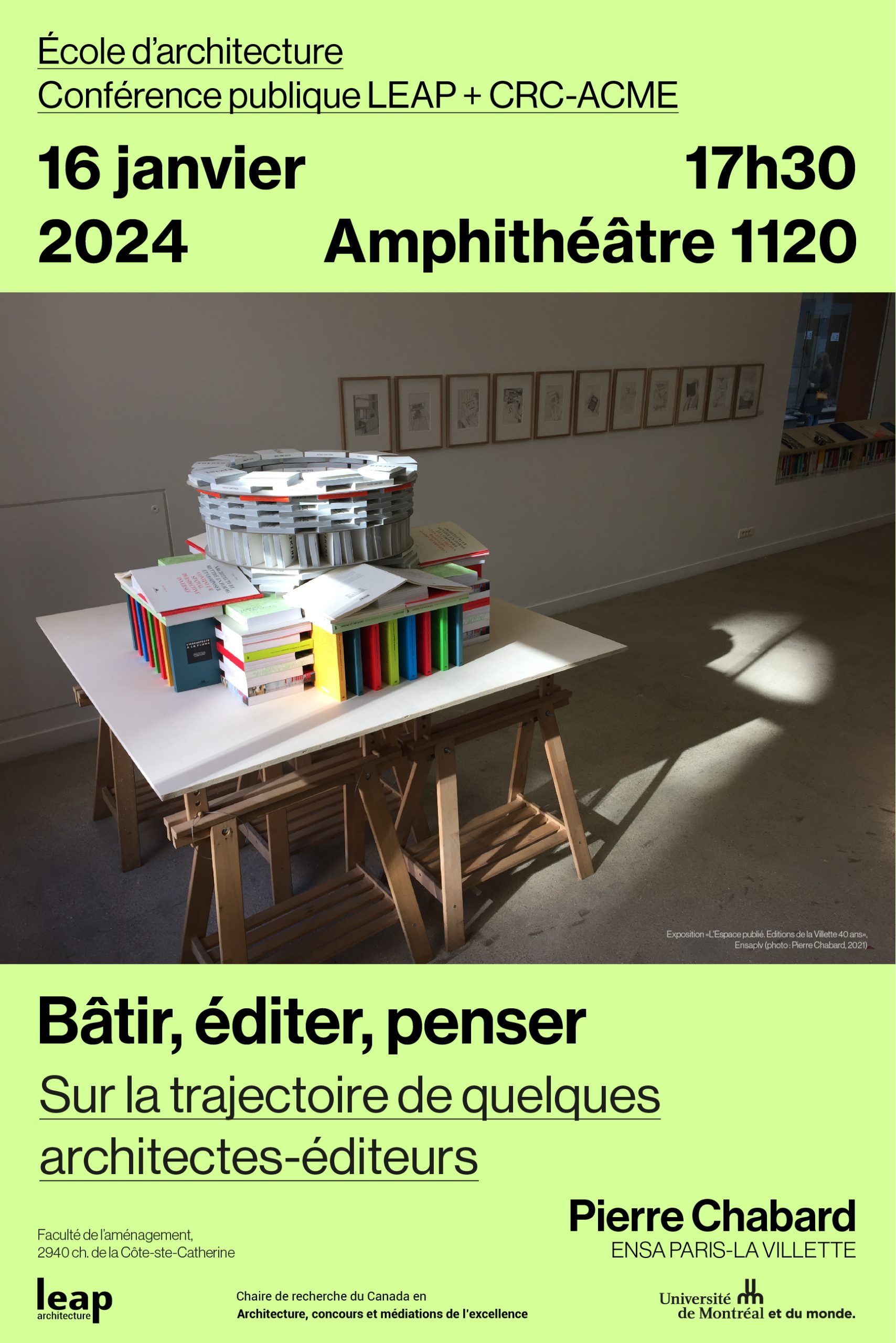 |
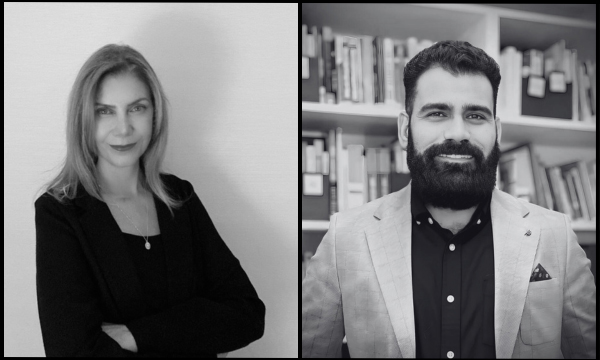
Deux chercheurs postdoctoraux intègrent l’équipe de coordination du partenariat sur la qualité – enDecember 5, 2023
Après consultation publique et affichage du poste, deux chercheurs postdoctoraux ont été recrutés pour assister l’équipe de coordination du partenariat CRSH sur la qualité dans l’environnement bâti (QEB).
Maria Patricia Farfan Sopo, nouvelle docteure de l’Université McGill est financée par le budget CRSH du partenariat, tandis que Morteza Hazbei, nouveau docteur de l’Université Concordia est financé par le budget complémentaire octroyé par l’Université de Montréal à la Chaire de recherche du Canada en architecture, concours et médiations de l’excellence.
Les résumés biographiques ci-dessous vous permettront d’apprécier leurs parcours personnels et universitaires remarquables. Bienvenu à Maria Patricia et Morteza!
Dr. Maria Patricia Farfan Sopo  Mon parcours personnel, académique et professionnel - ou comment j'en suis venu à voir et à aborder le domaine de l'environnement bâti - a commencé avec mes études de premier cycle dans ma Colombie natale, me rapprochant des questions de durabilité dans les régions d'Amérique latine, et l'expérience post-universitaire acquise au cours de mon Master (Minimum Cost Housing McGill University) - et de mon Doctorat en Histoire et Théorie (McGill University) achevé en février 2023.
Dans mon travail de doctorat, j'examine les transformations spatiales réalisées par les communautés autochtones de la région du Pacifique colombien qui créent un mouvement pacifiste par la reconnaissance de la culture au milieu de la violence, en mettant l'accent sur les femmes et la force politique qui ont créé l'environnement bâti éphémère en tant que territoire-grande maison. J'ai occupé un large éventail de postes administratifs et de direction dans le domaine universitaire, tout en travaillant avec diverses communautés et associations. Cela m'a donné une large perspective du monde universitaire et m'a préparée à collaborer efficacement avec des experts de différentes disciplines et cultures.
Mon parcours personnel, académique et professionnel - ou comment j'en suis venu à voir et à aborder le domaine de l'environnement bâti - a commencé avec mes études de premier cycle dans ma Colombie natale, me rapprochant des questions de durabilité dans les régions d'Amérique latine, et l'expérience post-universitaire acquise au cours de mon Master (Minimum Cost Housing McGill University) - et de mon Doctorat en Histoire et Théorie (McGill University) achevé en février 2023.
Dans mon travail de doctorat, j'examine les transformations spatiales réalisées par les communautés autochtones de la région du Pacifique colombien qui créent un mouvement pacifiste par la reconnaissance de la culture au milieu de la violence, en mettant l'accent sur les femmes et la force politique qui ont créé l'environnement bâti éphémère en tant que territoire-grande maison. J'ai occupé un large éventail de postes administratifs et de direction dans le domaine universitaire, tout en travaillant avec diverses communautés et associations. Cela m'a donné une large perspective du monde universitaire et m'a préparée à collaborer efficacement avec des experts de différentes disciplines et cultures.
Dr. Morteza Hazbei  J'ai obtenu mon doctorat à l'Université Concordia en septembre 2023, en me concentrant sur l'amélioration de la durabilité de notre environnement bâti par l'intégration de l'habitabilité, de l'efficacité énergétique et de la conception contextuelle. Cette exploration interdisciplinaire m'a permis d'étudier les facteurs qui contribuent à la qualité de notre environnement bâti du point de vue de l'architecture et de l'ingénierie.
Parallèlement, j'ai agi à titre de chercheur étudiant principal dans le cadre du projet de partenariat du CRSH à Concordia. J'ai étudié l'interconnexion de l'habitabilité, de la décarbonisation et de la biodiversité afin de favoriser un environnement bâti inclusif et équitable, en particulier pour les groupes démographiques marginalisés comme les personnes âgées. De plus, mon rôle de vice-président au sein du comité des étudiants diplômés du partenariat du CRSH m'a donné l'occasion de collaborer avec des étudiants de diverses disciplines, ce qui m'a permis de mieux comprendre les multiples facettes de la qualité de l'environnement bâti, ce qui correspond parfaitement à mon domaine de recherche.
Source : https://livingatlasofquality.ca/fr/home
J'ai obtenu mon doctorat à l'Université Concordia en septembre 2023, en me concentrant sur l'amélioration de la durabilité de notre environnement bâti par l'intégration de l'habitabilité, de l'efficacité énergétique et de la conception contextuelle. Cette exploration interdisciplinaire m'a permis d'étudier les facteurs qui contribuent à la qualité de notre environnement bâti du point de vue de l'architecture et de l'ingénierie.
Parallèlement, j'ai agi à titre de chercheur étudiant principal dans le cadre du projet de partenariat du CRSH à Concordia. J'ai étudié l'interconnexion de l'habitabilité, de la décarbonisation et de la biodiversité afin de favoriser un environnement bâti inclusif et équitable, en particulier pour les groupes démographiques marginalisés comme les personnes âgées. De plus, mon rôle de vice-président au sein du comité des étudiants diplômés du partenariat du CRSH m'a donné l'occasion de collaborer avec des étudiants de diverses disciplines, ce qui m'a permis de mieux comprendre les multiples facettes de la qualité de l'environnement bâti, ce qui correspond parfaitement à mon domaine de recherche.
Source : https://livingatlasofquality.ca/fr/home |
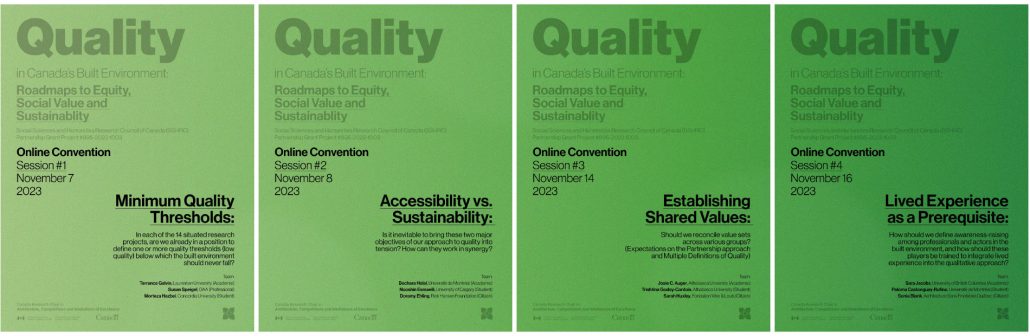
Les 4 vidéos de la 2e convention en ligne du partenariat CRSH sur la qualité sont en libre accès – enNovember 17, 2023
Les enregistrements des 4 sessions de la deuxième convention en ligne du partenariat CRSH sur la qualité sont désormais en libre accès.
Rappelons que la recherche partenariale s’intitule Qualité dans l’environnement bâti au Canada : Feuilles de route vers l’équité, la valeur sociale et la durabilité et que ce projet rassemble 14 universités, 70 chercheurs et près de 70 institutions, villes et groupes citoyens jusqu’en 2027.
Cette deuxième rencontre s’est déroulée en ligne et en 4 temps correspondant à 4 thématiques pour des discussions ouvertes, libres, créatives et critiques :
 |
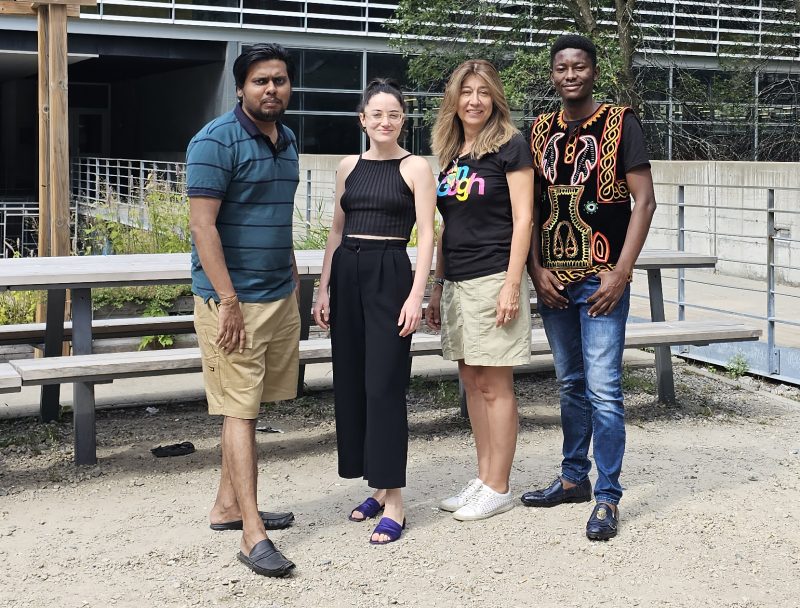
4 doctorants reçoivent une bourse de la Chaire de recherche du Canada en architecture (CRC-ACME) – enNovember 9, 2023
Les quatre doctorants en architecture suivants reçoivent chacun une bourse de 12 000$ pour 2023-2024 de la Chaire de recherche du Canada en architecture, concours et médiations de l’excellence dont Jean-Pierre Chupin est titulaire.
|
Séminaire présenté par Claire Petetin : SocialMachine, les outils conviviaux d’aides à la conception participative – enNovember 1, 2023
Date : Le 6 novembre 2023, de 16h30 à 18h00
Lieu : Salle 2064, Faculté de l'aménagement, Université de Montréal
Séminaire présenté par Claire Petetin, professeure à l'ENSA Versailles
SocialMachine, les outils conviviaux d’aides à la conception participative
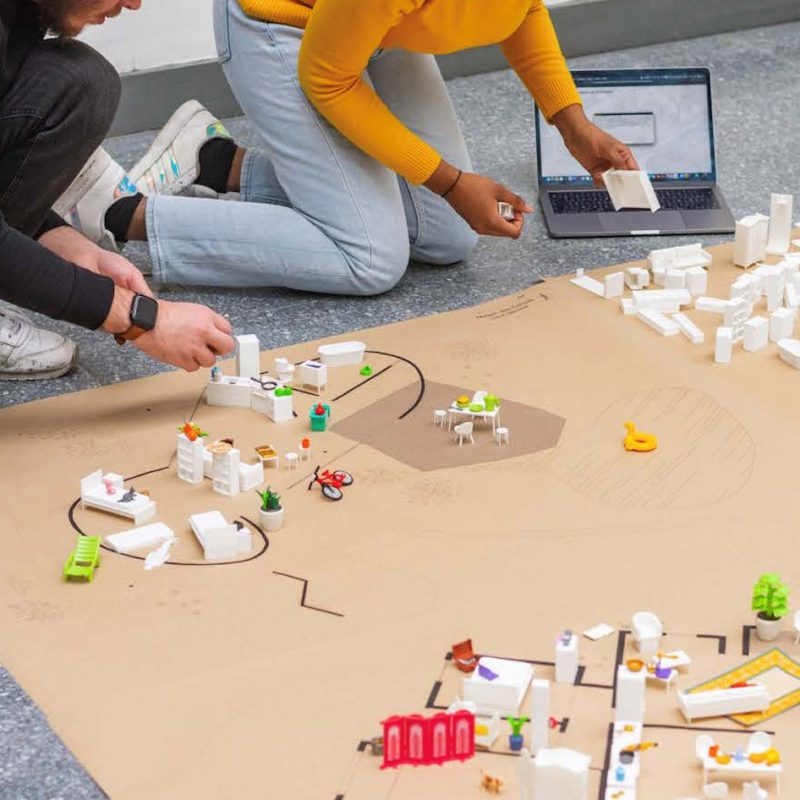
Social Machine est un projet d’enseignement et de recherche expérimental, interdisciplinaire et multiscalaire, motivé par la vocation de former des architectes et des designers à la pédagogie du projet d’architecture à destination de la société civile. Cet enseignement s’inscrit dans les enjeux de la démocratisation de la culture architecturale. Il interroge le savoir-faire de l’architecte dans une société marquée par les crises systémiques, qui met l’architecte à l’épreuve de la décroissance et de l’engagement pour un monde supportable. Ces questionnements ouvrent de nouvelles perspectives pour faire projet autrement en lui donnant un nouveau sens social et collaboratif par l’expérimentation créative de la culture pédagogique architecturale.
Nous proposons à nos étudiants de concevoir des protocoles de conception collaborative qui s'apparentent à des représentations malléables et perméables à l'expression des imaginaires de l'ensemble des parties prenantes ou des outils d'aide à la conception jouables qui s'appuient sur les formats et les règles de l'interactivité ludique, pour inventer de nouvelles dynamiques de co-idéation et de socialisation entre les différentes parties prenantes. Les protocoles de conception potentiels laissent la place à l'intuition, à l'aléatoire, à l'erreur, au dysfonctionnement, à la rétroaction et à l'itération. Ils prennent des formes variées, à mi-chemin entre des dessins collaboratifs et spéculatifs agrémentés de maquettes ou de figurines à la manière de jeux de table tangibles, des logiciels computationnels d'auto-conception à destination des non-sachants, des jeux vidéo générateurs de dessins d'architecture en plan ou axonométrie.
Social Machine se déploie maintenant dans la recherche, au sein du Léav (Laboratoire de recherche de l’école nationale supérieure d’architecture de Versailles) avec la vocation d’associer, à côté des sciences de l’architecture, celles de l’éducation. Dans le cadre d’un partenariat avec la Petite école d’architecture de Versailles (fondée par l’ensav en 2021), la Maréchalerie Centre d’Art Contemporain, et le Ministère de la Culture, les prototypes d’outils ludiques d’aides à la conception participative sont testés dans différents lieux accueillant du public, et dans des établissements scolaires.
Cette pratique de l’expérimentation in situ apporte des matériaux théoriques considérables pour comprendre le processus relationnel des parties prenantes qui intègrent le processus de projet, et le rôle de l’architecte, en capacité de créer de l'empathie et du dialogue, à construire une culture commune et à faire émerger la créativité et la confrontation des idées entre de différents acteurs.
|
Lucie Palombi est lauréate d’une bourse doctorale de la Fondation de Bibliothèque et Archives nationales du Québec (BAnQ) d’une valeur de 12 500 $ – enOctober 19, 2023
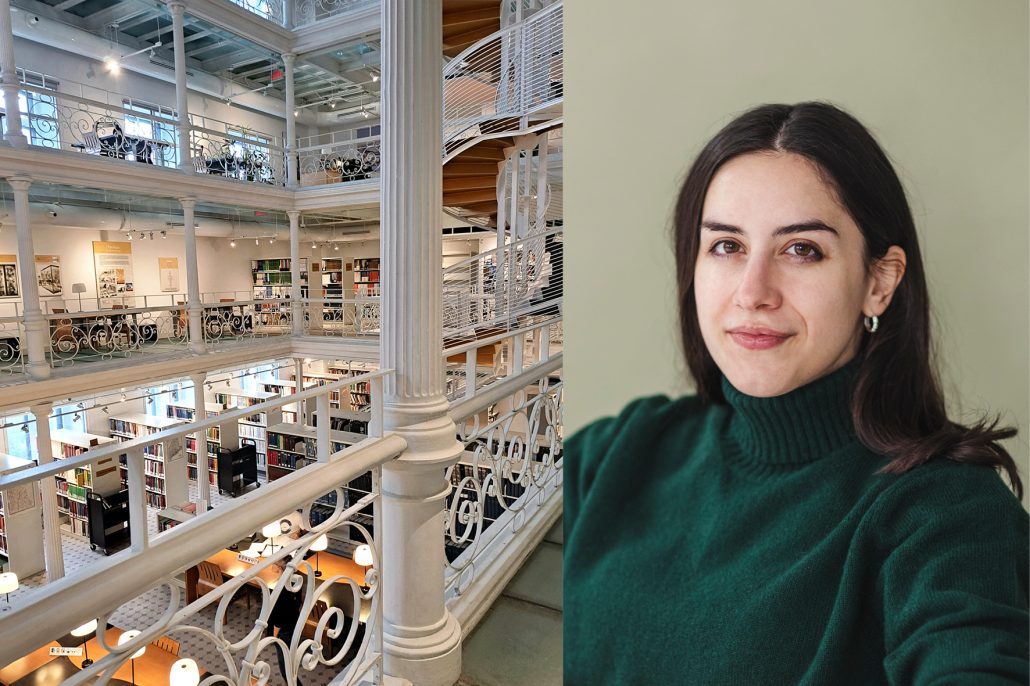 Le jury chargé d’évaluer les candidatures de doctorat soumises dans le cadre du concours de bourses 2023-2024, formé de professeurs d’universités québécoises et de spécialistes de BAnQ, a attribué à Lucie Palombi une bourse doctorale de 12 500 $ pour son projet intitulé « Textualité et projet en architecture – Approche interprétative et comparative d'écrits rédigés par des architectes québécois ». Lucie effectue sa thèse dans le programme de doctorat individualisé en architecture sous la direction de Jean-Pierre Chupin.
La candidature de Lucie Palombi à l’occasion de ce concours a reçu une recommandation de Mme Phyllis Lambert, fondatrice du Centre Canadien d’Architecture. À BAnQ Vieux-Montréal, Lucie étudie le fonds de l’architecte et écrivain québécois Jacques Folch-Ribas, lauréat de nombreux prix littéraires. Elle analyse notamment ses correspondances avec de grands noms du monde de la littérature et de l’édition (Marguerite Yourcenar, Hervé Bazin, Jean Cayrol, Michèle Lalonde ou encore Robert Laffont) et questionne les critères qui font basculer un architecte du statut d’« écrivant » à celui d’écrivain. Le jury chargé d’évaluer les candidatures de doctorat soumises dans le cadre du concours de bourses 2023-2024, formé de professeurs d’universités québécoises et de spécialistes de BAnQ, a attribué à Lucie Palombi une bourse doctorale de 12 500 $ pour son projet intitulé « Textualité et projet en architecture – Approche interprétative et comparative d'écrits rédigés par des architectes québécois ». Lucie effectue sa thèse dans le programme de doctorat individualisé en architecture sous la direction de Jean-Pierre Chupin.
La candidature de Lucie Palombi à l’occasion de ce concours a reçu une recommandation de Mme Phyllis Lambert, fondatrice du Centre Canadien d’Architecture. À BAnQ Vieux-Montréal, Lucie étudie le fonds de l’architecte et écrivain québécois Jacques Folch-Ribas, lauréat de nombreux prix littéraires. Elle analyse notamment ses correspondances avec de grands noms du monde de la littérature et de l’édition (Marguerite Yourcenar, Hervé Bazin, Jean Cayrol, Michèle Lalonde ou encore Robert Laffont) et questionne les critères qui font basculer un architecte du statut d’« écrivant » à celui d’écrivain. |
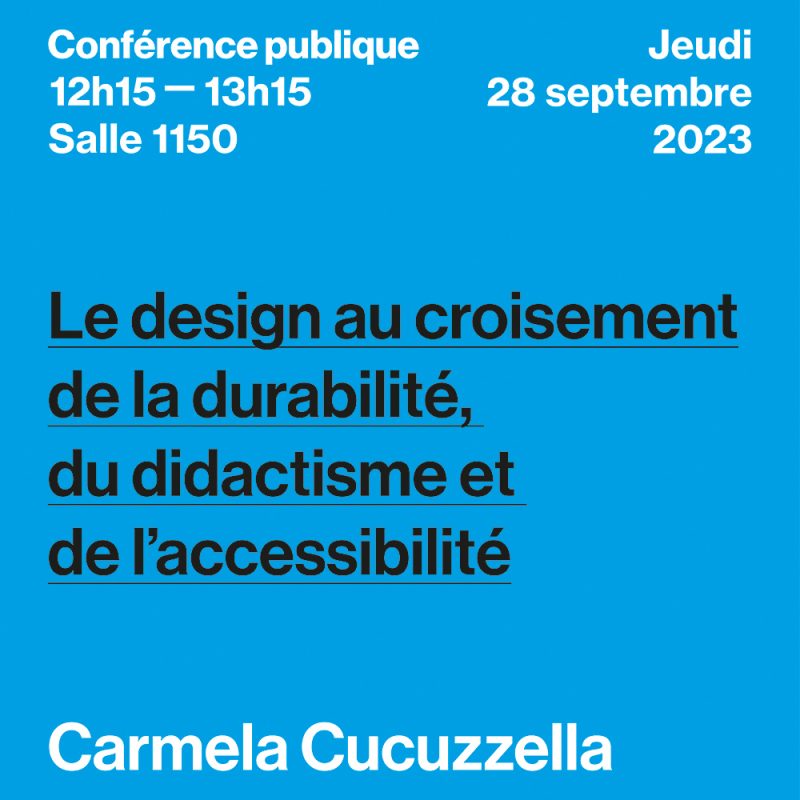
Conférence de Carmela Cucuzzella : Le design au croisement de la durabilité, du didactisme et de l’accessibilité – enSeptember 25, 2023
Date : Le jeudi 28 septembre, 2023 à 12h15-13h15 Lieu : Salle 1150, Faculté de l’aménagement de l’Université de Montréal |
Jean-Pierre Chupin dénonce la confusion entre sondage en ligne et concours de projets dans une lettre ouverte relayée par La Presse, TVA et Kollectif – enSeptember 20, 2023
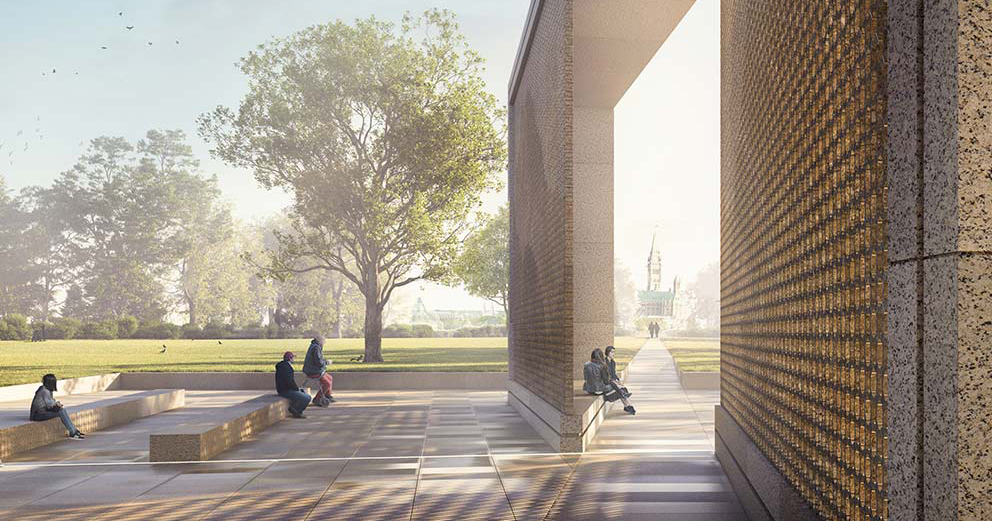 « Sondage versus concours : simulacre et démocratie » – Lettre ouverte co-signée par Jean-Pierre Chupin et Jacques White à propos de l’annulation du concours du Monument commémoratif national de la mission du Canada en Afghanistan.
Quand il s’agit de juger des projets d’art ou d’architecture, un sondage en ligne est un « simulacre de démocratie » qui ne peut remplacer ni un concours de design ni un vrai jury! Condamnant vigoureusement des élections organisées par la Russie dans les territoires occupés de l’Ukraine, le Premier ministre Justin Trudeau a récemment déclaré haut et fort que ces procédures constituaient un « simulacre d’élections ». En annulant un résultat de concours pour un monument aux vétérans, et en le remplaçant par un sondage en ligne, son gouvernement s’est quant à lui dangereusement égaré dans un simulacre de démocratie sur lequel il faut aujourd’hui réfléchir pour mieux réagir et surtout éviter qu’il ne se reproduise.
Rappelons tout d’abord que les milieux de l’art, de l’architecture et du design ne décolèrent pas depuis l’annonce, le 19 juin dernier, de l’annulation du résultat du concours pour le monument commémoratif de la mission du Canada en Afghanistan. Cette frustration apparaît d’autant plus légitime que le renversement du choix du jury s’est fait sur la seule base d’un sondage en ligne propice aux confusions de toutes sortes. Affirmant vouloir donner la parole aux vétérans, chose honorable s’il en est, le gouvernement fédéral a décrédibilisé la décision du jury d’un concours de design, sacrifiant au passage un principe fondamental de notre démocratie : le respect d’un jugement collectif qualitatif porté par un jury représentatif, impartial et informé…
Lire la suite sur le site de Kollectif
Dans la presse :
Voir l’article sur TVA nouvelles, d’Anne-Caroline Desplanques
Voir l’article sur Radio Canada, d’Erik Chouinard
Voir l’article dans La Presse « Sondage versus concours : simulacre et démocratie » – Lettre ouverte co-signée par Jean-Pierre Chupin et Jacques White à propos de l’annulation du concours du Monument commémoratif national de la mission du Canada en Afghanistan.
Quand il s’agit de juger des projets d’art ou d’architecture, un sondage en ligne est un « simulacre de démocratie » qui ne peut remplacer ni un concours de design ni un vrai jury! Condamnant vigoureusement des élections organisées par la Russie dans les territoires occupés de l’Ukraine, le Premier ministre Justin Trudeau a récemment déclaré haut et fort que ces procédures constituaient un « simulacre d’élections ». En annulant un résultat de concours pour un monument aux vétérans, et en le remplaçant par un sondage en ligne, son gouvernement s’est quant à lui dangereusement égaré dans un simulacre de démocratie sur lequel il faut aujourd’hui réfléchir pour mieux réagir et surtout éviter qu’il ne se reproduise.
Rappelons tout d’abord que les milieux de l’art, de l’architecture et du design ne décolèrent pas depuis l’annonce, le 19 juin dernier, de l’annulation du résultat du concours pour le monument commémoratif de la mission du Canada en Afghanistan. Cette frustration apparaît d’autant plus légitime que le renversement du choix du jury s’est fait sur la seule base d’un sondage en ligne propice aux confusions de toutes sortes. Affirmant vouloir donner la parole aux vétérans, chose honorable s’il en est, le gouvernement fédéral a décrédibilisé la décision du jury d’un concours de design, sacrifiant au passage un principe fondamental de notre démocratie : le respect d’un jugement collectif qualitatif porté par un jury représentatif, impartial et informé…
Lire la suite sur le site de Kollectif
Dans la presse :
Voir l’article sur TVA nouvelles, d’Anne-Caroline Desplanques
Voir l’article sur Radio Canada, d’Erik Chouinard
Voir l’article dans La Presse |
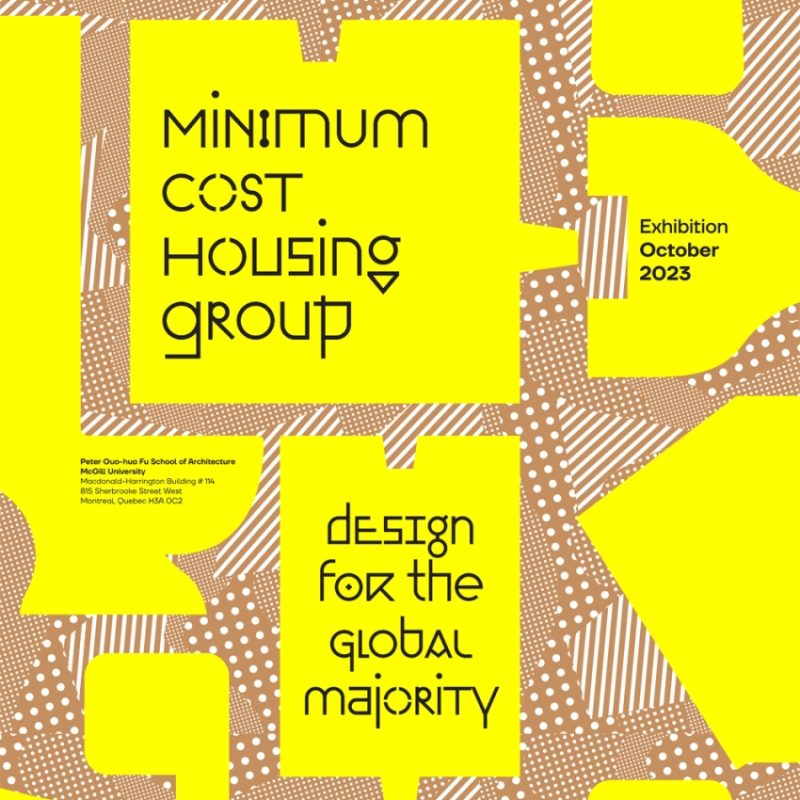
Exposition et symposium : Conception pour la majorité mondiale – enSeptember 11, 2023
Événement 1
Titre : « Mille millions de clients » Discours par Vikram Bhatt (McGill) en conversation avec Ipek Türeli (McGill) et Carmela Cucuzzella (UdeM)
Date : Jeudi 19 octobre, 2023
Heure : Vernissage à 17h00 (salle 114) suivi de la conférence à 18h00 (salle G-10)
Lieu : École Peter Guo-hua Fu École d’architecture Peter Guo-hua Fu, édifice Macdonald-Harrington, 815, rue Sherbrooke Ouest, Montréal (Québec) H3A OC2
Description : Cet événement fait partie du projet Conception pour la majorité mondiale. Le vernissage de l’exposition sera suivi d’un discours de Vikram Bhatt, professeur émérite à l’Université McGill et ancien directeur du MCHG, et d’une conversation avec Ipek Türeli, professeure associée et titulaire de la Chaire de recherche du Canada sur les architectures de justice spatiale à l’Université McGill, et Carmela Cucuzzella, doyenne de la Faculté de l’aménagement de l’Université de Montréal.
Événement 2
Titre : Symposium « Conception pour la majorité mondiale »
Date : Vendredi 20 octobre, 2023
Heure : 9h00 à 16h00
Lieu : Maison Thomson, 3e étage, 3650, rue McTavish, Montréal, Québec H3A 1Y2
Description de l’événement : Cet événement fait partie du projet Conception pour la majorité mondiale. Symposium international avec des présentations présentations d’anciens élèves et d’universitaires de MCHG.
Événement 3
Titre : « Le vert avant le vert » Discours de clôture par Witold Rybczynski (UPenn)
Date : Vendredi 20 octobre, 2023
Heure : 18h00
Lieu : Faculté de droit, New Chancellor Day Hall (salle 100), 3644 rue Peel, Montréal, Québec H3A 1W9
Description : Cet événement fait partie du projet Conception pour la majorité mondiale. Discours de clôture par Witold Rybczynski, professeur émérite d’urbanisme Martin et Margy Meyerson, Université de Pennsylvanie, et ancien directeur du MCHG.
|
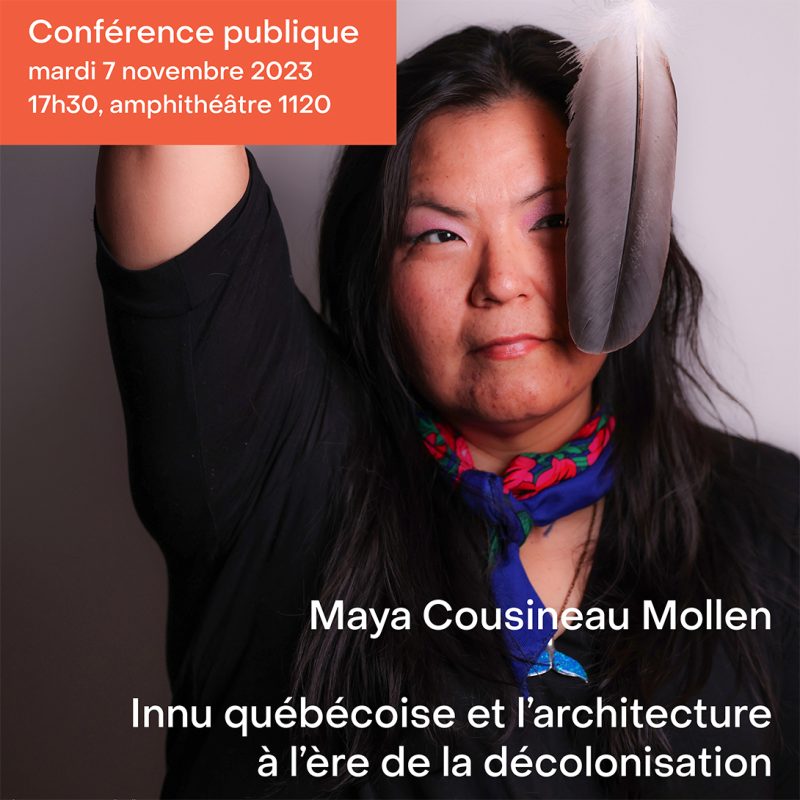
Conférence publique présentée par le LEAP : Maya Cousineau Mollen, Innu québécoise et l’architecture à l’ère de la décolonisation – enAugust 30, 2023
Date : Le 11 novembre, 2023 à 17h30
Lieu : Amphithéâtre 1120, Faculté de l'aménagement de l'Université de Montréal
|
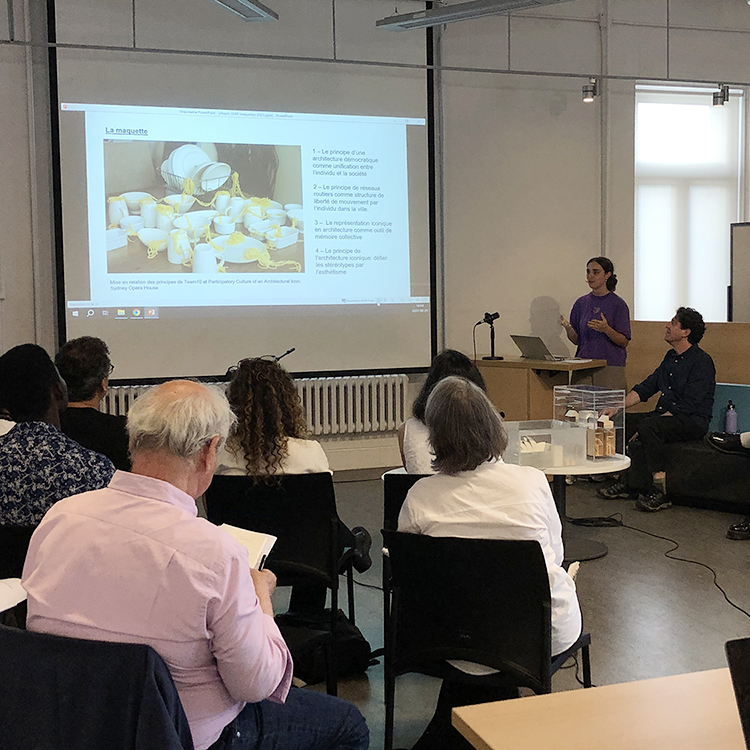
Journée d’étude du LEAP : À quoi sert la maquette en architecture? – enAugust 30, 2023
Date : Le 29 août 2023, 8h30 à 17h30
Lieu : Salle 1150, Faculté de l’aménagement de l’Université de Montréal.
Organisation : Denis Bilodeau et Virginie LaSalle
La journée d’étude du LEAP qui pose la question À quoi sert la maquette en architecture? se présente comme une exploration initiale du thème et de son potentiel appréhendé depuis de multiples perspectives. Lors de cette rencontre les intervenants sont invités à présenter leurs réflexions et leurs recherches sous la forme de brefs exposés (15 minutes) portant sur des situations ou des cas précis d’utilisation de la maquette dans différents contextes, professionnels, artistiques, pédagogiques ou autres. Cette journée d’étude vise à ouvrir un champ d’investigation multidisciplinaire sur une pratique commune dont les dimensions cognitives, culturelles et communicationnelles restent encore à élucider. Trois tables rondes de 1h30 chacune proposent, selon des thèmes généraux qui se rencontrent et s’entrecroisent, des pistes de réponse à la question titre de la journée.
Déroulement de la journée :
8h30-9h Arrivée et installation
9h-10h30 Table 1 : SIMULER ET APPRENDRE
• Bechara Helal
• Anne Cormier et Paloma Castonguay-Rufino
• Maurilio Lima Lobato
• Izabel Amaral
Répondante lors de la discussion : Lucie Palombi
11h-12h30 Table 2 : TRANSMETTRE ET DIALOGUER
• Georges Adamczyk
• Ipek Tureli
• Virginie LaSalle et Victorian Thibault-Malo
• Morteza Hazbei et Carmela Cucuzzella
Répondant lors de la discussion: Maurilio Lima Lobato
12h30-14h Pause dîner
14h-15h30 Table 3 : PENSER ET COMPRENDRE
• Denis Bilodeau
• Aurelien Catros
• Jean-Pierre Chupin et Joelle Tétreault
• Louis Martin
Répondante lors de la discussion : Paloma Castonguay-Rufino
16h-17h30 Discussion ouverte (participants et auditoire)
|

Virginie LaSalle and Jean-Pierre Chupin present neuroarchitecture in La PresseJune 8, 2023
On the occasion of accessibility week at the Senate, La Presse echoes the research coordinated by researchers from the Université de Montréal who are members of LEAP and the SSHRC partnership on quality. Click here to read the article.
|
Students from Concordia, UdeM and Calgary participate in the Accessibility Professional Network 2023 (RHF) National ForumMarch 21, 2023
From left to right: Catherine Gauthier (MArch, Université de Montréal), Morteza Hazbei (PhD candidate, Concordia University), Jean-Pierre Chupin (UdeM), Doramy Ehling (CEO, Rick Hansen Foundation), Marco Pasqua (Rick Hansen Foundation), Nooshin Esmaeili (UCalgary) On March 1-2, 2023, several student members of the SSHRC Quality Partnership were invited to participate in person or online in the annual APN2023 Building Together Symposium, which brought together industry leaders, accessibility professionals, and global thought leaders to discuss how we can continue to build an inclusive and accessible world for people of all ages and abilities. [Accessibility Professional Network 2023.](On March 1-2, 2023, several student members of the SSRC Quality Partnership were invited to participate in person or online in the annual APN2023 Building Together Symposium, which brought together industry leaders, accessibility professionals, and global thought leaders to discuss how we can continue to build an inclusive and accessible world for people of all ages and abilities. Accessibility Professional Network 2023. 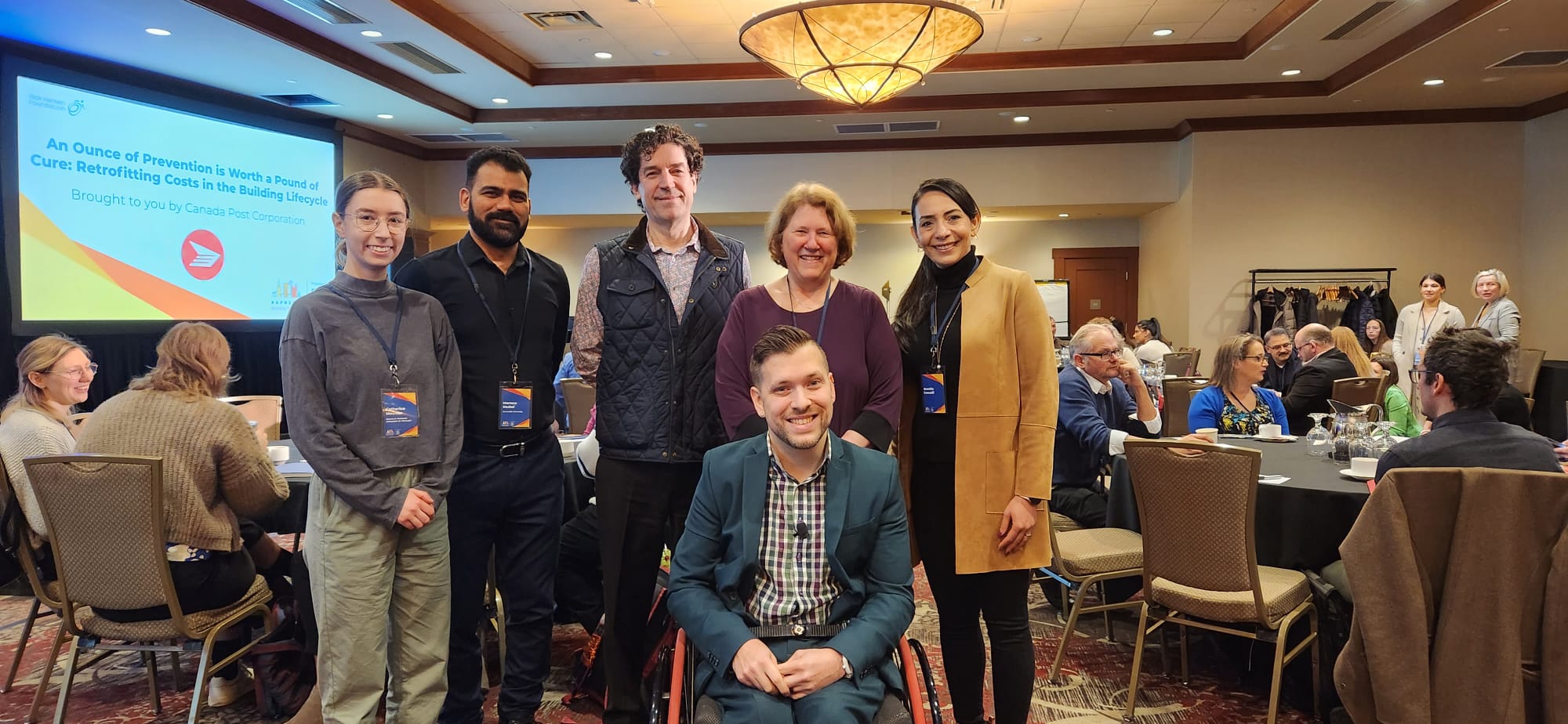 |
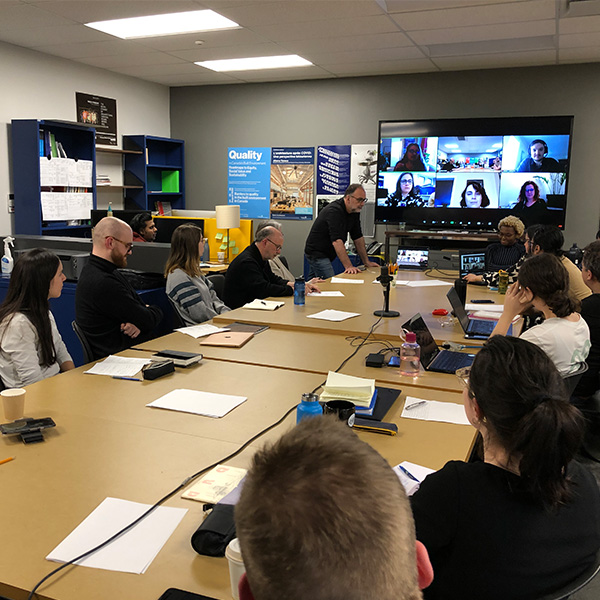
A new LEAP seminar: “Material Cultures through the filter of the Cecobois and Woodworks Awards” by Izabel Amaral. March 16, 2023.March 21, 2023
A seminar presented by Izabel Amaral (UdeM) around a SSHRC Insight Development Grant: (in collaboration with Carmela Cucuzzella (Concordia) and Jean-Pierre Chupin (UdeM) An Ecology of Wood Cultures in Canada (20032020): comparing constructive cultures through awarded architectural designs At the intersection of architectural theory and cultural studies, this research investigates wood architecture as a symbolic universe that allows us to study the presence of nature in human culture. This research will theorize the diversity of expressions of quality in Canadian architecture, from the standpoint of environmental preoccupation, building culture and architectural expression. Considering wood architecture as a form of “cultural ecology”, it has the potential to reveal how Canadian cultures represent and symbolize their relations to the land and natural resources, as well as the cultures of its founding peoples. Notwithstanding the interest in wood as a major alternative to fossil fuelbased construction materials, this research will highlight the symbolic spectrum of wood buildings, which ranges from local and indigenous traditions to ecological aesthetics, representing forms of making that rely both on traditional architectural practice or recent building technologies and computeraided design. We aim to better interpret and understand how advancements in architectural practice and building techniques affect the way architecture is envisioned and materialized in Canada during the past decades. In parallel to studying the influence of environmental considerations to architectural forms in Canada, we will make sense of a dissonance within the theory of architecture between ideas about the interdependency or autonomy of architectural form (visual appearance), material (what it is made of) and meaning (messages and ideals expressed). |

Conference-debate on the history of architecture schools in France and QuebecJanuary 29, 2023
Date: January 31, 2023, 5:30 pm.
Location: Amphitheatre 1120, Faculté de l'aménagement, Université de Montréal.
On the occasion of the publication in 2022 of L'architecture en ses écoles, une encyclopédie, we welcome Daniel Le Couédic, architect and historian, professor at the University of Western Brittany, and co-director of the book. Around Lucie K. Morisset, professor at UQAM and holder of the Canada Research Chair in Urban Heritage, this conference-debate will also bring together two Quebec contributors to the encyclopedia, François Giraldeau, honorary professor at UQAM's School of Design, and Jean-Pierre Chupin, professor at UdeM's School of Architecture and holder of the Canada Research Chair in Architecture, Competitions and Mediation of Excellence,
|
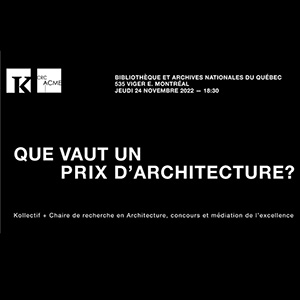
Video of the roundtable: What is an architecture award worth?January 29, 2023
This debate was organized at the BAnQ's National Archives in Montreal (535 Viger Avenue East) on November 24, 2022. Once a symbol of excellence and exception, architecture and design awards, which aim to reward achievements, have multiplied exponentially in recent years. We no longer count the number of companies, associations, municipalities and specialized publications that have set up their own awards, many of which have greatly multiplied their categories over the years. The situation is such that we can now speak of a veritable awards "industry", both in Quebec and internationally. The event was organized by Kollectif, in partnership with Jean-Pierre Chupin, Canada Research Chair in Architecture, Competitions and Mediations of Excellence (Université de Montréal) and co-editor of the collective book The Rise of Awards in Architecture (Vernon Press, 2022) with Carmela Cucuzzella and Georges Adamczyk. 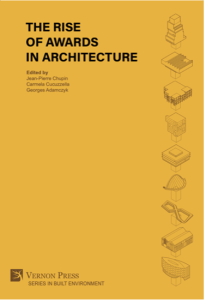 Presenter: Marc-André Carignan, Content Manager for Kollectif Our panelists:
Our guests of honour:
Video production:
Funding: Canada Research Chair in Architecture, Competitions and Mediations of Excellence. |
Two CRC-ACME doctoral grants for Paloma Castonguay-Rufino and Shantanu Biswas-LinkonJanuary 29, 2023
Two grants to support two doctoral students of the Canada Research Chair in Architecture, Competitions and Mediations of Excellence: Paloma Castonguay-Rufino and Shantanu Biswas-Linkon.
These two $12,000 scholarships are awarded by the Canada Research Chair in Architecture, Competitions and Mediations of Excellence for the quality of their academic record. Paloma Castonguay-Rufino is working on a redefinition of the notion of "industrial heritage" in the Canadian context, while Shantanu Biswas-Linkon is studying the notion of "social value" (Re-evaluating the Social Value of Architecture in the Public Realms through Inclusiveness and Environmental Justice).
|

Two grants awarded to Aurélien Catros, Ph.D. candidate at UdeMJanuary 29, 2023
Under the supervision of professors Jean-Pierre Chupin and Bechara Helal in the Individualized Doctoral Program in Architecture, Aurélien Catros has received two prestigious grants for his thesis:
|

The CRC-ACME coordinates a major research partnership funded by the SSHRCJune 18, 2022
Funded by the Social Sciences and Humanities Research Council of Canada until 2027, a major research partnership on quality in the built environment brings together - for the first time - 14 universities, 70 researchers and 68 public and private organizations at the municipal, provincial and national levels.
The total value of this partnership will be $8.6M ($2.5M from SSHRC, $6.1M from partners including $4.2M in-kind contributions). Such an investment confirms the commitment of all partners and the importance of the collaborative process.
The partnership will stimulate a vital dialog demonstrating how those active in considering and creating the built environment across Canada can contribute to a redefinition of quality that moves us to heightened equity, more social value and greater sustainability at a critical moment for our societies and for our planet.
Coordinated, from the University of Montreal, by the Canada Research Chair in Architecture, Competitions and Mediations of Excellence (CRC-ACME), the partnership Quality in Canada’s Built Environment: Roadmaps to Equity, Social Value and Sustainability addresses the diversity of public environments impacting the everyday life of millions of Canadians in urban spaces, buildings and landscapes.
The program has three aims:
|

The FRQSC renews LEAP’s team subvention until 2027June 13, 2022
The project, entitled Potentials of Architectural Quality: Equity, Sustainability and Cultural Openness, will have Jean-Pierre Chupin (Ph. D.) as team coordinator. The amount of the subvention granted to the LEAP by the FRQSC (support to research teams/university renewal) for this project is $423,420 and will be spread over a 4-year period, thus until 2027!
For 2022-2027, the programming of the Laboratoire d'étude de l'architecture potentielle is based on three research chairs to address a central issue that directly impacts the daily lives of millions of citizens: the quality of built environments.
The program of the Potentials of Architectural Quality: Equity, Sustainability and Cultural Openness project is based on three axes:
|
The Rise of Awards in Architecture, a new book edited by Chupin, Cucuzzella and AdamczykJune 12, 2022
This book is the first scientific study to focus on awards in architecture and the built environment investigating their exponential growth since the 1980s. The celebration of excellence in architecture and related fields remains a phenomenon on which there is strangely little scientific scrutiny. It is now necessary to take a critical distance to question what awards are meant to embody, symbolize, and perhaps measure. Each of the 10 chapters in this volume is centered on one question related to themes as varied as the comparison of Pritzker and Nobel Prizes, the Prix de Rome, the redefinition of quality through awards, green awards and sustainability, the multiplication of sustainable awards, heritage awards, architecture book awards, the awarding of school architecture, awards as mediations and awards as pedagogical devices. [vc_btn title="ACCESS THIS BOOK'S INFORMATIONS" align="center" button_block="true" link="url:https%3A%2F%2Fvernonpress.com%2Fbook%2F1507|target:_blank"]
PraiseThis book offers an in-depth analysis of the widespread practice of acknowledging the quality of architecture works with prizes, awards, and project competitions given to individuals, collective works, and constructions. This timely study considers a contemporary culture of recognition that is largely taken for granted and not yet grasped as a global and rising phenomenon that has seen exponential growth since the 1980s. The contributors thus address the controversies, ambiguities, and shortcomings surrounding this context, including issues of gender biases, cultural diversity, transparency, and how media, politics, and financial prizes impact architectural awards. The authors provide scholarly insights that cannot be found elsewhere, proving a timely contribution to knowledge that will further our understanding of the context in which contemporary architecture practices operate. Federica Goffi, Ph.D., School of Architecture (Carleton University) This book raises, in quite a healthy and rational fashion, the vexed question of the judgment of quality in the arts, lifting the lid on the very human and sometimes unseemly tendency to favor winners and follow the money, while yet allowing some hope for continuing development of mechanisms that permit valid judgments, promote genuine quality, and encourage current and future practitioners. This is an unusually balanced point of view. This is a useful guide to understanding how things have worked and to acting intelligently to make things fairer. David Vanderburgh, Ph.D., Laboratory of Architecture and the Built Environment (Université catholique de Louvain)Authors and EditorsJean-Pierre Chupin, Carmela Cucuzzella, Georges Adamczyk (Eds.) by Dana Buntrock (University of California, Berkeley)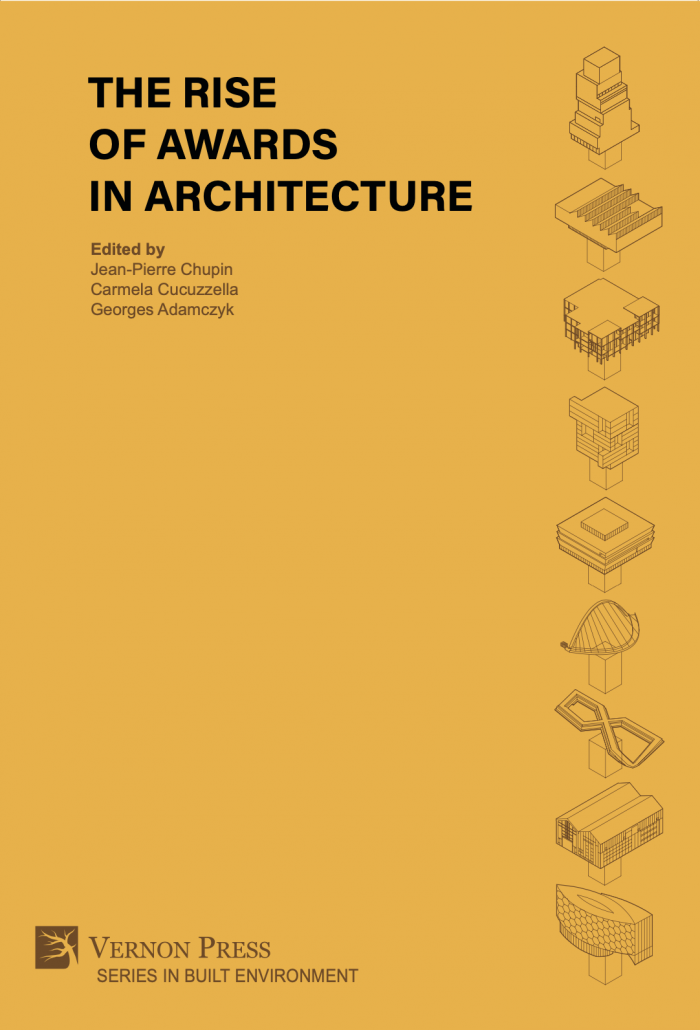 |
Block 2 design competitionApril 10, 2022
Hello,
The Canada Research Chair in Architecture, Competitions and Mediations of Excellence having had the honor of being associated with the preparation and implementation of this historic competition, I am pleased to extend to you this invitation to the public presentations of the 6 internationally renowned teams that will take place online on April 11, 2022.
Jean-Pierre Chupin
http://crc.umontreal.ca[vc_separator color="black"]In May 2021, Public Services and Procurement Canada (PSPC) launched an architectural design competition to redevelop Block 2, a full city block directly opposite Canada’s parliament buildings, just south of Parliament Hill.
The renewal of Block 2 is a critical piece of PSPC’s Long Term Vision and Plan for the Parliamentary Precinct. The design competition ensures that the final design for this city block brings forward new vitality to a significant part of Confederation Boulevard. The goal is to transform this mix of buildings into an innovative complex that will meet the needs of Parliament and the public now and into the future.
On April 11, the six design team finalists will present their design concepts for Block 2 through a virtual public presentation. We would be grateful if you would share the invitation below about the public presentation with your networks.[vc_single_image image="24481" img_size="large" alignment="center"]Few sites carry the significance of Block 2, a full city block directly opposite Canada’s parliament buildings, just south of Parliament Hill. To the north, it faces the Centre Block and its Peace Tower.
The renewal of Block 2 is a critical piece of PSPC’s Long Term Vision and Plan (LTVP) for the Parliamentary Precinct. The design competition, launched in spring 2021, ensures that the final design for this city block brings forward new vitality to a significant part of Confederation Boulevard. The goal is to transform this mix of buildings into an innovative complex that will meet the needs of Parliament and the public now and into the future.
Join us to hear the competitors speak to their vision for this prominent space in Canada’s capital. The six finalist design teams will present their design concepts for Block 2.
PRESENTERS:
|

IDEAS-BE: Weekly graduate seminar led by Dr. Albena YanevaMarch 27, 2022
This seminar will be held by Albena Yaneva, Professor of Architectural Theory at the University of Manchester and Director of the Manchester Architecture Research Group [MARG].
Date and time: April 6, 2022 from 2:30 to 6:00 pm.
Held at: Next Generation Cities Institute, 2155 Rue Guy, 14th floor, Montreal, Quebec.
Presenting PhD Students and Candidates:
Morteza Hazbei, PhD student, INDI Program, Concordia University
Measuring the unmeasurable: A proposal for parameterizing urban and architectural qualities.
Aristofanis Soulikias, PhD student, INDI Program, Concordia University
A Touch of Place: Feeling and expressing the city through handmade film animation.
Fatemeh Mehrzad, PhD student, INDI Program, Concordia University
Social media as a means of exchange to influence, collect and enable social values for urban regeneration.
Moh Abdolreza, PhD student, INDI Program, Concordia University
Where is Homeless? When is Homeless? Time-space analysis of OECD definitions of Homelessness.
Aurélien Catros, PhD candidate in architecture, Université de Montréal
Thinking through models: The phenomenon of projection in architectural design processes.
Lucie Palombi, Ph.D. candidate in architecture, Université de Montréal
L'architecte en concours, un écrivain ou un écrivant ?
In discussion with :
Dr. Jean-Pierre Chupin, Professor, School of Architecture, Université de Montréal
Canada Research Chair in Architecture, Competitions and Mediations of Excellence
Dr. Carmela Cucuzzella, Professor, Design and Digital Arts, Concordia University
Concordia University Research Chair in Integrated Design and Sustainability for the Built Environment (IDEAS-BE), Co-Director and Founder, Next Generation Cities Institute (NCGI)
Event organized by:
Concordia University Research Chair in Integrated Design Ecology and Sustainability for the Built Environment (IDEAS-BE).
|
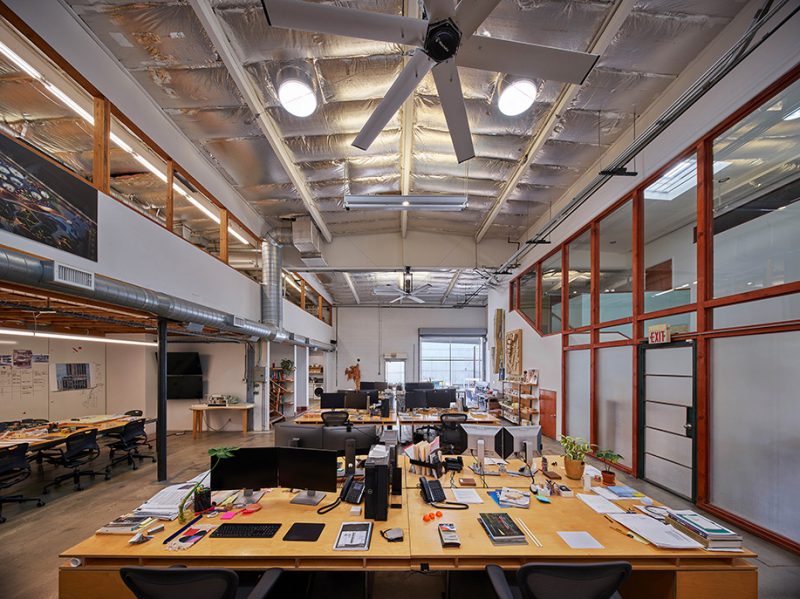
Post-Covid Architecture: A Latourian PerspectiveMarch 14, 2022
Public conference organized by the Canada Research Chair in Competitive Architecture and Mediations of Excellence (CRC-ACME) and the inter-university team of the Laboratoire d'étude de l'architecture potentielle (LEAP)
Tuesday, April 5, 2022 at 5:45 PM in Amphitheatre 3110 of the Faculté de l'aménagement, Université de Montréal
Albena Yaneva, Professor of Architectural Theory, University of Manchester
Director of the Manchester Architecture Research Group [MARG], Manchester Urban Institute
Recent books :
The New Architecture of Science: Learning from Graphene. Singapore: World Scientific
Crafting History: Archiving and the Quest for Architectural Legacy, Ithaca and London: Cornell University Press.
Forthcoming:
Latour for Architects (Thinkers for Architects), London: Routledge.
Architecture after Covid, London: Bloomsbury Publishing.
Presentation by : Jean-Pierre Chupin, CRC-ACME Full Professor, Coordinator of the Laboratory for the Study of Potential Architecture.
Information: jean-pierre.chupin@umontreal.ca
CRC-ACME: www.crc.umontreal.ca
LEAP: www.leap-architecture.org
|
Between experimentation and standardization: Architects and engineers in search of solutionsDecember 12, 2021
On Friday, December 3, 2021, Bechara Helal, Professor of Architecture at the Université de Montréal, organized a study day at the UQÀM Design Center. The event was sold out in 'face-to-face' format, but it was also possible to attend it via Zoom (a registration was required).
The event's details are available on this link.
This study day was presented in the context of the exhibition Pier Luigi Nervi master designer-builder which continues until February 6, 2022.
THE PROGRAM OF THE DAY :
9:00 a.m.: Welcome
9:30 a.m.: "Building correctly": Pier Luigi Nervi and the intersecting dynamics of design and research in construction
|
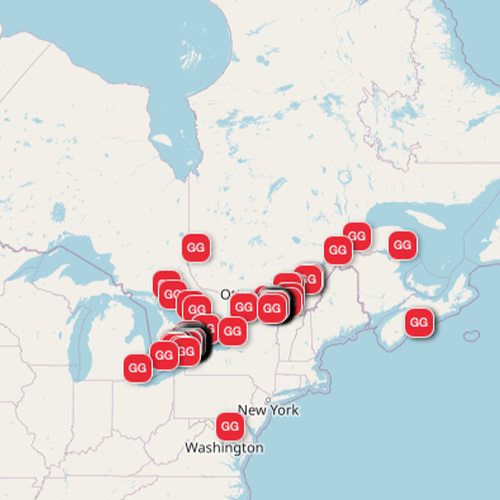
All Governor General’s Medals in Architecture in Canada gathered on a map and a visual galleryNovember 2, 2021
Wednesday, October 27, 2021.
The Atlas of Research on Exemplarity in Architecture and the Built Environment, in collaboration with the Canada Council for the Arts and the Royal Architectural Institute of Canada, presents all buildings and places recipient of a Governor General Medal in Architecture since 1982 on a single interactive map and in a visual gallery of over 250 items.
A new classification system by typological categories allows for more precise queries in the database. A table of "unlocated items" collects cases that cannot appear on the map because they are private residences.
The realization of this map and the entry of data in the AREA system is funded by the Canada Research Chair in Architecture, Competitions and Mediations of Excellence directed by Jean-Pierre Chupin (https://crc.umontreal.ca/en/ ), as well as by the Social Sciences and Humanities Research Council of Canada (SSHRC). This corpus was collected by the team of M.Arch. students coordinated by Lucas Ouellet at the Université de Montréal: Charles Cauchon and Anna Zakharova.For direct access to the map of all Governor General Medals in architecture since 1982:[vc_btn title="GOVERNOR GENERAL'S MEDALS MAP" align="center" button_block="true" link="url:https%3A%2F%2Farchitecture-excellence.org%2Fgovernor-general-map%2F|target:_blank"]For direct access to the visual gallery:[vc_btn title="VISUAL GALLERY" align="center" button_block="true" link="url:https%3A%2F%2Farchitecture-excellence.org%2Fgovernor-general%2F|target:_blank"]
|

Announcement of the 5 winning teams of the international student competition launched by IDEAS-BE and CRC-ACMEOctober 1, 2021
81 teams of students from 16 countries and 4 continents participated in this ideas competition which asked for new ways to encourage and renew the experience of public transport in the wake of a global sanitary crisis. How can we open up avenues for redefining an enhanced relationship to urbanity through the sharing of public spaces? The jury chose to reward 5 projects and gave 2 honorary mentions for exemplary ways of reimagining the experience of public transportation in a post-pandemic metropolis.
 This competition was part of a joint research initiative. Concordia University's Chair in Integrated Design, Ecology and Sustainability for the Built Environment and the Canada Research Chair in Architecture, Competitions and Mediations of Excellence of the Université de Montréal worked together to mobilize the creativity of young designers of the built environment to stimulate the debate on new experiences of public transportation to enhance urban resilience.
The 2021 edition was organized in collaboration with the CRE-Montreal and the ARTM. The Conseil régional de l'environnement de Montréal (CRE-Montréal) promotes sustainable development for the city of Montréal. The Autorité régionale de transport métropolitain (ARTM) plans, finances, organizes, and promotes public transit and paratransit services for the Montréal metropolitan region.
The proposals were judged anonymously by a jury composed of the following: This competition was part of a joint research initiative. Concordia University's Chair in Integrated Design, Ecology and Sustainability for the Built Environment and the Canada Research Chair in Architecture, Competitions and Mediations of Excellence of the Université de Montréal worked together to mobilize the creativity of young designers of the built environment to stimulate the debate on new experiences of public transportation to enhance urban resilience.
The 2021 edition was organized in collaboration with the CRE-Montreal and the ARTM. The Conseil régional de l'environnement de Montréal (CRE-Montréal) promotes sustainable development for the city of Montréal. The Autorité régionale de transport métropolitain (ARTM) plans, finances, organizes, and promotes public transit and paratransit services for the Montréal metropolitan region.
The proposals were judged anonymously by a jury composed of the following:
|

How to make the waiting for the bus more attractive and generate more community interest? New open access bookSeptember 21, 2021
The international student competition inviting creative ways to renew the appeal of public transport during a global health crisis is now the subject of a book. It is available for free access today.
Reimagining Waiting for the Bus is an open access book edited by Carmela Cucuzzella, Jean-Pierre Chupin, Emmanuel Rondia and Sherif Goubran and published by Potential Architecture Books (Montreal, 2021).
This creative guide, the result of an international competition, is a synthesis of the best ideas in the form of a free resource aimed at stimulating citizen discussion and community group engagement around the improvement of small urban environments connected to bus stops.
This richly illustrated, educational guide presents ideas that encourage appreciation of urban spaces by emphasizing the importance of nature, art and design. Reimagining Waiting for the Bus invites citizens to think about creative approaches, neighborhood by neighborhood, bus stop by bus stop, that would energize these public spaces in an interactive, poetic, critical and meaningful way: shifting the immediate environment of bus stops from a merely functional spatiality to a multi-purpose spatiality.
This is not about redesigning the bus shelter, but about making waiting for the bus more pleasant, in various ways, encouraging citizens to use the bus instead of their car, all year round, including during hot summer days and long periods of freezing winter.
The ideas extracted from projects from many countries are not presented as solutions but as illustrated principles gathered in 5 vectors going from culture to social dimensions, from ecological concerns to technological innovations and, in general, to everything that can increase the feeling of well-being.
The result of a research and creation process, this guide aims to encourage citizens to take hold of these often neglected spaces in which waiting should be given all the attention necessary to enhance public transport.
Reference:Cucuzzella, C., Chupin J.-P., Rondia, E., Goubran, S., (2021), Reimagining Waiting for the Bus, Montréal, Potential Architecture Books, 139 pages. ISBN 9781988962054[vc_btn title="DOWNLOAD THIS BOOK IN OPEN ACCESS" align="center" button_block="true" link="url:https%3A%2F%2Fleap-architecture.org%2Fwp-content%2Fuploads%2F2021%2F09%2Fguide_enplusdattendrelebus.pdf|target:_blank"] |
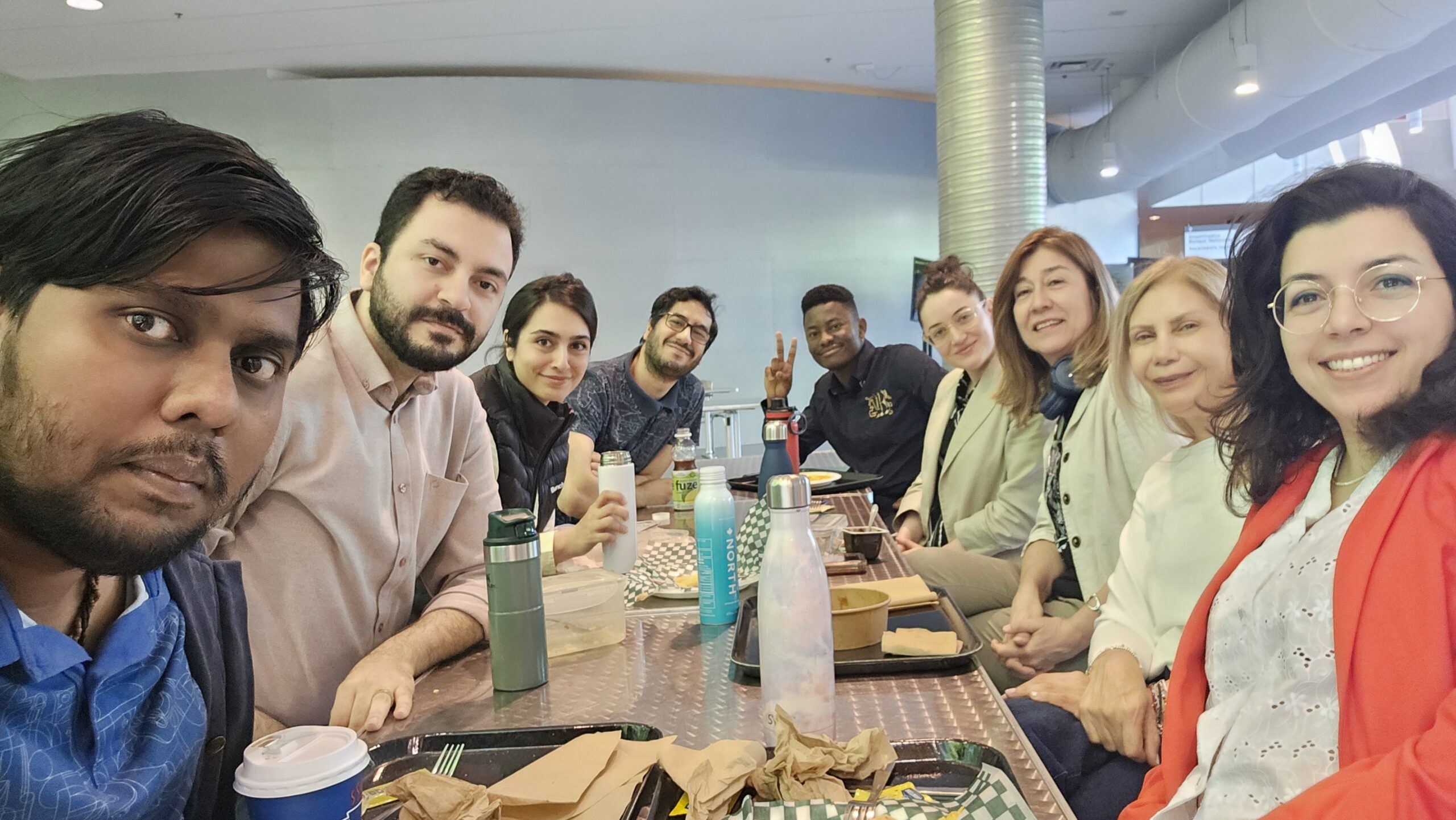
A mosaic gathering all the LEAP assistantsSeptember 21, 2021
Many assistants contribute to the smooth running of the Laboratoire d'étude de l'architecture potentielle. The team brings together students from four different universities in Montreal. These are; Université de Montréal, Université du Québec à Montréal, McGill University and Concordia University.
|

Aurélien Catros wins the Ray Lifchez Berkeley Prize of IASTE with his paper on reconstructive game modelsSeptember 10, 2021
The article “When Boston Isn’t Boston: Useful Lies of Reconstructive Game Models” won the Ray Lifchez Berkeley Prize of the International Association for the Study of Traditional Environments (IASTE) for the best article written by students or junior researchers. The authors, Aurélien Catros and Maxime Leblanc, are respectively an individualized doctoral candidate in Architecture at the Université de Montréal under the direction of Jean-Pierre Chupin and Bechara Helal, and a doctoral student at McGill University under the direction of Theodora Vardouli.
First organized in 1988 in Berkeley, USA, the 2021 “Virtual Tradition” edition of this biennial international conference was hosted by Nottingham Trent University, UK, and held online from August 31 to September 3. This year it brought together over 120 scholars and practitioners from many fields of study (architecture, architectural history, art history, anthropology, archaeology, conservation, geography, history, planning, sociology, etc.) around the 3 themes: Theorizing the Virtual and the Traditional in the Built Environment; The Socio-Spatial Traditions of Everyday Life in Changing Landscapes; and Tradition, Space, and Professional Practice in the Built Environment at Times of Transition.
The winning paper, published in the peer-reviewed journal Traditional Dwellings and Settlements Review, uses qualitative comparative analysis (QCA) to infer the origin of verisimilitude of models used in video games that simulate historic cities. Drawing on Kevin Lynch’s concept of imageability, he specifically examines the similarities and differences between a 1775 military map of Boston and the model of the same city presented in Ubisoft’s Assassin’s Creed III game. By comparing the monuments, roads, nodes, boundaries, and neighborhoods of the game model to the information recorded on the historical map, he demonstrates that a sense of verisimilitude is achieved not by total accuracy, but by specific combinations of sufficiently precise historical elements.
The article is available in open access on the Laboratory for the study of potential architecture website.[vc_btn title="ACCESS THE OPEN ACCESS PUBLICATION" align="center" button_block="true" link="url:https%3A%2F%2Fleap-architecture.org%2Fwp-content%2Fuploads%2F2021%2F07%2F32.2-TDSR_Spr-21_4_Catros-LeBlanc_print.pdf|target:_blank"]
|
All Canadian Architect awards since 1968 on one mapAugust 31, 2021
Wednesday, August 25, 2021.
The Atlas of Research on Exemplarity in Architecture and the Built Environment, in collaboration with Canadian Architect magazine, presents all the projects, buildings and places awarded since 1968 on a single interactive map and in a visual gallery of over 500 items.
A new classification system by typological categories allows for more precise queries in the database. A table of "unlocated items" collects cases that cannot appear on the map because they are private residences or unbuilt award-winning projects by students.
This corpus was compiled in coordination with Elsa Lam, chief editor of Canadian Architect magazine, and the data was collected by the team of M.Arch. students led by Lucas Ouellet at the Université de Montréal: Charles Cauchon and Anna Zakharova.
The realization of this map and the entry of data in the AREA system is funded by the Canada Research Chair in Architecture, Competitions and Mediations of Excellence directed by Jean-Pierre Chupin (https://crc.umontreal.ca/en/ ), as well as by the Social Sciences and Humanities Research Council of Canada (SSHRC).
For direct access to the map of Canadian Architect magazine list of awards since 1968: https://architecture-excellence.org/canadian-architect-map/
To access directly to the visual gallery: https://architecture-excellence.org/canadian-architect/[vc_single_image image="23584" img_size="medium" onclick="custom_link" link="https://architecture-excellence.org/canadian-architect-map/"]Jean-Pierre Chupin, PhD, MOAQ, MIRAC
Professor, Université de Montréal, School of Architecture
Canada Research Chair in Architecture, Competitions and Mediations of Excellence
https://crc.umontreal.ca/en/
|
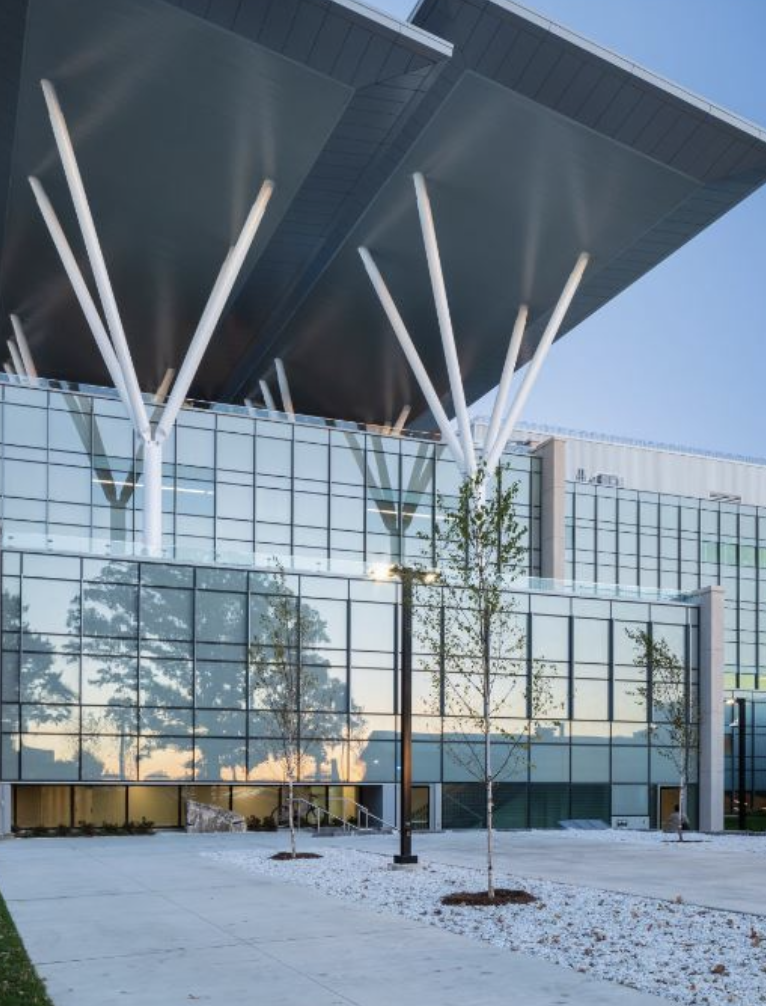
A new article in the journal “Sustainability” about architectural education strategies (AES) in sustainable buildings for learning environments in CanadaJuly 31, 2021
Jean-Pierre Chupin, Morteza Hazbei and Karl-Antoine Pelchat wrote an article in the journal Sustainability (2021, 3, 8166) about architectural education strategies (AES) in sustainable buildings. Their research led them to conclude that there are three strategies for architectural education in buildings designed to disseminate knowledge in the field of sustainable architecture in Canada; the labeling approach, the experiential approach, and the iconic method. Architects are convinced that architectural communication forms can be used as a language accessible to non-experts. Future research may therefore challenge the very possibility of teaching through formal language and aesthetic features.[vc_btn title="ACCESS THIS PUBLICATION FOR FREE" align="center" button_block="true" link="url:https%3A%2F%2Fleap-architecture.org%2Fwp-content%2Fuploads%2F2021%2F07%2Fsustainability-13-08166-v2.pdf"]
|

Aurélien Catros, PhD student at CRC-ACME, publishes an article on reconstructive game modelsJuly 15, 2021
Aurélien Catros and Maxime Leblanc jointly wrote a paper on reconstructive game models. Their research was based on a comparison between the video game Assassin's Creed III and a 1775 map of Boston, with the goal of determining how closely historical cities are reproduced in video games. The pair are both doctoral students in Architecture. Their research will have highlighted the fact that a feeling of verisimilitude is achieved not through complete accuracy but through specific combinations of sufficiently accurate historic elements. Aurélien Catros is studying at the Université de Montréal, while Maxime Leblanc is studying at McGill University. If you wish to access this publication, it is available free of charge on the CRC-ACME website's open access publications page.[vc_btn title="ACCESS THE PUBLICATION" align="center" button_block="true" link="url:https%3A%2F%2Fleap-architecture.org%2Fwp-content%2Fuploads%2F2021%2F07%2F32.2-TDSR_Spr-21_4_Catros-LeBlanc_print.pdf"]
|

Lucie Palombi, PhD student, participates in a conversation with Phyllis Lambert and Joseph Hillel about the documentary “City Dreamers”March 19, 2021
For this 3rd online edition of Docu-conferences, the Université de Montréal Alumni and Donors Network is proud to welcome director Joseph Hillel, a graduate of the Faculty of Continuing Education, as well as two special guests: architect emeritus Phyllis Lambert and doctoral student Lucie Palombi, from the Université de Montréal's Faculty of Planning.
The documentary Rêveuses de villes takes us to the heart of our urban environments in perpetual metamorphosis to meet four exceptional architects, exemplary women, pioneers who - for decades - have been working, observing and shaping the city of today and tomorrow.
When: Thursday, March 25, 202, from 5:30 to 8:00 p.m.
Where: Online activity, via Zoom.
Course of the evening:
5:30 p.m. | Welcome and opening remarks before the screening
5:35 p.m. | Screening of the documentary Dreamers of Cities
18 h 55 | Intermission
6:58 p.m. | Exchange and discussion with invited speakers
19 h 25 | Public question period (30 min)
19 h 55 | Thanks and closing remarks
20 h 00 | End of the event
|
On the themes of the classroom, the gathering space and the relationship to the context, 3 videos from the CRC-ACME put into debate teams from the 5 competitions organized by LabÉcole for new elementary schools in QuebecMarch 19, 2021
Produced by the Canada Research Chair in Architecture, Competitions and Mediations of Excellence, this set of 3 videos presents excerpts from 3 roundtables recorded in January and February 2021 with design teams of the projects submitted to the 5 competitions organized by Lab-École.
These winning projects, finalists or submitted in the first phase of the competitions for the sites of Saguenay, Shefford, Maskinongé, Rimouski and Gatineau in 2020 were presented in the exhibition Devoirs d'architecture at the Centre de design de l'UQAM from September 2020 to February 2021. The pandemic did not allow the general public to discover these 160 projects for new elementary school in Quebec. These debates allow us to take the measure of the richness of the proposals.
1 - The round table on the theme of The Classroom and Collaborative Spaces presents different physical and spatial devices imagined by Quebec architects to rethink spaces dedicated to teaching and learning.
- Panelists : Étienne Bernier, Christian Bisson, Jean-Pierre Chupin, Andréanne Dumont, Jérôme Duval, Bechara Helal, Sergio Morales, Alexandra Paré, Hubert Pelletier, Nathaniel Proulx Joannisse
- Special thanks to Bechara Helal
- Organization: Jean-Pierre Chupin and Alexandra Paré
- Video editing : Julien Bouthillier
- The organizers thank the three main partners of the exhibition: Lab-École, Centre de design de l'UQAM, Laboratoire d'étude de l'architecture potentielle
2021 - Canada Research Chair in Architecture, Competitions and Mediations of Excellence (www.crc.umontreal.ca)
2 - The round table on the theme of The Gathering Space presents a few variations and the dilemmas faced by the design teams become evident. Between spaces dedicated to very specific activities and "all-purpose spaces", architects must harmonize proposals. The versatility of spatial devices has its qualities, but it can quickly demonstrate its limitations.
- Panelists: Randy Cohen, Katarina Cernacek, Jean-Pierre Chupin, Virginie LaSalle, Marie-Hélène Nollet, Alexandra Paré, Charles Laurence Proulx, Geneviève Riopel
- Special thanks to Virginie LaSalle
- Organization: Jean-Pierre Chupin and Alexandra Paré
- Video editing : Julien Bouthillier
- The organizers thank the three main partners of the exhibition: Lab-École, Centre de design de l'UQAM, Laboratoire d'étude de l'architecture potentielle
2021 - Canada Research Chair in Architecture, Competitions and Mediations of Excellence (www.crc.umontreal.ca)
3 - The roundtable on the theme of The School and its Context shows that a standard cannot satisfy the complexity and richness of a given site, and even more so that architectural programs need to be always adapted to their context.
- Panelists: Philippe Ashby, Martin Brière, Jean-Pierre Chupin, Thomas-Bernard Kenniff, Guillaume Marcoux, Catherine Milanese, Lucie Paquet, Jessy Paquet-Methot, Alexandra Paré
- Organization: Jean-Pierre Chupin and Alexandra Paré
- Video editing : Julien Bouthillier
- Special thanks to Thomas-Bernard Kenniff
- The organizers thank the three main partners of the exhibition: Lab-École, Centre de design de l'UQAM, Laboratoire d'étude de l'architecture potentielle
2021 - Canada Research Chair in Architecture, Competitions and Mediations of Excellence (www.crc.umontreal.ca)
TO ACCESS THE 3 VIDEOS: https://vimeo.com/showcase/7619270
|

An international student competition launched by the Concordia University Chair of Integrated Design, Ecology, and Sustainability for the Built Environment (IDEAS-BE) and the Canada Research Chair in Architecture, Competitions, Mediations of Excellence (CRC-ACME) at Université de MontréalJanuary 29, 2021
How can design accelerate the transition from the end of the pandemic to a new experience of public transportation?
This design competition is part of a joint research initiative. The Concordia University Chair of Integrated Design, Ecology, and Sustainability for the Built Environment and the Canada Research Chair in Architecture, Competitions, Mediations of Excellence at Université de Montréal are working together to mobilize the creativity of young designers of the built environment in order to stimulate debate on the renewed experiences of public transportation for increased urban resiliency.
This 2021 edition is done in collaboration CRE-Montreal and ARTM. The Conseil régional de l’environnement de Montréal (CRE-Montreal) promotes sustainable development for the City of Montreal. The Autorité régionale de transport métropolitain (ARTM) is the transportation authority, which plans, funds, and promotes public transit and paratransit services for the Montréal metropolitan area.
This ideas competition seeks to gather:
|
Aurélien Catros, doctoral student in architecture, wins the Academy of Architecture Prize for the best paper of the SCAN’20 conferenceDecember 17, 2020
After evaluating the quality of the research, scientific writing and oral presentation during the two-day conference, the members of the Academy's prize jury selected the winner of the prize for the best paper. This jury was chaired by Paul Quintrand, Former President of the Academy of Architecture. The Academy of Architecture Prize for the best paper of the SCAN'20 conference was awarded to Aurélien Catros, doctoral student in architecture at the Université de Montréal, under the supervision of Jean-Pierre Chupin and Bechara Helal, for his paper entitled: “A categorization of BIM models within scientific models”.
|
New book « Sustainable Architecture – Between Measurement and Meaning » by Carmela Cucuzzella and Sherif GoubranNovember 1, 2020
Carmela Cucuzzella (Concordia University) and Sherif Goubran (American University in Cairo) co-edit a new book, “Sustainable Architecture – Between Measurement and Meaning”.
Sustainable Architecture – Between Measurement and Meaning takes a step back to reflect on how sustainability in the built environment can be theorized and practiced critically. This book exposes that architecture remains a human and social science that lies at the intersection of measurements and meanings. It reveals that sustainable architecture can still operate in a dialectic space of expression, rather than serving as a manifesto for either the technical or socio-cultural extremes. It purports that the human intuition, senses, and skills still holds the key to unravelling alternative futures of sustainable built spaces. And that most importantly, humans still have a place in sustainable architecture.
It includes chapters from Anne Cormier (Université de Montreal), Nada Tarkhan (Massachusetts Institute of Technology (MIT)), Tom Jefferies (Queen’s University Belfast), Laura Coucill (Manchester School of Architecture), Izabel Amaral (Laurentian University), Ted Cavanagh (Dalhousie University)
|
Louis Martin publishes a chapter in the book The Figure of Knowledge: Conditioning Architectural Theory, 1960s-1990sNovember 1, 2020
"It is a major challenge to write the history of post-WWII architectural theory without boiling it down to a few defining paradigms. An impressive anthologising effort during the 1990s charted architectural theory mostly via the various theoretical frameworks employed, such as critical theory, critical regionalism, deconstructivism, and pragmatism.
Yet the intellectual contours of what constitutes architectural theory have been constantly in flux. It is therefore paramount to ask what kind of knowledge has become important in the recent history of architectural theory and how the resulting figure of knowledge sets the conditions for the actual arguments made.
The contributions in this volume focus on institutional, geographical, rhetorical, and other conditioning factors. They thus screen the unspoken rules of engagement that postwar architectural theory ascribed to."
Contributors: Matthew Allen (University of Toronto), Karen Burns (University of Melbourne), Ole W. Fischer (University of Utah), Philip Goad (University of Melbourne), Hilde Heynen (KU Leuven), Rajesh Heynickx (KU Leuven), Paul Holmquist (Louisiana State University), Sandra Kaji-O'Grady (University of Queensland), Peter Lang (Royal Institute of Art, Stockholm), André Loeckx (KU Leuven), Sebastiaan Loosen (KU Leuven), Louis Martin (Université du Québec à Montréal), Joan Ockman (University of Pennsylvania), Carmen Popescu (ENSAB, Rennes), Ricardo Ruivo (Architectural Association, London), Andrew Toland (University of Technology Sydney).
|

Tiphaine Abenia wins the prize of the thesis in co-tutorship 2020November 1, 2020
On October 19, 2020, the Consulate General of France in Quebec City, following the recommendations of the evaluation mission of the Ministry of Higher Education, Research and lʼInnovation, designated Tiphaine Abenia as the French winner of the 2020 cotutelle thesis prize. The French and Quebec cotutelle thesis prizes, in the amount of $1,500, will be awarded at the Gala organized by Acfas (Association francophone pour le savoir) to be held virtually on December 9.
|
Jean-Pierre Chupin named honorary member of the AAPPQ 2020November 1, 2020
It was at the launch of the 2020 Reference Manual of the Association des architectes en pratique privée du Québec (AAPPQ) that the name of the honorary member she has chosen was unveiled, a title granted to a person who contributes to promoting architectural quality and enhancing the importance of architects in society. According to Anne Carrier, President of the AAPPQ, "this title is awarded to a committed individual who, through his or her career, contributes to promoting the architectural quality of the built environment and the importance of architects in society in general. This year, the Board of Directors of the AAPPQ wished to emphasize the importance, for the private practice of architecture, of cooperation with the university community. The contribution of research, based on knowledge, is indeed essential to identify, qualify and define best practices. This year's honorary member has played a pioneering role in researching and documenting the role of competitions as tools for creating and improving quality in architecture. » During this event, the 25 achievements selected by the Reference Manual selection committee were presented. Among them, the Science Complex of the MIL Campus of the Université de Montréal, realized by Menkès Shooner Dagenais Le Tourneux Architectes | Lemay | NFOE, in consortium.
|
The 5 competitions of the LABécole fully documented exclusively on the CCCAugust 28, 2020
As part of a collaboration with the LABécole organization, the Canadian Competitons Catalogue is the first to deliver all 160 projects submitted in 2019 to the 5 competitions for the construction or expansion of elementary school in Shefford, Rimouski, Gatineau, Maskinongé and Saguenay. The official unveiling of the winners took place on Monday, August 24.
LAB-ÉCOLE | Agrandissement et rénovation de l'école Saint-Joseph à Maskinongé LAB-ÉCOLE | Rénovation et agrandissement de l'école primaire Pierre Elliott Trudeau à Gatineau LAB-ÉCOLE | Construction d'une nouvelle école primaire à Shefford LAB-ÉCOLE | Construction d'une nouvelle école primaire à Rimouski "In 2020, judging by the number of architecture competitions held in Quebec over the past two decades and the number of award-winning buildings, it is easier to find an excellent library than an elementary school worthy of the name. This series of 5 competitions - open and in two phases - organized by the LAB-École organization therefore confronted two contradictory convictions: the certainty that places of schooling forge and shape what we are since early childhood and this conviction, widespread among public decision-makers, that we could basically study and teach anywhere. Particularly well organized by LAB-École, these competitions show, on the contrary, that architecture is not a luxury, but a necessity. For contexts as different as Saguenay, Maskinongé, Rimouski, Gatineau and Shefford, the proposals prove to be rich in reflections demonstrating that the question of primary school remains complex and cannot be circumscribed in models that can be repeated - in blue, wood or aluminum - whatever the context." Thanks to the teams of students from Université de Montréal working on the CCC and to CRC-ACME for this intense digital documentation work. |

Ipek Tureli holds the Canada Research Chair in Architectures of Spatial JusticeAugust 20, 2020
Prof. Ipek Tureli: holds one of the McGill CRCs: the Tier 2 – Canada Research Chair in Architectures of Spatial Justice announced the 2nd of december 2016 by the Canada Science minister Kirsty Duncan.
|
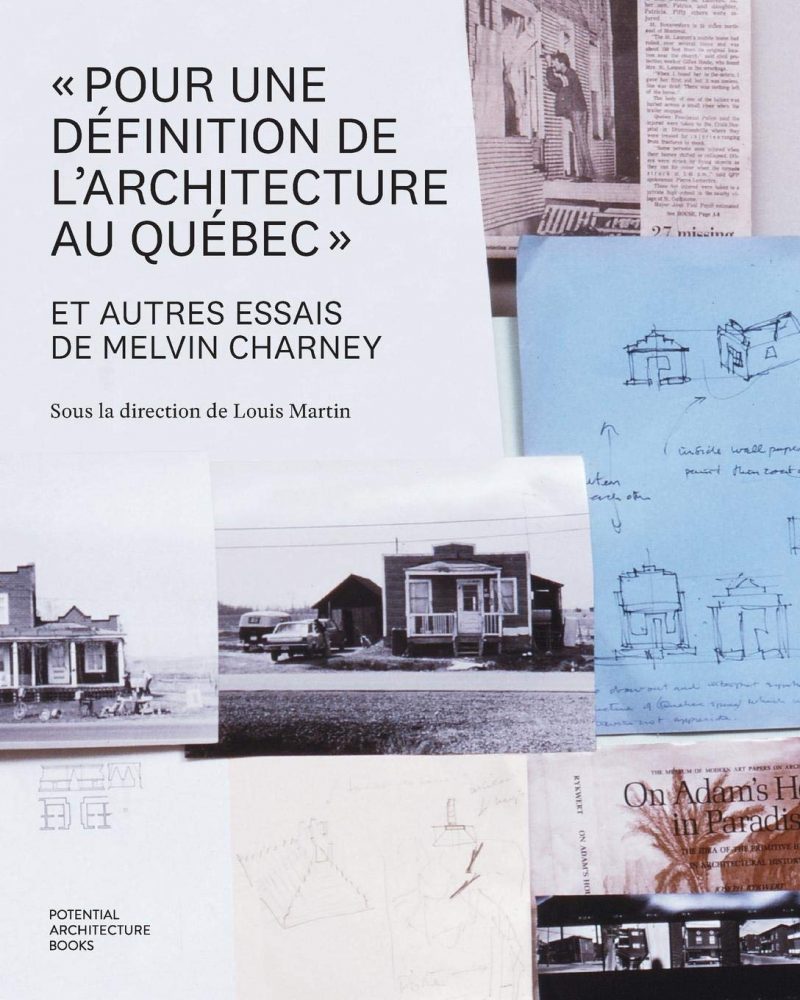
Louis Martin and Georges Adamczyk publish Melvin Charney’s important theoretical texts on architecture in QuebecAugust 13, 2020
From 1964 to 1989, Montreal architect and artist Melvin Charney (1935-2012) published some forty essays dealing with the problems confronting contemporary architecture in Quebec and elsewhere, and describing the works he designed in response. This collection makes accessible to French-speaking readers, in revised and often unpublished translations, a selection of these writings that presents the essence of Charney's critical reading of contemporary architecture in Quebec, while exposing the originality of the thinking that nourished his artistic practice.
Published during a pivotal period in Quebec's cultural and social history, beginning with the advent of the Quiet Revolution and ending with the first referendum on sovereignty, these documents are a veritable barometer recording the changing climate of an architectural culture in perpetual motion during one of the most turbulent periods in the history of architecture. They also describe the unsuspected contribution of Montreal, Quebec and Canadian architecture to the international debates that marked the transition from late modernity to an uncertain postmodernity.
|

Understanding the Awards of Excellence (Issue 191 of Architecture Québec magazine) : Researchers from LEAP and the Canada Research Chair in Architecture, Competitions and Mediations of Excellence present some results of their recent work on awards of excellence in all areas of designAugust 6, 2020
This special issue on Awards of Excellence does not introduce new winners or reveal any results that were not previously known. Its purpose is to call for more attention to a phenomenon - the celebration of excellence - on which there is strangely little critical attention. What is to be understood from the plethora of award-winning projects, achievements and practices year after year? Certainly, the images are part of an intense ballet at each local, regional or national award ceremony. Images of architectural excellence, no doubt about it. However, it is necessary to "freeze frame" the images to begin to question the definitions of quality that they are supposed to summarize, symbolize, perhaps measure. The reader who would like to be convinced of the extent of the phenomenon in a few figures can start this issue at the end, as we draw up an unprecedented statistical portrait of it, revealing in particular the exponential increase in the number of organizers and prizes in a decade.
Georges Adamczyk first of all proposes to shift the "waiting horizon" from the reception of architects or the public to the interest of the academic world. In fact, he takes award-winning projects as models: "projects that are judged excellent by their peers for their exemplary aesthetic and functional qualities are also potential projects for learning about design and production in architecture". David Theodore places the Quebec awards in a broader Canadian context. While Quebec architects do indeed distinguish themselves in Canada and even abroad, his survey shows that it is certain types of buildings and architectural practices that are distinguished, rather than excellence or the best buildings in general. Paradoxically, he wonders whether the awards really promote good architecture. This is confirmed by Aurélien Catros' reflections on heritage distinctions. The recent history of the categories of excellence in conservation first reveals the fluctuations of the underlying policies. And what could be more up-to-date than a policy for school architecture? On this point, Alexandra Paré's retrospective look shows that school architecture remains a poor relation of awards. She agrees with the conclusions of Theodore and Adamczyk in inviting us to conceive of prices as a true school of architectural quality. The articles by Sherif Goubran and Carmela Cucuzzella question the growing importance of ecological and environmental criteria in contemporary quality recognition. The statistics compiled by Goubran shed light on the multiplication of definitions of sustainability. Cucuzzella's analyses show in detail that certain awards literally force the use of ever more "eco-didactic" visibility. She concludes that awards would not only play a recognition function, they would determine a form of excellence. In essence, this inversion is the game proposed by Lucie Palombi who, by temporarily obliterating the images of the prize-winning projects, wonders what a foreign visitor to three prize-winning libraries might understand by considering only the rare comments of the juries. We'll let you guess.
For as long as the lists of prize-winning projects are not accompanied by the reasons, analyses, judging criteria and therefore the jury reports, there is a risk that the prizes will remain nothing more than nice celebrations and not stages in the full and effective recognition of an "architectural quality policy".
Editorial: Prices, freeze frame! (Jean-Pierre Chupin, Professor, Université de Montréal)
Taking Home the Prize: Distinguishing Québec in Architectural Awards (David Theodore, Professor, McGill University)
Three award-winning libraries (the reverse visit) (Lucie Palombi, doctoral student, Université de Montréal)
School architecture, the poor relation of prizes (Alexandra Paré, doctoral student, Université de Montréal)
Learning from excellence in residential architecture (Georges Adamczyk, Professor, Université de Montréal)
Quebec in the Canadian sustainable development awards concert (Sherif Goubran, PhD student, Concordia University)
The allegory of heritage through the filter of awards of excellence (Aurélien Catros, doctoral student, Université de Montréal)
What is the purpose of architectural awards? (Jean-Pierre Chupin, Professor, Université de Montréal)
"Eco-education": Are "green awards" forcing the visibility of green devices? (Carmela Cucuzzella, Professor, Concordia University)
|

CANADIAN MAP OF AWARD-WINNING BUILDINGS AND PLACESAugust 6, 2020
More than 2,800 award-winning projects - designed by more than 1,000 architectural, urban planning and landscape architecture firms in Canada - first recorded in an Atlas of Architectural Excellence (AEA)
At the initiative of the Canada Research Chair in Architecture, Competitions and the Mediation of Excellence (CRC-ACME), the Atlas of Excellence in Architecture (AEA) is taking shape with the publication of the first historical directory of award-winning projects and achievements.
A prototype of a decentralized and collective digital platform, the AEA is intended to gather data on the quality of built environments. In conjunction with the establishment of a research network, it is intended to offer the information necessary for the dissemination, understanding, training and constitution of quality mediation policies and actions aimed at excellence at all levels. The data, information, analyses, comparisons and visualizations that will gradually be delivered on the open access platform will be based on all the award-winning achievements in Canada. Thanks to the coordination of the awarding institutions and professional teams, the general public can already take the measure of the repertoire of best practices in all areas of the built environment.
|
Cynthia Hammond and Ipek Tureli receive new fundingAugust 6, 2020
Cynthia Hammond and Ipek Tureli (with Luis Sotelo Castro) were awarded a two-year $71,795 IDG grant for the project "The Spaces of Restorative and Transitional Justice: Architecture, Oral History, and Design"
|
Sherif Goubran appointed as an instructor at the American University in Cairo (AUC-Egypt)August 6, 2020
Sherif Goubran, PhD Candidate in the Individualized program working under the supervision of Dr. Carmela Cuccuzzella at Concordia University, will commence his appointment as an instructor at the Department of Architecture at AUC this fall. In his new assignment, he will be teaching and expanding the department's research activities in the area of sustainable and green building design
|
Carmela Cucuzzella and Jean-Pierre Chupin presented a paper for the Society of Architectural Historians 2020 conferenceAugust 6, 2020
Carmela Cucuzzella and Jean-Pierre Chupin presented a paper entitled "Competitions as a means of alternative development in the city" at the virtual conference of the Society of Architectural Historians 2020
|
A series of summer seminars for IDEAS-BE graduatesAugust 6, 2020
The summer seminar series for IDEAS-BE graduates runs from 3 June to 11 August 2020. All IDEAS-BE graduate students present their current publication projects to the team
|

Carmela Cucuzzella holds the Concordia University Research Chair (CURC) IDEAS-BEAugust 6, 2020
The Concordia University Research Chair (CURC) of Carmela Cucuzzella in IDEAS-BE is renewed from July 2020 to July 2025.
The Concordia University Research Chair in Integrated Design, Ecology And Sustainability for the Built Environment (ideas-be) focuses on the study of design projects and practices for the built environment situated at the crossroads of cultural, social, environmental and economic concerns. It considers sustainability as a paradigm crossing the main disciplines and professions concerned with design for the built environment (urban design, architecture, and landscape). This research program identifies, categorizes and disseminates strategic transformations of sustainable intentions in the design of the urban built environment. Our main objective is to better understand how designers go beyond current injunctions of environmental norms and policies in order to achieve a creative balance between design ethics and aesthetics in their public space projects – a question that has remained largely unaddressed in recent design theory.
|
Louise Pelletier receives a new grantAugust 6, 2020
Louise Pelletier obtains a PAFARC research grant (part 10) on the exhibition of design worth $17,000 for the period 2019-2023 at the Université du Québec à Montréal
|
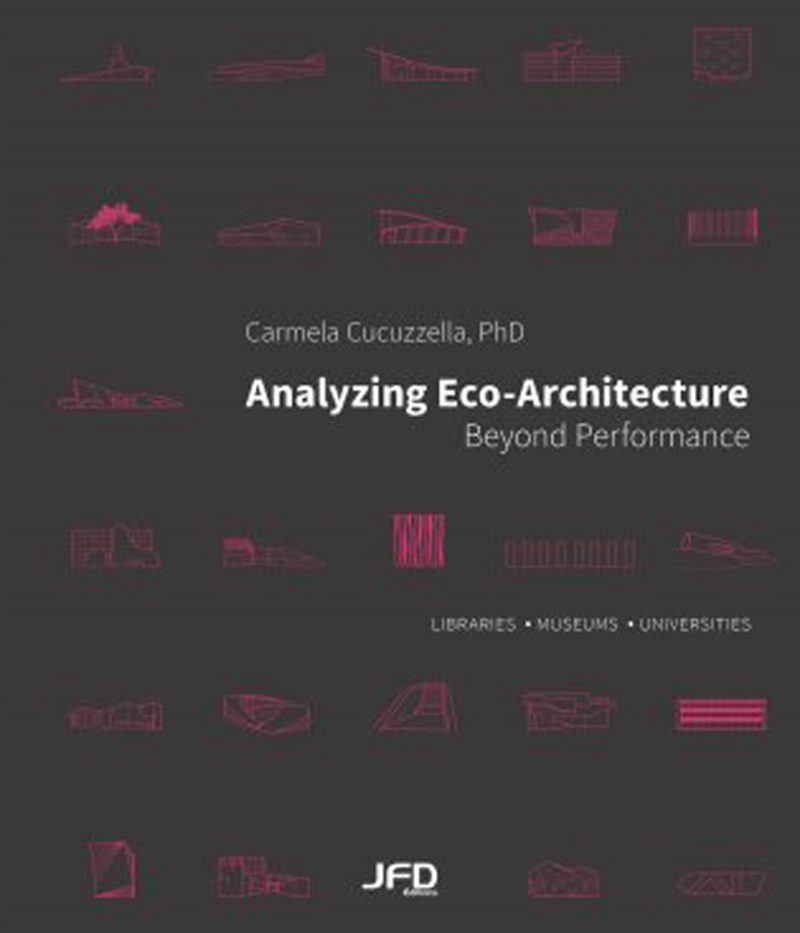
Carmela Cucuzzella published a new bookAugust 6, 2020
Carmela Cucuzzella published a new book, Analyzing Eco-Architecture Beyond Performance, at JFD Editions.
At a time when environmental architecture is proliferating in all its forms around the world, adopting ever more complex sets of tools, this book provides an overview of the state of the field. It provides a critical introduction to the study of environmentalism in architecture. Written especially for students and researchers who work in the field of environmental architecture, this book reveals the spectrum of approaches practiced today.
The text includes:
|
Lucie Palombi, doctoral student, receives a FRQSC scholarship for her research projectAugust 6, 2020
Lucie Palombi, individualized doctoral student under the supervision of Jean-Pierre Chupin, receives a doctoral research scholarship from the Fonds de Recherche Société et Culture du Québec, worth $77,000 over 4 years (from 2020 to 2024) for the research project entitled "La mise en compétition de l'écriture en architecture. Herméneutique du texte gagnant et de l'ouvrage primé", attached to the Research Chair in Architecture, Competitions and Mediations of Excellence.
|

Mandana Bafghinia, doctoral student, receives a Cardinal and Hardy scholarship for her research projectAugust 6, 2020
Mandana Bafghinia, doctoral student in architecture under the direction of Jean-Pierre Chupin, receives the Cardinal and Hardy scholarship, valued at $8,000, for the research project "Habiter les toits, dialogue in the shadow of high-rise buildings", attached to the Research Chair in Architecture, Competitions and Mediations of Excellence
|

LEAP takes part in 27 brainstorming sessions on the determinants of quality in architectureAugust 6, 2020
For three weeks in May 2020, 3 groups of researchers and professionals across Canada participated in 3 brainstorming sessions per week, with 9 Zoom sessions per group, for a total of 27 sessions.
This series of remote exchanges is part of both the establishment of a large collaborative and research network on the quality of built environments (AREA) and the design of a digital platform or « Atlas of Excellence in Architecture » capable of supporting long-term research on the understanding and dissemination of best practices in the Canadian context (AEA). This database is decentralized and in open access.
Coordination: Jean-Pierre Chupin (Université de Montréal), Terrance Galvin (Laurentian University)
Doctoral students and assistants: Mandana Bafghinia, Aurélien Catros, Sherif Goubran, Firdous Nizar, Lucie Palombi, Alexandra Paré, Anne-Lise Belbezet
|
Anne Cormier named Fellows this year by the Royal Architectural Institute of Canada (RAIC)April 21, 2020
Anne Cormier is one of 31 architects who were named Fellows this year by the Royal Architectural Institute of Canada (RAIC). Source : site de l'IRAC Details : Communiqué de l'IRAC |
Ipek Tureli (McGill University), Carmela Cucuzzella (Concordia University), Jean-Pierre Chupin (Université de Montréal) are participating in the online version of the major annual conference of the Society of Architectural HistoriansApril 21, 2020
On May 1st, Ipek Tureli (McGill University), Carmela Cucuzzella (Concordia University), Jean-Pierre Chupin (Université de Montréal) are participating in the online version of the major annual conference of the Society of Architectural Historians originally scheduled to be held in Seattle in May 2020.
Ipek leads the PS25 session: The Campus: Pedagogy and Spatial Imagination, while Jean-Pierre presents in the PS25 session and Carmela in the PS23 session (Urban Affects: A New Materialist Approach to the Global City).
|
Carmela Cucuzzella, Jean-Pierre Chupin and Cynthia Hammond publish an article on their SSHRC-funded research in the journal CITIESApril 21, 2020
Carmela Cucuzzella, Jean-Pierre Chupin and Cynthia Hammond publish an article on their SSHRC-funded research in the journal CITIES : “Eco-didacticism in art and architecture: Design as means for raising awareness” Cucuzzella, C., Chupin, J.P., Hammond, C., Cities (#102) 2020
|
Georges Adamczyk and Anne Sabourin led a workshopApril 21, 2020
Georges Adamczyk, professor at the Université de Montréal and Anne Sabourin, guest professor at the School of Architecture and doctoral student at UQAM under the direction of Louise Pelletier, led a workshop in the third year of the bachelor's degree. This workshop proposed a critical reflection on the question of the architecture program as well as a disciplinary opening towards contemporary dance creation and scenography.
|
Carmela Cucuzzella and Jean-Pierre Chupin are invited guest editors for a special issue of Journal of SustainabilityApril 21, 2020
Carmela Cucuzzella and Jean-Pierre Chupin are invited guest editors for special issue (upcoming 2020), “Sustainable Architecture and Urban Design: Alternative Theories for Qualitative Comparisons”, Journal of Sustainability Research, special issue, deadline for manuscripts June 30, 2020
|
Carmela Cucuzzella, Jean-Pierre Chupin, Cynthia Hammond are invited guest editors for a special issue of Sustainability JournalApril 21, 2020
Carmela Cucuzzella, Jean-Pierre Chupin, Cynthia Hammond are invited guest editors for special issue (upcoming 2021), “Eco-didactic art, design, and architecture in the public realm”, Sustainability Journal (MDPI), special issue, deadline for manuscripts Nov 15, 2020
For more information : www.mdpi.com/journal/
|
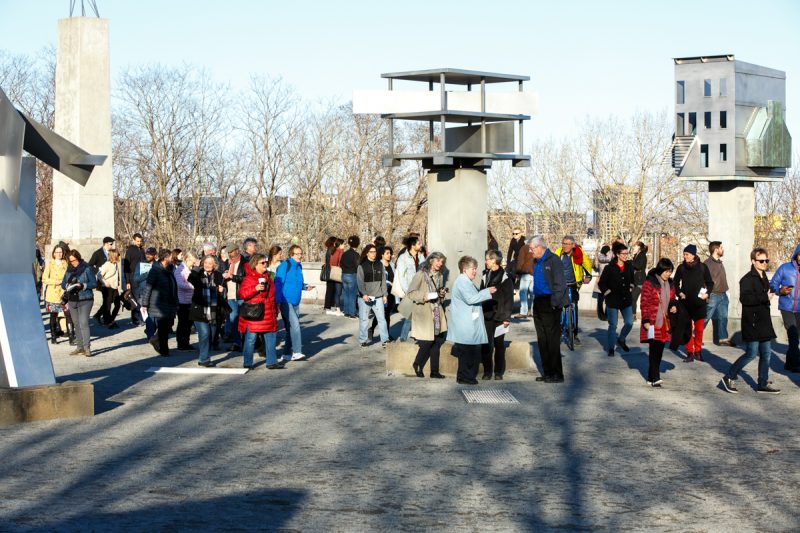
Cynthia Hammond has been awarded a SSHRC Partnership Development Grant for the project, “La ville extraordinaire: Learning from older Montrealers’ urban knowledge through oral history research-creation”April 21, 2020
Working with LEAP team member, Denis Bilodeau and a team of seven other professors and community partners, Cynthia Hammond will be leading a 3-year research-creation project that focuses on the ways in which four different communities of older Montrealers have shaped the city of Montreal over time.
|
Jean-Pierre Chupin and David Theodore participated in a round table on the occasion of the launch of the book “Canadian Modern Architecture”February 24, 2020
Jean-Pierre Chupin and David Theodore participated in a round table at the launch of the book "Canadian Modern Architecture", January 15, 2020, at the Canadian Center for Architecture. This detailed reference work highlights how architectural practice in Canada has changed since 1967, and how Canadian architects have interpreted international fashions and regional and Aboriginal architectural trends, with a focus on Toronto, Montreal , and Vancouver. The conversation focused on Canadian methods of competition and commissioning in an international context.
|
Louise Pelletier is co-curator of the exhibition “Concrete in all its forms – Mark West’s architectural experiments”February 24, 2020
Louise Pelletier is co-curator of the exhibition "Concrete in all its forms - Mark West's architectural experiments", inaugurated on February 20, 2020. Until April 11, 2020, the Design Center presents visionary and enigmatic drawings concrete constructions by artist and architect Mark West, brought together for the first time in one place. This collection of works imprinted by the surrealist universe brings together works, which go from dreamlike drawing to the design of architectural elements, in an installation where their remarkable unity becomes explicit. These works demonstrate the symbiosis of rational and non-rational thought through methods that explore and discover the poetic potential and the structural intelligence hidden in everyday materials.
|
Anne Cormier represented LEAP at the Ryerson meeting of the Canadian Architecture Forums on Education (CAFÉ)February 14, 2020
On February 6, 2020, Anne Cormier represented LEAP at the Sidewalk Labs in Toronto. As part of the Canadian Architectural Forums on Education (CAFE) series, she has participated in various discussions that support the search for a national architectural policy for Canada.
|
Carmela Cucuzzella and professors from UQAM, ULaval and the University of Montreal organize a conference for the next ACFAS 2020February 14, 2020
The second edition of the Intersections du design symposium will take place on May 4 and 5, 2020, during the 88th Acfas congress in Sherbrooke. Entitled "Caring through design", it seeks to examine what kind of insight the concept of care can offer to research and practices currently carried out in the design disciplines. Organized over two days, its purpose is to bring together speakers from the different fields of research and practice in design, including researchers and researcher-creators (emerging or confirmed), practitioners and designers (established or at the start of their careers), graduate students. In a spirit of mutual fertilization and diversity, the presentations of the students will be mixed with those of the researchers, researchers-creators and practitioners. This conference is led by a plural organizing committee made up of representatives from four Quebec Schools of Design, associating Concordia University, Laval University, the University of Montreal and the University of Quebec in Montreal. In partnership with the journal Sciences du Design, the research group Design, innovations and humanisms, the research group Design and society, the Interdisciplinary research center in operationalization of sustainable development (CIRODD), the Concordia Integrated Design Research Chair, Ecology And Sustainability for the Built Environment (IDEAS-BE), and the UQAM Research Chair in Design for E-Mental Health (DIAMENT).
|
Jean-Pierre Chupin interviewed on the international competition for the national palace in HaitiFebruary 14, 2020
In 2017, seven years after the earthquake that destroyed the historic building of the National Palace in Haiti, a major international architecture competition was launched and the winners were announced on January 12, 2020. But some of the contest participants denounce the opacity of the process.
Despite the renown of the winning team of Cassandre Méhu, supported by the great British architect David Adjaye, the fact that the Haitian people do not have access to the jury's report and therefore to the issues of qualitative judgment poses many democratic problems.
Journalist Widlore Mérancourt, of the online media Ayibopost, a critical platform for popularizing public issues, consulted Jean-Pierre Chupin on certain aspects of this process. For Jean-Pierre Chupin, the communication of the jury's report is essential. "In a competition, the jury literally embodies the company for which we want to design and build the best project [...] There is therefore no reason to hide this or that aspect of the judgment".
|
Georges Adamczyk organizes an exhibition around Japanese heritage at the UdeM Exhibition CenterFebruary 13, 2020
As part of his mandate as head of exhibitions of the Faculty of Planning presented annually at the Exhibition Center of the University of Montreal, Georges Adamczyk, offers an exhibition of monuments and sites inscribed on the World Heritage List of UNESCO, photographed by Kazuyoshi Miyoshi. This exhibition is a project supported by the School of Architecture and the School of Town Planning and Landscape Architecture.
This is the third exhibition devoted to Japanese architecture, urban planning and the landscape which is presented by Georges Adamczyk at the Exhibition Center of the University of Montreal, three exhibitions produced by the Japan Foundation and which also contributed financial assistance for these projects. In 2014, the exhibition on architectural reconstruction and adaptation after the terrible earthquake of March 2011 was presented. The aim was to take stock of the incredible resilience of the communities hit by this disaster and above all the immediate contribution and imaginative of universities and schools of architecture. Parallel Nipon, Architecture and Urbanism in Japan from 1996 to 2006, presented in 2018, was a remarkable example of the social and environmental directions taken by Japanese architecture after the formalist break of post-modernism.
To better understand contemporary architecture in Japan, that of today, especially that of Kengo Kuma and that of Sou Fujimoto, nothing better than to go back to basics. This new exhibition presents 67 photographs of Kazuyoshi Miyoshi. The list of natural and cultural properties of exceptional and universal values of UNESCO world heritage, includes 23 sites and built complexes of Japanese heritage which is immense. 8 ancient built sites, 4 natural sites and the National Museum of Western Art in Tokyo, 1 of Le Corbusier's 17 buildings, a group spread over 7 countries which marks its contribution to the heritage of modern architecture. This building is not included in the works of photographer Kazuyoshi Miyoshi. A small window is dedicated to him, allowing to discover other architectural photographers: Cemal Emden, Richard Pare and Takashi Homma.
The exhibition is also a discreet tribute to André Corboz who signed the preface to the volume on the architecture of Japan in the Universal Architecture collection, published by the Book Office in 1969, when he was a professor at the 'School of Architecture of the University of Montreal. The exhibition runs from January 23 to February 15, 2020.
|
Cynthia Hammond organizes a student conference as part of the exhibition “Feminist Spatial Stories”January 17, 2020
Cynthia Hammond is organizing a student conference as part of the exhibition “Feminist Spatial Stories”, at the Center for Oral History, in collaboration with 4th Space, at Concordia University, on March 5 and 6, 2020.
|
Cynthia Hammond is organizing a conference at Concordia University as part of an academic exchange with the Center for Oral History and Digital NarrationJanuary 17, 2020
Cynthia Hammond is organizing the conference "Incarnated Stories: Gender, Body and Oral History" as part of a university exchange with the COHDS-SOHC Summer Institute, Center for Oral History and Digital Narration, Concordia University, from June 10 to 13 2020.
|

Anne Sabourin, doctoral student at UQAM, receives two doctoral scholarshipsJanuary 17, 2020
Anne Sabourin, doctoral student at UQAM under the supervision of Louise Pelletier, receives the Doctoral Research Scholarship from the Fonds de recherche du Québec - Société et culture, as well as The Return to Studies Scholarship from the University of Quebec Foundation (FUQ).
|
DOCTORAL SCHOLARSHIPS (New deadline August 1st 2020 for integration January 2021)December 7, 2019
La Chaire de recherche du Canada en architecture, concours et médiations de l’excellence (CRC-ACME) sollicite des candidatures pour des bourses doctorales. Chaque bourse sera accompagnée d’un contrat de recherche et soutiendra une étudiante ou un étudiant dans la réalisation d’un projet de recherche doctorale étroitement lié à la programmation de cette chaire qui se consacre à l’étude de la qualité architecturale au filtre des prix d’excellence et des processus de concours. (https://crc.umontreal.ca)
De façon générale, les propositions de recherche doctorale devront contribuer à l’histoire et à la théorisation des définitions contemporaines de la qualité en architecture. Les propositions de recherches comparatives sont fortement encouragées et devront indiquer comment elles prendront appui sur l’étude conjointe des projets lauréats de concours et de prix d’excellence au Canada (voir Catalogue des Concours Canadienswww.ccc.umontreal.ca et Atlas de l’Excellence en Architecture www.architecture-excellence.org).
La thèse sera dirigée par Jean-Pierre Chupin Ph.D. (https://crc.umontreal.ca/chercheur/jean-pierre-chupin/), dans le cadre du programme de Ph.D. individualisé en architecture à l’Université de Montréal. Une codirection avec une ou un professeur associé à la CRC-ACME (UdeM) pourra être envisagée en fonction des orientations spécifiques du projet de recherche.
Chaque bourse de 15 000$ CAN par année sera octroyée pendant un minimum de deux années et un maximum de quatre années, en fonction des résultats scolaires et scientifiques (publications, conférences, etc.). Ces bourses seront accompagnées de contrats de recherche de la CRC-ACME (au minimum un contrat de 5000$ CAN par année) et, en fonction des fonds disponibles, s’ajouteront des bourses de voyage ou de soutien du Laboratoire d’étude de l’architecture potentielle (www.leap-architecture.org). Les boursiers pourraient aussi être éligibles aux bourses d’admission, de scolarité et d’excellence, offertes par la Faculté de l’aménagement et par l’Université de Montréal.
Autres conditions et modalités :
|
Two LEAP scholars head a special issue of the Journal of Sustainability Research (Open access journal of Hapres)November 12, 2019
Deux chercheurs du LEAP dirigent un numéro spécial du Journal of Sustainability Research (Journal en accès libre de Hapres)
Numéro special : "Sustainable Architecture and Urban Design: Alternative Theories for Qualitative Comparisons"
Since the turn of the century, theories and practices of sustainable architecture and urban design have been characterized by increasingly normative grids, such as standards, checklists, certifications, etc. As imperative as these normative grids are for ensuring a certain level of sustainability in the built environment, they may inadvertently avert the virtues of creative design practices to mere risk management exercises.
This is in clear contrast to the pioneering environmental design of the 1960s, when the search for holistic approaches gave rise to a spectrum of methodological experimentations, both in the field of design processes (design methodologies) and environmental studies. The formation of the Environmental Design Research Association (EDRA) in 1968 was an outcome of this search for qualitative as well as quantitative methodologies in the design disciplines. In the 1970s, environmentalism started to shift towards an ecological ideology soon dominated by technical solutions and the search for eco-efficiency. Systematically developed throughout the 1980s and 1990s, this technological emphasis for measurable efficiency started to reveal its limitations. Facing a problematic integration of cultural and social dimensions, this dominant approach founded on the management of eco-performances revealed a counterproductive hyper-technological paradigm for the design disciplines and their theoretical frameworks (Vesely, 2004; Perez-Gomez, 1983).
Numerous scholars now underline that these missing inter-subjective dimensions may be compromising the very idea of a holistic environmentalism in various realms of knowledge and action (Kagan, 2010; McLennan, 2004). Such is the case in the design disciplines, where a series of ethical issues are being identified at varying scales (Fisher, 2008). In the past twenty years, theoretical frameworks have induced or supported the normative rather than systemic methods to sustainable design. The more comparative and qualitative evaluative approaches that have been established in professional practice—design committees, collective judgment, competition juries—are still being overlooked by scholars as the foundation of evaluation and judgment. Furthermore, even if authors have sought to reveal critical theories for these dominant discourses, occurrences have been rare.
We believe it is now time to step back and rethink these dominant paradigms in order to provide new theoretical frameworks and methodologies for sustainable architecture and urban design. This special issue calls for the renewal of theories and hypotheses opening on a broadened evaluative and comparative framework. We welcome papers in the following three themes:
(A).(B).(C).
Professor Carmela Cucuzzella
Professor Jean-Pierre Chupin
Guest Editors
sustainable architecture sustainable urban design comparative analysis qualitative-quantitative divide evaluation judgment
Submission Deadline: 30 April 2020 |
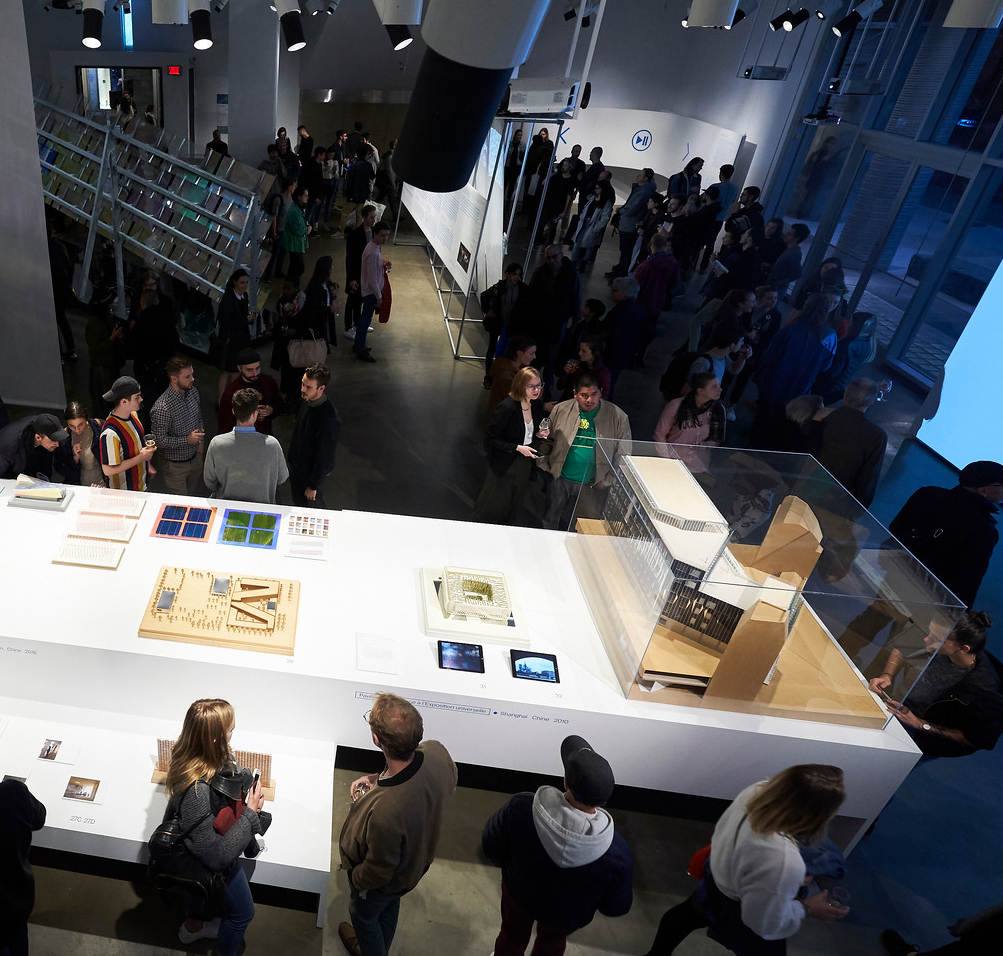
At the UQAM Design Center, LEAP is supporting the exhibition BETWEEN TWO: AN ARCHITECTURE OF RESONANCENovember 8, 2019
Louise Pelletier, directrice du Centre de design a invité l’agence Ferrier Marchetti studio à présenter ses projets les plus récents traitant de la sensorialité et de la sensualité dans l’espace urbain.
Du 3 octobre au 10 novembre 2019
http://www.centrededesign.com/entre-deux/
Trois membres du LEAP (Georges, Adamczyk, Anne Cormier et Louise Pelletier) participent à la table ronde : Les sens et la ville (Comment les sens contribuent-ils à créer une nouvelle urbanité?)
Centre de design de l’UQAM, 30 octobre 2019 à 18h00
|
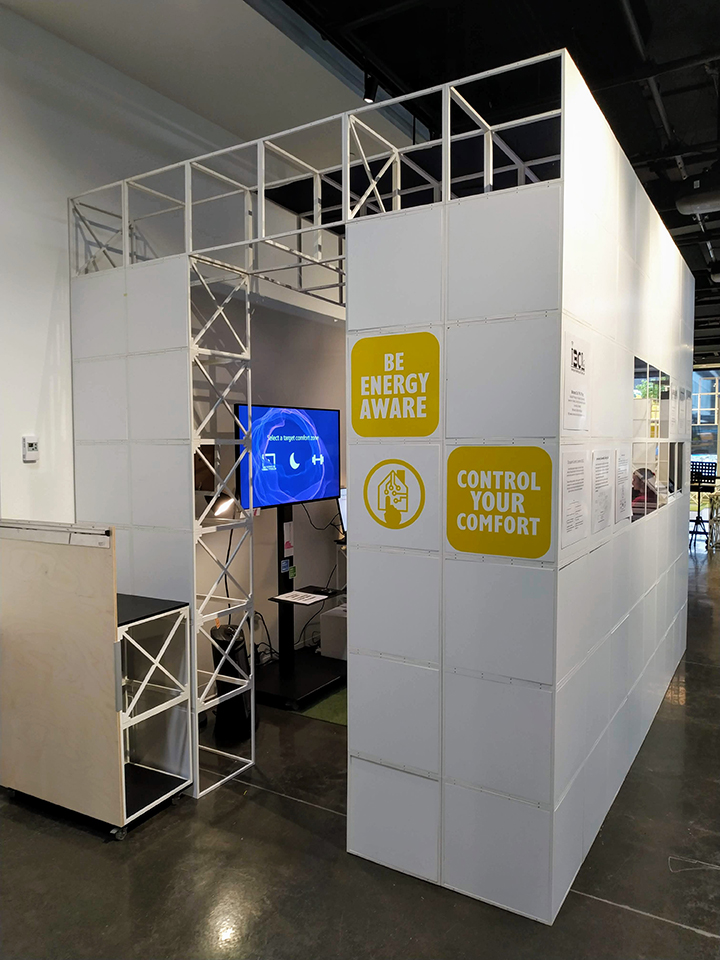
The Concordia IDEAS-BE team presents an interactive installation on the domestic uses of energyNovember 8, 2019
Under the coordination of Professor Carmela Cucuzzella, the IDEAS-BE team (Sherif Goubran, Anghelos Coulon, Gabriel Pena, Firdous Nizar, Aristofanis Soulikias, Morteza Hazbei), presents an interactive installation inviting visitors to estimate their stay at the Espace ESPACE 4 space of Concordia University and the event's framework: NextGenCitieshttps://www.concordia.ca/next-gen/4th-space/themes/next-generation-cities.html
The interactive interface of the installation allows users to control their comfort while learning about their energy consumption. The goal is to create playful and interactive plateforms.
 |
LUCIE PALOMBI, DOCTORAL STUDENT, RECEIVES TWO PRESTIGIOUS AWARDSNovember 7, 2019
March 28, 2019: Lucie Palombi received the scientific prize, the public prize and the prize for the best summary of the Symposium Perspectives 360 organized by the Association of Higher Cycles of the Faculty of Planning for the presentation of her doctoral project in 6 minutes. The funds were donated by the Ivanhoé Cambridge Observatory.
October 25, 2019: On the occasion of the launching ceremony of the Royal Architecture Institute of Canada Festival, Lucie Palombi was awarded a $ 5,000 scholarship for the writing of a 1000-word essay.
His text takes the form of a letter to Le Corbusier. She writes that the descriptions of her travel diary inspired her, as did descriptions of North America in the 19th century, Paris in the 20th century, and the gardens of Versailles from various authors she read over the years. years. These readings led her to ask "Can we carve the world with words and paper? The journeys described in places far removed by reading have allowed him to understand that "stories, real or fantasized, give meaning to the most silent places". Jury Comment: The text is intelligent and original in form and content, and is beautifully written. It reveals a new analytical mind, able to contribute to the discipline in thought and action.
|
Jean-Pierre Chupin holds the Canada Research Chair in Architecture, Competitions, and QualityJune 25, 2019
CANADA RESEARCH CHAIR IN ARCHITECTURE, COMPETITIONS AND QUALITY
MONTREAL, June 20, 2019 – Canada's science minister Kirsty Duncan announced the April and October 2018 Canada Research Chair Awards, including one in Architecture, Competitions and Quality, granted to Université de Montréal architecture professor Jean-Pierre Chupin. One of the few Tier-1 chairs in Canada dedicated to the study of contemporary architecture, it will help Professor Chupin better define the attributes, parameters and criteria for recognizing quality in architecture and understanding its renewal in current practices. |

A Daniel Arbour and Associates scholarship for Alexandra ParéJune 25, 2019
Alexandra Paré (Individualized PhD in Architecture) is the winner of the 2018-2019 competition of the Daniel Arbour and Associates Scholarship that promotes innovation and new approaches in environmental design by highlighting the competence of a student enrolled in a program in studies of the Faculty of Environmental design ($ 20,000).
|
Thesis defense Tiphaine AbeniaJune 25, 2019
Friday, June 7, 2019, at the Research House of the University of Toulouse, Tiphaine Abenia, PhD student in co-supervision between the University of Toulouse (Jean Jaurès) + ENSA Toulouse and the School of Architecture of the University of Toulouse Montreal has defended a thesis entitled: Potential Architecture of the Great Abandoned Structure: Categorization and Projection. Under the chairmanship of Professor isabelle Alzieu (University of Toulouse) and in addition to the thesis supervisors (Daniel Estevez and Jean-Pierre Chupin) the jury was composed of: Dominique Rouillard (Paris-Malaquais rapporteur) and Dieter Dietz (EPFL rapporteur), Pierre Boudon (University of Montreal).
|

(Winter 2019) 5 doctoral students at inter university LEAP lab receive a financial support taken on the FRQSC infrastructure grant (2016-2020)May 3, 2019
Angie Arsenault (Concordia, dir. Cynthia Hammond), Morteza Hazbei et Aristofanis Soulikias (Concordia, dir. Carmela Cucuzzella), Aurélien Catros et Lucie Palombi (UdeM, dir. Jean-Pierre Chupin).
|
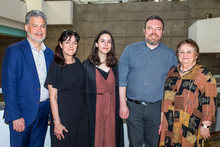
Lucie Palombi awarded the first Geneviève Bazin bursary from the rare book department at UdeMMay 3, 2019
During a ceremony held on April 23, Lucie Palombi was awarded the very first Geneviève-Bazin Fellowship, created to honor the memory of the one who set up what would become the Rare Books Library. and special collections (BLRCS) of the Université de Montréal. A PhD student at the UdeM School of Architecture, Ms. Palombi received this $ 2,000 scholarship because of the importance of the BLRCS documents in her research project as well as for the quality of her work.
|
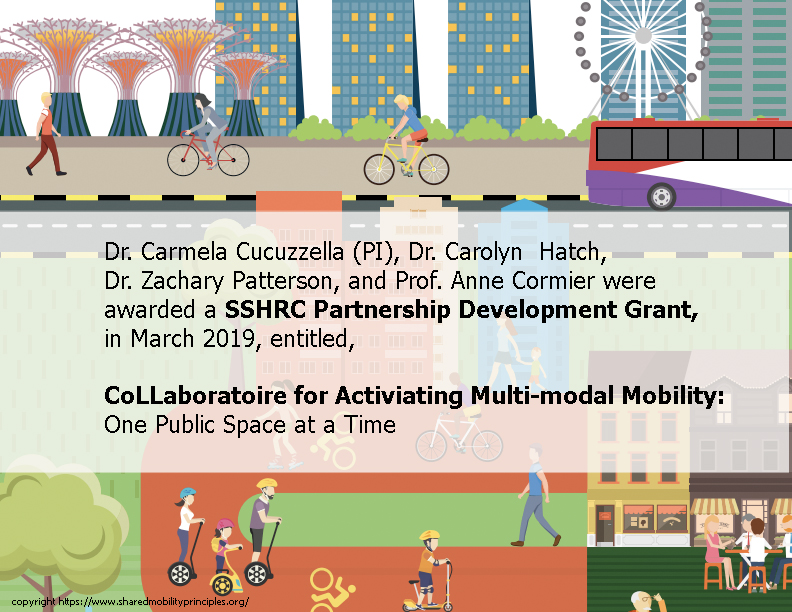
Carmela Cucuzzella and Anne Cormier awarded a SSRHC Partnership Development GrantMay 3, 2019
Title: CoLLaboratoire for Activating Multi-Modal Mobility (CAM): One Public Space at a Time
Chair Ideas-be (Leap@Concordia)
Co-Applicants: Anne Cormier, Zackary Patterson, Carolyn Hatch
Partners: City of Montreal, CRE Montreal, Jalon MTL, Velo Mtl,.
The overall goal of this partnership is to raise awareness and encourage behavior shifts towards more sustainable urban mobility by understanding how public spaces can become knowledge exchange nodes. Its aims to move the climate change conversation into our community (raising awareness) and to awaken environmental behavior (engagement) to empower citizens to change their urban mobility behavior.
The first objective is to identify, analyze, and understand the best practices in other cities in North America and Europe for public space interventions that encourage citizens to embrace multi-modal mobility. The second objective is to test, through a series of community workshops, in three different areas in the City of Montreal, these methods (along with others). The workshops will allow the co-development of ideas for public spaces – ideas that will help citizens better understand issues related to multi-modal mobility and encourage behavior shifts. The ideas developed during the workshops will be presented in exhibitions, both online and in the public realm to further build dialogues with the community. The third objective is to develop these exercises, tools, and methods, into an exportable platform.
Researchers:
Carmela Cucuzzella
Anne Cormier
Caroline Hatch
Zachary Patterson
Pierre Gauthier
Research Assistants:
Morteza Hazbei
Amelie Tremblay
Sherif Goubran
Firdous Nizar
Omar Oriz Moraz
Mohammad Abdol-rezazadeh
Fatemeh Mehrzad
|

LEAP Notebooks #3: On the Potential of Didacticism in Architecture (winter 2019)March 31, 2019
Issue #3 of the Cahiers de recherche du LEAP Research Notebooks, coordinated by Carmela Cucuzzella and Cynthia Hammond with Sherif Goubran and Chanelle Lalonde / Guest scholars: Louise Pelletier (Design, Uqam), Nicola Pezolet (Art History, Concordia).
Discover issue #3 on the page dedicated by Potential Architecture Books: here.
|
Tiphaine Abenia will give a lecture at the University of MontrealMarch 19, 2019
Tiphaine Abenia will give a lecture entitled De l’abandon et du potentiel en architecture at the University of Montréal on March 18, 2019. This public lecture is organized by the Laboratoire d'Étude de l'Architecture Potentielle (LEAP).
|
Tiphaine Abenia will be at the international conference-exhibition Inventaires UrbainsMarch 19, 2019
Tiphaine Abenia will give a lecture at the international conference-exhibition Inventaires urbains at UQAM on March 21st, 2019. The international conference-exhibition brings together researchers and creators in the field of design and related disciplines to explore the role of inventory and invention in the investigation of the city and its territory.
|
Morteza Hazbei will be in San Diego for the International Conference on Civil and Architectural Engineering (ICCAE)March 19, 2019
Morteza Hazbei will be in San Diego for the International Conference on Civil and Architectural Engineering (ICCAE) which brings together innovative academics and industrial experts in the field of Civil and Architectural Engineering to a common forum.
|
Alexandra Paré will be in Lisbon for an international conference at the Calouste Gulbenkian FoundationMarch 19, 2019
Alexandra Paré will attend the international conference Educational Architecture – Education, Heritage which will be held in Lisbon from 6-8 May, 2019, at the Calouste Gulbenkian Foundation.
|
Aristofanis Soulikias awarded the Jorisch Family Artist ResidencyMarch 19, 2019
Aristofanis Soulikias, an Individualized Program PhD candidate with strong ties to the Faculty of Fine Arts, has been awarded the 2019 Jorisch Family Artist Residency. Announced in 2016, the fellowship supports a four-week artist residency for outstanding graduate students in the Amalie Redlich Tower of the Museum der Moderne in Salzburg, Austria.
|
Alessandra Mariani reviews the CCA exhibit in JAEMarch 19, 2019
Alessandra Mariani was invited to review the CCA's recent exhibition Architecture Itself and Other Postmodernist Myths in The Journal of Architectural Education (JAE).
|
David Theodore and TBA at the Venice Biennale in Architecture of 2020March 19, 2019
The Canada Council for the Arts is proud to support TBA and David Theodore's Impostor Citites exhibit at the Venice Architecture Biennale of 2020. It seeks to understand why, in the cinema, Canadian cities come to substitute themselves for other cities around the world.
|
Aaron Richmond at the Max Planck InstituteMarch 19, 2019
Since December 2018, Aaron Richmond has been a pre-doctoral fellow in Department II of the Max Planck Institute for the History of Science in Berlin. His research there considers the scientific lineages drawn together within the French periodical L'Esprit nouveau (1920-1925).
|
|
|

Aurélien Catros – Winner of a faculty doctoral fellowship related to Artificial Intelligence 2018November 19, 2018
The “Artificial Intelligence” faculty fellowship, worth $ 2,000 CAD, was awarded to support a doctoral research project entitled “Representation and Simulation of Architecture Project Qualities through the Prism of Building Data Modeling Systems”. This project aims to determine, through a series of comparative analyzes of different scientific models, the part of the numerical modeling of the architectural project in the appreciation of the architectural quality during its design. This research is part of the Montreal Declaration’s “Knowledge”, “Responsibility”, “Autonomy” and “Well-being” components for responsible development of artificial intelligence by promoting the transparency of design algorithms and processes. numerical modeling analysis, now widely democratized in professional practice.
|
Mandana Bafghinia winner of a 2018 Mitacs Globalink grant to pursue her research on observation decks in ShanghaiNovember 19, 2018
The Mitacs Globalink Research Award provides $6,000 in Canada to conduct 12–24-week research projects at universities overseas. The fellowship is awarded to support a doctoral research entitled « The Skyscraper: a viewing instrument for the metropolis ». The investigation of Shanghai’s buildings is particularly relevant to my research, both in terms of the quantity of observation decks located in the city and in terms of their design and operation. Besides the development of the thesis, the research stay will generate publications and support the development of a collaboration on high-rise buildings between Jiao Tong university and UdeM.
|
Jean-Pierre Chupin cosigns a manifesto for the quality of public constructionsAugust 15, 2018
Jean-Pierre Chupin, holder of the Université de Montréal Research Chair on Competitions, is co-signatory of the open letter on service contracts for public bodies, a joint manifesto of the Association of Architects in Private Practice of Quebec (AAPPQ) and the Association of Engineering Consulting Firms - Quebec (AFG) against the bill imposing the rule of the lowest bidder.
http://www.aappq.qc.ca/nouvelles/lettre-ouverte-contrats-de-services-des-organismes-publics-faudra-t-il-un-autre-viaduc-de-la-concorde
|
(winter 2018) 5 doctoral students at LEAP receive a support grantAugust 10, 2018
5 doctoral students at LEAP receive a support grant taken on the FRQSC infrastructure grant (2016-2020)
Elijah Borrero (McGill, dir. David Theodore), Alessandra Mariani (Uqam, dir. Louis Martin), Sherif Goubran (Concordia, dir. Carmela Cucuzzella), Alexandra Paré et Mandana Bafghinia (UdeM, dir. Jean-Pierre Chupin).
|
LEAP Notebooks #2: Heteronomy, Autonomy (winter 2018)August 10, 2018
Publication of a second issue of texts on contemporary architecture:
Cahiers de recherche du LEAP Research notebooks #02
Issue edited by Louis Martin and Jonathan Lachance dedicated to the
Potential of Heteronomy and Autonomy in Architecture
with invited scholar Prof. Paolo Amaldi (ENSA Versailles).
Discover issue#3 on the page dedicated by Potential Architecture Books: here.
|
Sherif Goubran receives the prestigious Vanier Canada Graduate Scholarship (2018-2021)August 10, 2018
Sherif Goubran, doctoral student à Concordia University (dir. Carmela Cucuzzella) receives the prestigious Vanier Canada Graduate Scholarship (2018-2021) for academic excellence and community involvement.
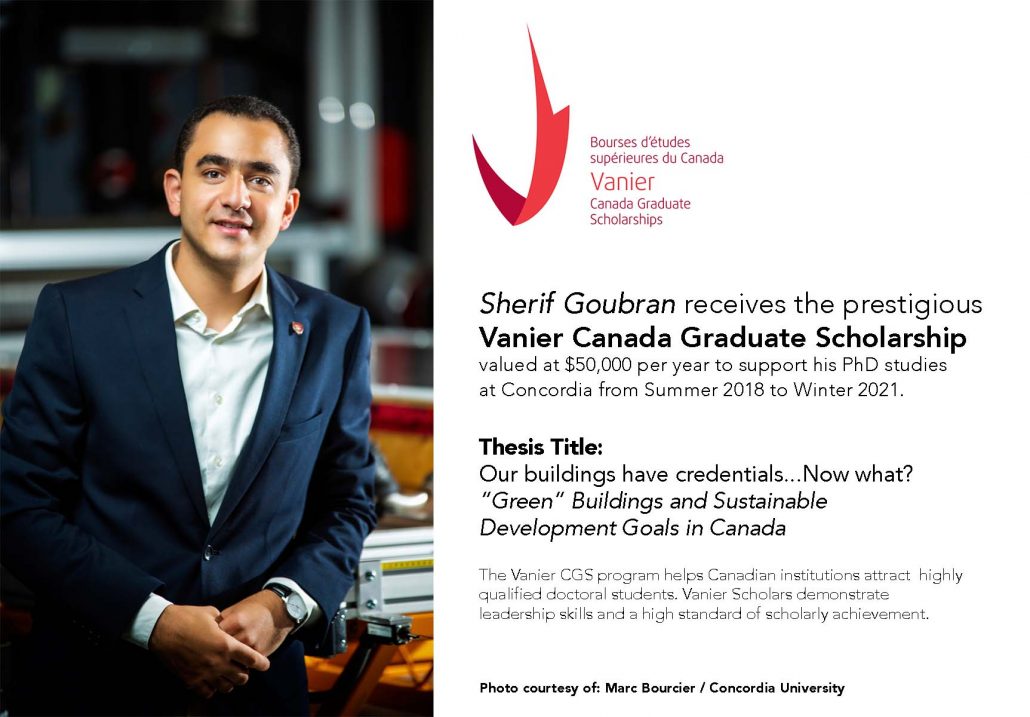 |
Tiphaine Abenia – Lauréate de la Bourse Palladio 2017 – enJanuary 9, 2018
Félicitations à Tiphaine Abenia, lauréate de la Bourse Palladio 2017 (Pour son travail de thèse intitulé "Le projet d'architecture contemporain à l'épreuve du reclassement : catégorisation des potentiels de la structure urbaine abandonnée", Tiphaine Abenia (directeurs : Jean-Pierre Chupin et Daniel Estevez) (La bourse de la Fondation Palladio soutient des doctorants et jeunes docteurs, français et étrangers, dont les recherches agissent significativement sur la construction de la ville. Cérémonie : 7 novembre 2017, Pavillon de l'Arsenal, Paris. ))
|
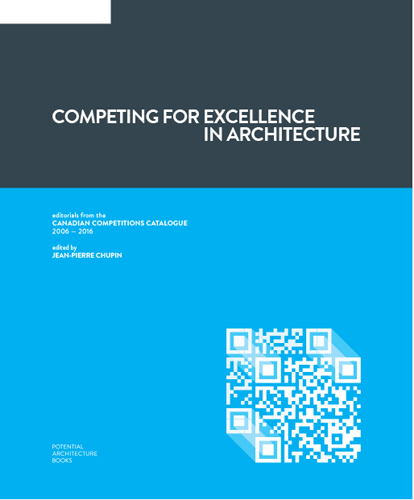
New Book (Translation): Competing for Excellence in Architecture (editorials from the Canadian Competitions Catalogue, 2006 – 2016) Edited by Jean-Pierre ChupinJanuary 9, 2018
Montreal, Potential Architecture Books, 322 pages, October 2017 ISBN 978-0-9921317-5-3
A travel guide for those in search of architectural quality, this book can be browsed in many ways. Written in a clear and concise manner by about thirty authors, it features a collection of editorials from the Canadian Competitions Catalogue (CCC), a large online digital archive open to the public since 2006. The editorials explore more than sixty Canadian architecture competitions held in the last seventy years. Especially in recent years, both public and private institutions have organized competitions across Canada, producing hundreds of architectural, urban planning, and landscape design projects. Together these proposals, most of which remain unbuilt, constitute a fantastic treasure in our tangible and intangible common heritage. Given that competition organizers, designers, juries, and critics never operate alone, there is no doubt whatsoever that this book results from the collaboration of a myriad of people, contributing to and competing for excellence in architecture.
|
test – enJanuary 9, 2018
Mercredi 22 mars – 17h30. Conférence publique de Reinhold Martin (Columbia University NY), # 1120 de la Faculté de l’aménagement de l’Université de Montréal.
|
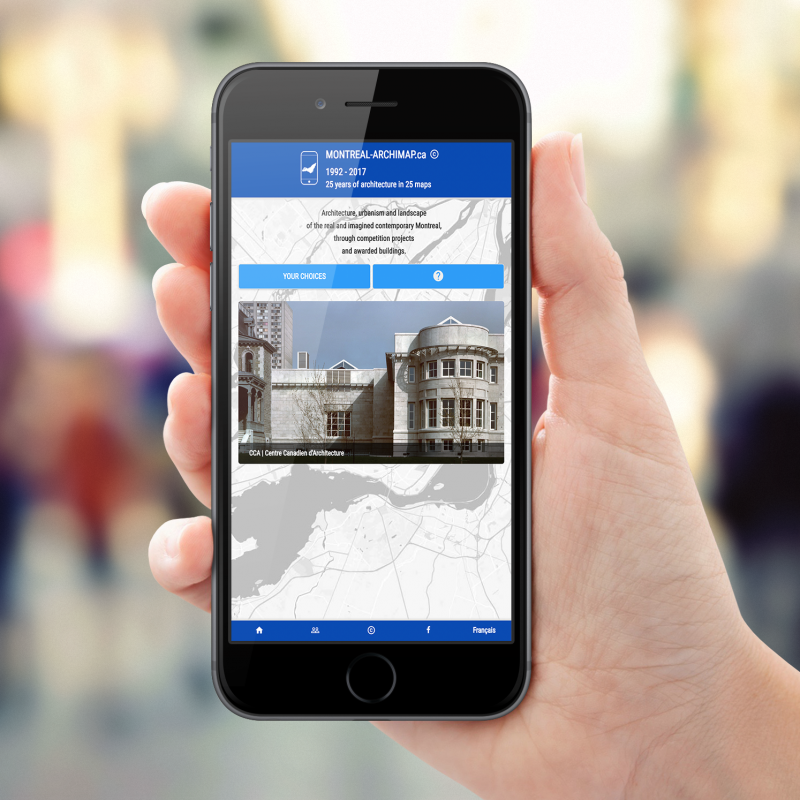
Make your maps of excellence on www.MONTREAL-ARCHIMAP.caJanuary 9, 2018
Discover the cartographic device MONTREAL-ARCHIMAP. The team of the Research Chair on Competitions and Contemporary Practices in Architecture embarked on the design and implementation of a cartographic application highlighting contemporary architecture in Montreal for the 375th anniversary of Montreal. (Nicholas Roquet and Jean-Pierre Chupin in collaboration with Humaneco.ca). |
Doctoral Thesis Defence – – Louis Destombes (Director Jean-Pierre Chupin) – January 15th 2018January 9, 2018
Traductions constructives du projet d’architecture. Théoriser le détail à l’ère de la modélisation intégrative (B.I.M.)
Résumé: Cette recherche porte sur le rôle des écarts entre les dessins d’architecture et les édifices qu’ils représentent en analysant le transfert des projets de la figuration à l’édification. Ce phénomène est abordé à la fois en tant que problématique disciplinaire, dans la perspective théorique et historique de la modernité architecturale, et en tant que problème pratique, à travers le tournant numérique de la conception architecturale.
L’hypothèse des traductions constructives du projet d’architecture (Evans, 1986), qui attribue une fonction heuristique à ces écarts, est déployée au moyen d’un rapprochement analogique entre conception architecturale et traduction littéraire. Ce parallèle permet de mobiliser les théories de la traduction de l’Allemagne romantique (Berman, 1984) pour problématiser le phénomène du transfert du projet au sein de la discipline architecturale. Interprétés en termes d’attitudes possibles des concepteurs face au transfert du projet, les principes théoriques modernes de la tectonique (Frampton, 1995) et de la construction comme représentation (Levine, 2009) assurent l’ancrage historique de cette problématique.
Supports privilégiés pour élaborer et prescrire les dispositifs constructifs, les détails constituent les principaux indicateurs permettant une observation pragmatique de ces attitudes au sein des pratiques professionnelles. L’hypothèse des traductions constructives est testée à travers deux études de cas portant sur la genèse de projets réalisés par les agences Chevalier Morales Architectes au Québec et Jakob+MacFarlane en France. Les opérations de traduction identifiées à travers ces projets témoignent de tensions constructives où le détail apparaît comme une catégorie de la conception architecturale numérique. Ces analyses permettent d’envisager une actualisation des théories modernes du détail à l’aulne de l’évolution contemporaine des méthodologies de conception.
Directeur : Jean-Pierre Chupin
|

4 PhD students @LEAP receive support grantMarch 13, 2017
Doctoral candidates: Adrienne Costa (UdeM), Mandana Bafghinia (UdeM), Sherif Goubran (Concordia) and Alessandra Mariani (UQAM) each receive a LEAP support grant in March 2017 thanks to our FRQSC infrastructure
|
New book : « Competing for Excellence in Architecture – Editorials from the Canadian Competitions Catalogue (2006-2016) »March 13, 2017
A travel guide for those in search of architectural quality, this book can be browsed in many ways. Written in a clear and concise manner by about thirty authors, it features a collection of editorials from the Canadian Competitions Catalogue (CCC), a large online digital archive open to the public since 2006. The editorials explore more than sixty Canadian architecture competitions held in the last seventy years. Especially in recent years, both public and private institutions have organized competitions across Canada, producing hundreds of architectural, urban planning, and landscape design projects. Together these proposals, most of which remain unbuilt, constitute a fantastic treasure in our tangible and intangible common heritage. Given that competition organizers, designers, juries, and critics never operate alone, there is no doubt whatsoever that this book results from the collaboration of a myriad of people, contributing to and competing for excellence in architecture. |
Anne Cormier et Jean-Pierre Chupin participent à l’évènement « Perdants Magnifiques » – enMarch 12, 2017
Anne Cormier et Jean-Pierre Chupin sont invités à l’événement « Perdants Magnifiques » organisé par la MAQ au Centre Phi le 26 oct. 2015
|
Special issue of Museology on “Research-Creation and the Contemporary Art Space”March 12, 2017
Directed by Carmela Cucuzzella and Alessandra Mariani
|
Évènement de lancement du livre « Concourir à l’excellence en architecture / Éditoriaux du CCC 2006-2016 » – enMarch 12, 2017
Lancement du livre « Concourir à l’excellence en architecture / Éditoriaux du CCC 2006-2016 », sous la direction de Jean-Pierre Chupin. L'évènement se tiendra à l'Université de Montréal, de 17h30 à 19h00, au local 1150.
|
Vernissage de l’exposition accompagnant la conférence « Sculpture, salon ou Shed» – enMarch 12, 2017
La conference (Sculpture, salon ou shed, 11 octobre 2016) est accompagnée d’une exposition conçue par Nicholas Roquet et Jacques Plante (professeur agrégé à l’École d’architecture de l’Université Laval) qui rassemble 36 réalisations et projets contemporains pour des musées et centres d’interprétation. Intitulée Architectures d’exposition au Québec, elle permet de comprendre les défis que relèvent, avec ingéniosité, les architectes québécois. L’exposition est présentée au local 2081 du pavillon de la Faculté de l’aménagement du 4 au 14 octobre. Vernissage, le 11 octobre après la conférence.
|
Évènement d’annonce des résultats du concours « En plus d’attendre le bus / More than waiting for the bus » – enMarch 12, 2017
Mardi 18 avril à la Maison du développement durable se tiendra l'évènement d’annonce des résultats du concours « En plus d’attendre le bus / More than waiting for the bus » organisé par la Chaire IDEAS-Be Concordia University (Carmela Cucuzzella) et la Chaire de Recherche sur les Concours UdeM (JPC) en collaboration avec CRE-Montréal.
|
Doctoral Thesis Defence – – Jonathan Lachance (Director Louis Martin) – March 17th 2017March 12, 2017
« Les fondements architecturaux et écologiques de l’Environmental Design aux États-Unis : 1953-1975 »
<p/p>Under the supervision of professor Louis Martin at UQAM, the thesis examines the nature of the intersection in between Environmental Design and the natural sciences, and its effects on architecture both as a discipline and as a profession in the 1960s’. The first chapter retraces the origins of the discipline of Environmental Design in the 1950s’ in the teachings of Serge Chermayeff at Harvard and in the College of Environmental Design in Berkeley created by William W. Wurster, and it gives an overview of its successive development, dissemination and gradual institutionalization throughout the United States in the 1960s’. The two following chapters are case studies of two landscape architects who have introduced ecology, biology and other natural sciences in their discourse during this last decade: Ian McHarg from the University of Pennsylvania and Lawrence Halprin from San Francisco. My thesis shows that, although McHarg and Halprin approaches ecology from two different points of view, the aim of the intersection with the natural sciences in the 1960s’ was to help formulate a new unified theories of design and sciences which gives the landscape architect the responsibility to both solve the environmental crisis through enlightened and inclusive design practices, and solve the internal problems of post-war American architecture through the dissemination, among the anglo-saxon architectural culture, of a new definition of architecture as «natural process» rather than «design object».
|
Launching of the new Cahiers de recherche du LEAP Research NotebooksMarch 12, 2017
Launching of the new Cahiers de recherche du LEAP Research Notebooks (Du potentiel des grandes structures urbaines abandonnées / On the Potential of Abandoned Large Urban Structures) with heads of schools represented at LEAP. April 5th, 2017, AME room 1150, 18h00.
Abandoned building, modern ruin, urban ghost, skeleton property, deserted structure … these are some of the words used in an attempt to circumscribe the phenomenon of abandoned city fragments. This abandonment, whether partial or total, temporary or long-term, is examined through the “potential” that the survival of these structures would offer. This first edition of the LEAP Research Notebooks gathers 12 case studies, each structured around a common theme in the disciplines of architecture, art history, and semiotics. From Montreal to Berlin, from Detroit to Turin, the various contributions are structured around four tensions calling into question the status of these structures (monumental / monument), their scale (architectural / city planning), the figures they materialize (utopia / ruin) and the poetics they embody (resistance / potential). As revealed by the authors, these large abandoned urban structures are far from being inert. Not only are they vectors of a collective memory, of potential projects, of multiple imaginations, but they also act as a trigger for a critical re-evaluation of our contemporary societies. Therefore, the large abandoned structure cannot be restricted to the fields of economy or land planning: such complex interweaving of material, technical, social and cultural dimensions calls for architects to reflect on its survival.Issue coordinated by Jean-Pierre Chupin and Tiphaine Abenia
|
|
|
Doctoral Thesis Defence – – Bechara Helal (Director Jean-Pierre Chupin) – January 30th 2017January 16, 2017
« The Laboratories of Architecture - Epistemological Inquiry into a Historical Paradigme »
Architectural sites and practices are commonly described in terms borrowed from the arts (studio, creation, masterpiece) and yet, the architectural field relies increasingly on scientific terms (laboratory experimentation, research). This contemporary interest in activities related to scientific research appears to coalesce around the now common notion of "architectural laboratory". Its first materialization dates back to the late nineteenth century and its presence has greatly increased since the recent "digital turn", although this term remains, to this day, still not properly defined. What is an "architectural laboratory"? What elements form its theoretical model? What are the issues related to the emergence of the figure of the "architectural laboratory"? Why and for what purpose do architects refer to the figure of the laboratory?
<p/p>
|
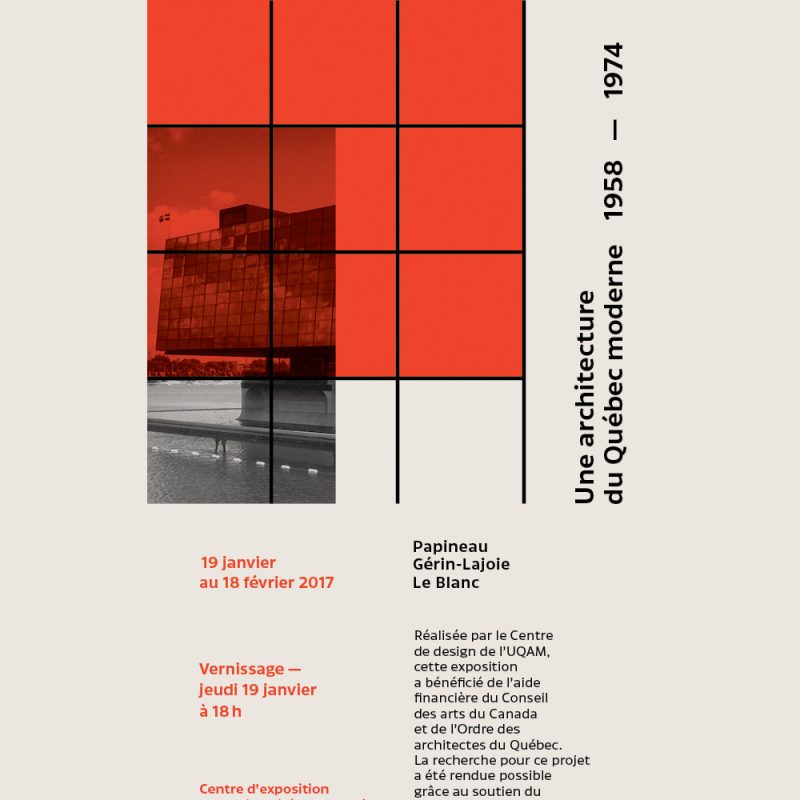
Vernissage de l’exposition Une architecture du Québec Moderne 1958-1974 (PGL) – enJanuary 16, 2017
Vernissage de l’exposition organisée par Georges Adamczyk et Louis Martin (et Réjean Legault) au Centre d’exposition de l’Université de Montréal : Une architecture du Québec Moderne 1958-1974 (PGL). Exposition soutenue par le LEAP.
|
Round Table and Exhibition : « Une architecture du Québec Moderne 1958-1974 (PGL)»January 16, 2017
Round Table and Exhibition organized by Georges Adamczyk and Louis Martin (and Réjean Legault) : « Une architecture du Québec Moderne 1958-1974 (PGL) »
Exhibition promoted by the LEAP, Université de Montréal
|
Jean-Pierre Chupin, Carmela Cucuzzella and Bechara Helal are co-leading a new book on international competitionsDecember 7, 2016
« Architecture Competitions and the production of Culture, Quality and Knowledge - An International Inquiry »
This book comprises a series of 22 case studies from renowned experts and new scholars in the field of architecture competition research. In 2015, it constitutes the most comprehensive survey of the dynamics behind the definition, organization, judging, archiving and publishing of architectural, landscape and urban design competitions in the world. These richly documented contributions revolve around a few questions that can be summarized in a two fold critical interrogation : How can design competitions - these historical democratic devices, both praised and dreaded by designers - be considered laboratories for the production of environmental design quality, and, ultimately, for the renewing of culture and knowledge ?
|

Architecture, philosophie, imagination… – enSeptember 10, 2016
30 septembre + 1 octobre 2005, Colloque international organisé par le LEAP et le Gerphau (France) : Architecture, philosophie et imagination.
|
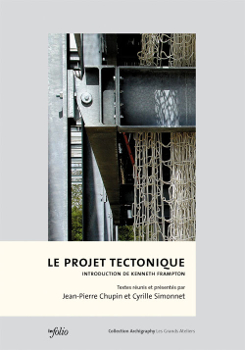
Le projet tectonique… – enSeptember 10, 2016
22 septembre 2005, Lancement du livre Le projet tectonique (éditions infolio, Genève, 2005) sous la direction de Jean-Pierre Chupin et Cyrille Simonnet, en présence du professeur Kenneth Frampton
|
Jean-Pierre Chupin en Autriche – enAugust 10, 2016
20 avril 2009, Jean-Pierre Chupin à l`Akademie der bildenden künste Wien (Institut für Kunst und Architektur) de Vienne en Autriche à titre de conférencier invité dans le cycle international « We built this City… ».
|
Jean-Pierre Chupin et Jean-Pierre Boutinet – enJune 10, 2016
24 janvier 2009, Jean-Pierre Chupin a prononcé une conférence intitulée « L`anticipation et les avatars de l`architecture potentielle » en ouverture du colloque international organisé par l`Université Catholique de l`Ouest et l`Université d`Angers du 28 au 30 janvier 2009 autour des travaux de Jean-Pierre Boutinet.
|
Mission de Fabiano Sobreira à Paris – enJune 10, 2016
8-11 juin 2009, Fabiano Sobreira, post doctorant, effectue un séjour de recherche à Paris auprès de la MIQCP (Mission Interministérielle pour la Qualité des Constructions Publiques) sur les concours de projets et les enjeux de l’administration publique en France
|

Félicitations à Bechara et à Imen!!! – enJune 10, 2016
Bechara Helal et Imen Ben Jemia, candidats au doctorat reçoivent la bourse d’études du FQRSC pour 3 ans
|
Fabiano Sobreira rencontre Denis Lemieux au MCCQ – enJune 10, 2016
7 juillet 2009 - Mission académique à la Direction du lectorat et des politiques du Ministère de la Culture, des Communications et de la Condition féminine du Québec. Entretien avec M. Denis Lemieux.
|
Un nouveau projet de recherche financé par le CRSH – enJune 10, 2016
Jean-Pierre Chupin, Georges Adamczyk et Pierre Boudon reçoivent une subvention ordinaire de recherche du CRSH pour travailler sur les Conflits d’interprétation analogique et le jugement architectural dans les concours publics canadiens (1984-2004)
|
L.E.A.P. Radiophonique – enJune 10, 2016
10 mars 2009, Jacques Lachapelle en entrevue à Radio Canada sur le thème de Montréal du futur à travers l’histoire
|
Débat Public sur le concours du Gesù – enJune 10, 2016
18 mars 2009, Jacques Lachapelle participe au débat public suite à la délibération du jury du concours Mise en Lumière de la Façade du Gesù
|
Concours du Musée National des Beaux-Arts du Québec – enJune 10, 2016
28 mars 2009, Jean-Pierre Chupin est invité à présenter son rapport sur la différence entre les Partenariats Public Privé et les concours d’architecture au Conseil d’administration du Musée des Beaux-Arts du Québec dans le cadre du concours international sur le nouveau pavillon.
|
Denis Bilodeau au MCCCQ – enJune 10, 2016
18 février 2009, Denis Bilodeau est invité à présenter sa recherche sur 15 ans de concours au Québec devant un panel d’administrateurs publics au (MCCCQ) Ministère de la Culture, de la Communication et de la Condition Féminine du Québec.
|
Jacques Lachapelle illumine la façade du Gesù – enJune 10, 2016
26 février 2009, Jacques Lachapelle participe au jury du concours Mise en Lumière de la Façade du Gesù
|
Collaboration L.E.A.P. – E.T.H. (Zurich) – enJune 10, 2016
10 février 2009, Jean-Pierre Chupin rencontre Joris Van Wezemael au centre de recherche sur les concours (Forschung Planungswettbewerbe, Research design competitions) à l’ETH de Zurich pour établir un protocole de collaboration avec le LEAP.
|
Félicitations à Lino pour son excellent mémoire de MScA – enJune 10, 2016
Lino Gomes Alves, obtient avec mention son diplôme de maîtrise MScA Aménagement sur l`archivage numérique des concours Europan comme situation d`analyse scientifique du concours d`idées en architecture.
|

Louis Martin à Yale University – enJune 10, 2016
23-24 janvier 2009, Louis Martin participe au symposium "Reassessing Rudolph: Architecture and Reputation", School of Architecture, Yale University
|
Revue de presse du premier concours du L.e.a.p. … – enJune 10, 2016
Le premier concours Repenser et redéfinir le logement social en centre-ville a attiré l`attention des médias locaux et nationaux. Des arcticles ont été publiés dans le Forum de l`UdM, le quotidien Le Devoir et le magasine d`architecture Canadian Architect.
|
Un printemps à Paris… – enJune 10, 2016
Jean-Pierre Chupin participe à la conférence Génération Europan à La Cité de l`Architecture à Paris et apportera une perspective extérieure sur l`impact des concours Europan 20 ans après leurs débuts. Les liens suivants proposent des versions PDF des programmes de la conférence et de la dernière édition de ce concours européen bien connu.
|
Exposition de travaux d’étudiants… – enJune 10, 2016
Les projets des étudiants ayant participé au concours Repenser et redéfinir le logement social en centre-ville sont exposés à la Faculté de design environnemental de l’Université de Calgary.
|
Échange architectural à Lyon… – enJune 10, 2016
Les chercheurs Anne Cormier, Georges Adamczyk et Jean-Pierre Chupin participent aux `Dix-neuvièmes Entretiens` du Centre Jacques Cartier à Lyon.
|
Aldo Rossi et l’analogie… – enJune 10, 2016
Jean-Pierre Chupin donne une conférence à l’École nationale supérieure d’architecture Paris-Malaquais s’intitulant La Città analoga d’Aldo Rossi.
|
Innovation et conservation au I.P.E … – enJune 10, 2016
En collaboration avec Rim Ben Fredj, Imen Ben Jemia et Mathieu Pomerleau, Jacques Lachapelle présente une communication sous le titre «Innover et conserver, méthode de recherche pour l`analyse des projets architecturaux» dans le cadre de la conférence annuelle de la SEAC (Société pour l’étude de l’architecture au Canada) organisé 14-17 Juin 2006 à Charlottetown à l’Île du Prince Edouard.
|
Prototype de moteur de recherche en Europe … – enJune 10, 2016
Jean-Pierre Chupin présente un prototype de moteur de recherche sur les projets d`architecture au forum européen EUROPAN de Dordrecht.
|
Le LEAP visite Vancouver … – enJune 10, 2016
Georges Adamczyk et Shannon Pirie participent au congrès annuel de l`Institut Royal d`Architecture du Canada et présentent le CCC lors de la table ronde du comité de révision du guide des concours (Document 5).
|
Une nouvelle subvention … – enJune 10, 2016
Denis Bilodeau et Jean-Pierre Chupin obtiennent une généreuse subvention du Ministère de la Culture et des Communications du Québec pour l`exposition au Centre de Design de l`UQAM sur 15 ans de concours au Québec.
|
25 ans d`ARQ… – enJune 10, 2016
Pierre Boyer-Mercier lance le premier numéro d`une série destinée à célébrer les 25 ans de la revue ARQ dont il est un des fondateurs.
|
Deux nouveaux contrats avec Europan… – enJune 10, 2016
Jean-Pierre Chupin obtient deux contrats du Groupement d`intérêt public (Europe des projets architecturaux et urbains) pour documenter et analyser les sessions françaises des concours EUROPAN
|
Deux “lumières” à Lyon… – enJune 10, 2016
Semaine du 4 décembre 2005, Georges Adamczyk et Catherine Szacka participent aux Entretiens Jacques Cartier à Lyon
|
L`esquisse à l`ère numérique… – enJune 10, 2016
1 + 2 décembre 2005, Pierre Boudon participe au colloque SCAN`05 sur le rôle de l`esquisse architecturale dans le monde numérique (Paris Val-de-Seine)
|
Colloque Projetar à Rio… – enJune 10, 2016
15-17 novembre 2005, Sonia Marques, chercheure invitée, participe au deuxième colloque Projetar à Rio de Janeiro
|
Félicitations Jean-Pierre – enJune 10, 2016
Jean-Pierre Chupin reçoit un Prix d’excellence en enseignement de l’Université de Montréal (catégorie professeurs agrégés)
|
Pierre Boudon à Miami – enJune 10, 2016
Pierre Boudon participe au colloque FLAIR qui se tient à Miami en Floride
|
Visite guidée – enJune 10, 2016
23 juillet 2008, Jacques Lachapelle présente l’édifice du Pavillon Principal de l’Université de Montréal auprès des délégués de la Society for College and University Planning, à la demande de l’attaché de presse international de l’Université de Montréal
|
Fabiano Sobreira stagiaire postdoctoral – enJune 10, 2016
Le LEAP accueille le stagiaire postdoctoral Fabiano Sobreira pour une année de recherches conjointes sur l`intégration des questions environnementales dans l`organisation des concours
|
A quoi sert la théorie? Le cycle de conférences du LEAP pour l`automne 2008 – enJune 10, 2016
Le cycle de conférences internationales du LEAP présente 6 conférenciers en provenance d`Europe et d`Amérique du Nord sur le rôle de la théorie dans l`architecture contemporaine
|
Jean-Pierre Chupin expose à la galerie Monopoli – enJune 10, 2016
Jean-Pierre Chupin présente sa recherche création avec l’écrivaine Catherine Mavrikakis à la Galerie Monopoli dans le cadre de l’évènement Frontières émouvantes II.
|
Pierre Boudon à Paris – enJune 10, 2016
Pierre Boudon est invité à Paris dans le séminaire de sémiotique de Jean-François Bordron (architecture et espaces)
|
Le L.E.A.P. est consulté sur les concours – enJune 10, 2016
28 novembre 2008, Les chercheurs du LEAP participent à la table ronde sur les concours organisée par le comité des concours de l’Ordre des Architectes du Québec
|
Exposition itinérante … – enJune 10, 2016
L`exposition de Denis Bilodeau Concours d`architecture & imaginaire territoriale sera exposée Pavillon de l`Arsenal (Paris, France) du 6 décembre 2007 au 8 janvier 2008. Elle ex plore les relations entre l’architecture et le territoire dans les concours d’architecture organisés entre 1991 et 2005 au Québec.. L`exposition est réalisée en collaboration avec le Centre de design de l`UQAM.
|
Documenter les concours … – enJune 10, 2016
Jean-Pierre Chupin clôture le premier colloque européen «Architecture & archives numériques natives » à Paris, le 7 novembre prochain. Sa présentation est intitulée : «Documenter les concours, concourir à la recherche». Le colloque est organisé par le Centre d`archivces d`architecture du XXe siècle, la Cité d`architecture et du patrimoine et l`Institut national de l`histoire de l`art. (programme en format pdf)
|
Le L.e.a.p. aux Halles … (cycle des conférences du L.e.a.p.) – enJune 10, 2016
30 octobre 2007, « La campagne des Halles : les nouveaux malheurs de Paris par Françoise Fromonot » (cycle des conférence du L.E.A.P.) Toutes les conférences publiques de l`École sont tenues dans l`amphithéâtre 3110 (sauf si avis contraire) et débutent à 17:45.
|
Colloque «Repenser et redéfinir le logement social en centre-ville» – enJune 10, 2016
Le « colloque Repenser et redéfinir le logement social en centre-ville » est ouvert à tous ceux qui s`intéressent au logement social. La thématique principal du colloque est le logement social comme agent de renouveau urbain et comprend aussi la présentation des 30 projets finalistes des deux concours du L.E.A.P.
|
Alberti vs. Mies, le L.e.a.p. vous invite … (cycle des conférences du L.e.a.p.) – enJune 10, 2016
25 septembre 2007, Le mur et la colonne : Alberti vs. Mies by Paolo Amaldi (cycle des conférence du L.E.A.P.) Toutes les conférences publiques de l`École sont tenues dans l`amphithéâtre 3110 (sauf si avis contraire) et débutent à 17:45
|
Le L.e.a.p. s`en va à Pernambouc … (cycle des conférences du L.e.a.p.) – enJune 10, 2016
11 septembre 2007, Pernambouc : une autre modernité de l`architecture brésilienne bySonia Marques(cycle des conférence du L.E.A.P.) Toutes les conférences publiques de l`École sont tenues dans l`amphithéâtre 3110 (sauf si avis contraire) et débutent à 17:45.
|
Un 2e concours couronné de succès… – enJune 10, 2016
Anne Cormier, accueille un jury pan-canadien à l’Université de Montréal qui choisit les projets lauréats du concours en recherche-création : « Repenser et redéfinir le logement social en centre-ville ». Un total de 10 000$ en prix à été attribué.
|
Georges Adamczyk et Daniel Pearl imaginent le future – enJune 10, 2016
17 Septembre - Daniel Pearl et Georges Adamczyk sont conférenciers invités du Colloque organisé par le rectorat de l’Université de Montréal : « Imaginer le campus de l’avenir ».
|
Félicitations à Imen Ben Jemia! – enJune 10, 2016
Imen obtient la prestigieuse bourse du CCA pour un séjour de 4 mois à la bibliothèque du Centre Canadien d`Architecture.
|
Une deuxième bébé pour Isabelle LeClair! – enJune 10, 2016
Isabelle Le Clair est l’heureuse maman d’Olivia née en septembre
|
Le CCC est présenté au rectorat – enJune 10, 2016
17 Septembre - Jean-Pierre Chupin et Georges Adamczyk sont invités à présenter le Catalogue des Concours Canadiens lors d’un déjeuner au rectorat rassemblant des donateurs potentiels.
|
Deux nouveaux assistants au LEAP! – enJune 10, 2016
Frédérick Boily, étudiant à la maîtrise professionnelle en architecture (UdeM) et Christian Semaan, étudiant à la maîtrise en Histoire de l’art (UQAM) intègrent le LEAP comme assistants de recherche.
|
Pierre Boudon en France – enJune 10, 2016
Du 1er au 8 Septembre Pierre Boudon participe au colloque international de Cerisy-la-Salle (France) sur le thème « architecture et littérature ».
|
Europan-France – enJune 10, 2016
18 janvier 2008, Le portail des concours Europan-France, un moteur de recherche bilingue conçu par le LEAP est enfin accessible au grand public.
|
OUPROPO – enJune 10, 2016
8 mars 2008, Mise à jour du site de l’orientation OUPROPO de la Maîtrise en architecture (100 projets d’étudiants ) avec une belle revue de presse
|
Greening/Verdir – enJune 10, 2016
8 mars 2008, Ouverture du forum en ligne "Greening/Verdir" des écoles canadiennes d`architecture (conçu par le L.E.A.P.)
|
Le LEAP au CCA – enJune 10, 2016
Izabel Amaral, doctorante et assistante de recherche au LEAP, a reçu la subvention de recherche Groupe Financier Banque TD dans la collection du CCA, décernée à un étudiant diplômé
|
Longue vie au LEAP !!! – enJune 10, 2016
22 avril 2008, C’est avec plaisir que nous annonçons que le Fonds Québécois de recherche sur la Société et la Culture nous a renouvelé sa confiance en nous octroyant de nouveau la subvention de fonctionnement pour un programme de recherche intitulé Théorie et pratique de l’Architecture dans le cadre de son programme de soutien aux équipes de recherche pour la période 2008-2012
|
L’équipe s’agrandit – enJune 10, 2016
Louis Martin, professeur en histoire de l’Art à l’UQàM, se joint à l’équipe des chercheurs du LEAP
|
Félicitations Alexandre et Marie-Eve !! – enJune 10, 2016
Alexandre Massé et Marie-Eve Primeau, assistants de recherche du LEAP, ont reçu la Bourse du Collège des Présidents de l’Ordre des Architectes du Québec. C’est la première fois qu’elle est attribuée à 2 personnes
|
OUPROPO sort de la faculté – enJune 10, 2016
27 mai 2008, Cette année, l’Université de Montréal fait honneur aux travaux des étudiants en architecture en choisissant quelques projets conçus dans le cadre de l’atelier Oupropo dirigé par Jean-Pierre Chupin sur le thème du futur
|
Nos doctorants reçoivent une bourse du LEAP – enJune 10, 2016
5 candidats doctorants reçoivent une bourse de soutien financier avec l`aide de notre fonds de fonctionnement octroyé par le FQRSC
|
Jean-Pierre membre de jury – enJune 10, 2016
Jean-Pierre Chupin - membre de jury du concours pour la nouvelle bibliotheque de Ville St. Laurent
|
Jean-Pierre à Radio Canada sur le concours MNBAQ – enJune 10, 2016
Jean-Pierre Chupin - entretien à Radio Canada avec Catherine Lachaussée de Radio Canada Québec à propos de la première phase du concours pour le nouveau pavillon du MNBAQ
|
Simon Bergeron integre le LEAP – enJune 10, 2016
Simon Bergeron étudiant au 1er cycle en architecture devient assistant de recherche au LEAP
|
Publication dans LOG – enJune 10, 2016
Louis Martin publie un article sur la théorie dans l’excellent journal américain LOG : « Against Architecture ».
|
Des photographies d’architecture pour le plaisir de tous… – enJune 10, 2016
Georges Adamczyk est le commissaire d’une exposition du photographe de renommée internationale Marc Cramer au Centre d’exposition de l’Université de Montréal.
|
Concours et patrimoine… – enJune 10, 2016
Jacques Lachapelle obtient une subvention de recherche du CRSH pour étudier la dimension patrimoniale des concours au Canada
|
Logement social et création… – enJune 10, 2016
Anne Cormier obtient une importante subvention de recherche & création du CRSH pour organiser des concours d`étudiants sur le thème du logement social
|
L`exposition sur les concours québécois avance… – enJune 10, 2016
En collaboration avec le Centre de Design de l’Uqam (dir. Marc Choko), Denis Bilodeau (L.e.a.p.) obtient deux subventions du Conseil des arts du Québec et du Conseil des arts du Canada pour l’organisation et la diffusion de l’exposition « Nouveaux territoires culturels » qui sera présentée à l’automne 2006.
|
Lancement du CCC … – enJune 10, 2016
Lancement du Catalogue des Concours Canadiens <http://www.ccc.umontreal.ca/> donnant accès au grand public à plus de 4000 documents sur des concours organisés depuis 1945.
|
Un concours couronné de succès… – enJune 10, 2016
Anne Cormier, accueille un jury international à l’Université de Montréal qui choisit les projets lauréats du concours en recherche-création : Repenser et redéfinir le logement social en centre-ville. Un total de 10 000$ en prix à été attribué.
|
Félicitations Jason!! – enJune 10, 2016
Jason Goorts, assistant de recherche du LEAP, a reçu la Médaille étudiante de l’IRAC pour avoir obtenu le plus haut niveau d’excellence académique dans le cadre de son projet final à l’École d’architecture de l’Université de Montréal. Son projet à également été publié dans la revue ARQ (numéro 136) en plus d’être sur la page couverture.
|
Exposition et publication… – enJune 10, 2016
En collaboration avec le Centre de Design de l’UQAM, Denis Bilodeau et son équipe d’assistants de recherche présentent l’exposition et la publication unanimement saluées s’intitulant : « Concours d’architecture et imaginaire territorial : Les projets culturels au Québec, 1991-2005 ».
|
La Presse souligne le succès du CCC – enJune 10, 2016
7 avril, Un intérêt sans précédent pour le concours du MNBAQ, P. A. Normandin, Cyberpresse.ca
|
Le CCC collabore avec le MNBAQ – enJune 10, 2016
Le L.E.A.P. est fier de collaborer avec le Musée national des beaux-arts du Québec pour la diffusion des tous les projets du grand concours international sur le CCC.
|
Anne à Radio-Canada – enJune 10, 2016
13 janvier, Entrevue d’Anne Cromier à l’émission de Christiane Charrette à Radio-Canada au sujet de la tour Burj Khalifa à Dubaï.
|
Big City s’expose – enJune 10, 2016
11 février au 18 avril, Anne Cormier participe avec l`Atelier Big City à l’exposition «Penser tout haut | Faire l`architecture» au Centre de design de l’UQAM.
|
L’OAQ reconnait le colloque du L.E.A.P. – enJune 10, 2016
L’Ordre des Architectes du Québec reconnait le colloque du L.E.A.P. (mai 2010) sur le jugement dans le cadre de son programme de formation permanente.
|
Anne à Toronto – enJune 10, 2016
13 mars au 18 avril, Anne Cormier participe avec l`Atelier Big City à l’exposition «In Study Model Wonderland from Halifax to Vancouver» au Chalmers Design Centre and Teknion Lounge du Design Exchange (DX) à Toronto
|
Le fonds des amis du CCC prend forme – enJune 10, 2016
Jean-Pierre Chupin participe à une première rencontre facultaire pour la mise en place du Fonds des amis du CCC visant à attribuer la pérennité de cette ressource en ligne.
|
Georges et Jean-Pierre participent à un colloque en hommage à André Corboz – enJune 10, 2016
Georges Adamczyk et Jean-Pierre Chupin participent à un colloque en hommage à André Corboz organisé au CCA par la Chaire en patrimoine urbain de l’UQAM. Georges Adamczyk présente une communication ayant pour sujet « l’architecture et le contexte » et Jean-Pierre Chupin dirige la session « construire la ville »
|
Vers un portfolio électronique? – enJune 10, 2016
Denis Bilodeau participe au projet pédagogique dirigé par Manon Guité sur le portfolio électronique et subventionné par l’UdeM.
|
Carmela en Grande-Bretagne – enJune 10, 2016
26-27 Octobre - Carmela Cucuzzella présente deux conférences au colloque international « Sustainable Innovation 2009 » à Farnham en Grande-Bretagne.
|
Éco-quartiers … – enJune 10, 2016
Daniel Pearl donne la conférence de clôture du séminaire Franco-Canadien (UdeM-Versailles) sur les éco-quartiers.
|
Réflexions sur le logement collectif – enJune 10, 2016
Georges Adamczyk dirige un numéro spécial de Architecture Québec (ARQ) sur le Logement Collectif. Jacques Lachapelle signe un article sur l’histoire des HLM à Montréal.
|
Esquisses aborde les concours – enJune 10, 2016
Anne Cormier et Jean-Pierre Chupin participent au numéro spécial sur les « concours » de la revue Esquisses de l’Ordre des architectes du Québec.
|
Daniel et Céline à Barcelone – enJune 10, 2016
Daniel Pearl et Céline Mertenat à Barcelone - mission de prospection
|
Anne membre de jury – enJune 10, 2016
Anne Cormier membre de jury du concours Northern Ontario School of Architecture, Sudbury, Ontario
|
Lancement du livre de Jean-Pierre à la Faculté de l’aménagement – enJune 10, 2016
Jean-Pierre Chupin lance le premier volume de ses recherches, Analogie et théorie en architecture, (éditions Infolio 2010) lors d’une soirée organisée à la Faculté de l’Aménagement
|
Céline au Brésil et en Suède – enJune 10, 2016
Céline-Coralie Mertenat, étudiante à la MscA en aménagement et assistante au LEAP participe à deux conférences sur le développement durable au Brésil et en Suède
|
Frédérick lauréat d’un concours d’idées – enJune 10, 2016
Frédérick Boily, étudiant à la maîtrise et assistant au LEAP est l’un des 5 finalistes du concours d’idées pour les abords de la station Champ-de-Mars organisé par la ville de Montréal
|
Jean-Pierre Chupin en Suisse – enJune 10, 2016
Jean-Pierre Chupin rencontre l’équipe des éditions INFOLIO à Genève pour la conception de la collection Projet et Théorie qu’il dirige avec Paolo Amaldi.
|
3 conférences au Brésil – enJune 10, 2016
Jean-Pierre Chupin donne 2 conférences sur l’analogie en architecture à l’invitation des universités fédérales de Rio et de Recife et une conférence sur le jugement des concours à Brasilia
|
Le livre de JP Chupin publié en Suisse – enJune 10, 2016
Jean-Pierre Chupin publie le premier volume de ses recherches, Analogie et théorie, aux éditions Infolio dans la nouvelle collection Projet et Théorie qu’il codirige avec Paolo Amaldi.
|
Le L.E.A.P. organise un colloque de l’ACFAS 2010 – enJune 10, 2016
12 et 13 mai, Tous les doctorants et chercheurs du L.E.A.P. participent activement au colloque de l’ACFAS sur le jugement dans les concours.
|
Anne Cormier et Big City s’exposent – enJune 10, 2016
L’Atelier Big City participe à des expositions collectives à Vancouver et Toronto
|
Un doctorant du LEAP au CCA – enJune 10, 2016
Victor Nasr, doctorant au LEAP sous la direction de Denis Bilodeau obtient une bourse de séjour au Centre Canadien d’Architecture de juin à septembre
|
Un nouvel assistant au LEAP – enJune 10, 2016
Ychang Chao, étudiant à la maîtrise en architecture intègre le LEAP en tant qu’assistant pour la recherche menée par Jacques Lachapelle
|
Denis publie une monographie – enJune 10, 2016
Denis Bilodeau signe la monographie de l’exposition sur l’architecte Éric Gauthier à la maison de l’architecture du Québec.
|
Jacques démarre une nouvelle recherche – enJune 10, 2016
Jacques Lachapelle reçoit une importante subvention de recherche du CRSH pour une monographie sur l’architecte J. Omer Marchand
|
McLeans souligne l’importance du CCC – enJune 10, 2016
24 mai, Buildings that will be and might have been, P. Wells, McLeans.ca
|
Jean Pierre à Copenhague – enJune 10, 2016
Jean-Pierre Chupin est keynote speaker au colloque de la Copenhagen Business School et présente les recherches du L.E.A.P.
|
3 doctorants du L.E.A.P. présentent leur sujet de recherche au premier colloque des études supérieures facultaires – enJune 10, 2016
Bechara Helal, Carmela Cucuzzella et Camille Crossman présentent leur sujet de recherche lors d’un colloque organisé par le regroupement des étudiants aux études supérieures à la Faculté de l’aménagement
|
Carmela soutient sa thèse de doctorat – enJune 10, 2016
Carmela Cucuzzella, coordonnatrice des assistants de recherche termine sa recherche doctorale sous la direction des professeurs Pierre De Coninck et Daniel Pearl avec la mention « excellente »
|
Jacques interrogé par La Presse – enJune 10, 2016
Jacques Lachapelle parle de l’intégration des garages dans la construction des maisons dans les années 30 dans un article de Lucie Lavigne (18 avril 2011)
|
Daniel Pearl interrogé par La Presse – enJune 10, 2016
Daniel Pearl défend l’importance de vivre dans un contexte plus dense pour réduire notre empreinte écologique dans un article de Danielle Bonneau (14 mars 2011)
|
Le FQRSC publie une fiche sur le LEAP – enJune 10, 2016
Le Fonds québécois de recherche sur la société et la culture souligne l’importance des retombées de la recherche du L.E.A.P. dans la rubrique Milieux de vie, aménagement et appropriation de l’espace humain
|
Nos 5 doctorants reçoivent une bourse du LEAP – enJune 10, 2016
5 candidats doctorants reçoivent une bourse de soutien financier avec l`aide de notre fonds de fonctionnement octroyé par le FQRSC
|
Le LEAP publie un numéro spécial d’ARQ – enJune 10, 2016
Un numéro spécial d’ARQ, édité par Jean-Pierre Chupin et Camille Crossman, est publié en février 2011 (n.154), sous le titre : Les concours une affaire de jugement
|
Un bébé pour Imen! – enJune 10, 2016
Imen Ben Jemia, doctorante au LEAP, donne naissance à un garçon, Hédi, le 2 février 2011
|
Jean-Pierre à la radio de France culture – enJune 10, 2016
Jean-Pierre Chupin est invité par France culture à présenter son ouvrage, Architecture et théorie en architecture, à l’émission Les jeudis de l’architecture, animée par François Chaslin
|
Une nouvelle assistante au LEAP – enJune 10, 2016
Élizabeth Critchley-Caron, étudiante à la maîtrise professionnelle en architecture, intègre le LEAP comme assistante de recherche de Jacques Lachapelle
|
Le CCC s’expose au Musée à Québec – enJune 10, 2016
Dans le cadre d’une exposition au Musée National des beaux-arts de Québec, la base de données du Catalogue des concours canadiens est utilisée comme outil interactif de présentation des projets d’architecture proposés pour l’agrandissement du musée lors du concours lancé en 2009
|
Izabel Amaral soutient sa thèse de doctorat – enJune 10, 2016
Izabel Amaral termine sa recherche doctorale sous la direction de Jean-Pierre Chupin avec la mention « excellente »
|
Carmela aux Pays-Bas – enJune 10, 2016
Carmela Cucuzzella donne une conférence sur le principe de précaution à Delft dans le cadre du colloque international ERSCP-EMSU 2010: Knowledge Collaboration & Learning For Sustainable Innovation
|
Jean-Pierre présente son livre à Paris et Montpellier – enJune 10, 2016
Jean-Pierre Chupin donne des conférences en France sur le rôle de l’analogie dans la théorie de l’architecture
|
Anne (Big City) remporte le concours du Centre Culturel de Notre-Dame-de-Grâce – enJune 10, 2016
À l’issue du processus de sélection, les architectes de Big City sont nommés lauréats du concours pour le nouveau Centre Culturel de Notre-Dame-de-Grâce
|
Louis Martin à Carleton University (Ottawa) – enJune 10, 2016
Louis Martin participe au colloque annuel de l`UAAC/AAUC (l’Association d’art des Universités du Canada) à Carleton University et présente une conférence intitulée « Melvin Charney: In Search of the Image behind the Image », 25-27 octobre 2011
|
Renouvellement des demandes de subvention – enJune 10, 2016
Les chercheurs du LEAP déposent 3 demandes de subventions auprès des grands organismes subventionnaires (FQRSC, CRSH)
|
Leçons d’histoire d’un concours. La Faculté de l’aménagement en 1994 – enJune 10, 2016
La Faculté de l’Aménagement et le Laboratoire d’étude de l’architecture potentielle organisent le colloque « Leçons d’histoire d’un concours. La Faculté de l’aménagement en 1994 ». Jean-Pierre Chupin et David Grenier ont conçu le site internet intégrant 6 entrevues vidéo, 29 septembre 2011
|
Lancement de la Chaire de recherche sur les concours – enJune 10, 2016
La Chaire de recherche sur les concours est officiellement lancée en présence de monsieur Joseph Hubert, vice-recteur à la recherche, 29 septembre 2012
|
Pierre Boudon à l’Association Française de Sémiotique – enJune 10, 2016
Pierre Boudon participe à 3 journées recherche organisées par l’Association Française de Sémiotique dirigé par Anne Haynaud et Jean-François Bordron, à Royaumont en France, 25-28 septembre 2011
|
Un nouveau site internet – enJune 10, 2016
La reprise des activités scientifiques du LEAP est soulignée par la mise en ligne d’un tout nouveau site internet, qui intègre le site de la Chaire de recherche sur les concours
|
Deux nouveaux chercheurs – enJune 10, 2016
Carmela Cucuzzella, PhD. et Nicholas Roquet, PhD, sont officiellement intégrés à l’équipe des chercheurs du LEAP et participent à l’élaboration de la programmation 2012-2016
|
Une nouvelle doctorante – enJune 10, 2016
Alessandra Mariani, étudiante au doctorat en histoire de l’art sous la direction de Louis Martin à l’UQAM, est intégrée comme assistante de recherche au LEAP
|
Une ancienne doctorante du LEAP obtient un poste à l’Université Concordia – enJune 10, 2016
Carmela Cucuzzella intègre un poste de professeure adjointe à la faculté de Design and Computation Arts de l’Université Concordia. Toutes nos félicitations!
|
Une chaire pour Jean-Pierre! – enJune 10, 2016
Jean-Pierre Chupin reçoit une « chaire de recherche sur les concours et les pratiques contemporaines de l’architecture » financée par l’Université de Montréal avec le soutien du Vice-recteur à la recherche, Joseph Hubert, et le Doyen de la Faculté de l’aménagement, Giovanni de Paoli
|
Le LEAP participe à une recherche sur le concours de 1994 – enJune 10, 2016
Sous la direction de Jean-Pierre Chupin, plusieurs assistants du LEAP travaillent à une vaste recherche historique et documentaire en vue d’un retour d’expérience sur le concours de réaménagement de la Faculté de l’aménagement organisé en 1994. Une première étape est présentée au recteur en mai 2011
|
Anne (Big City) chez BMR – enJune 10, 2016
Anne Cormier, Randy Cohen et Howard Davies (Big City) sont interviewés par La Presse
|
Une doctorante du LEAP reçoit une bourse prestigieuse – enJune 10, 2016
Camille Crossman, doctorante sous la direction de Jean-Pierre Chupin, reçoit la bourse d’études supérieures du Canada Joseph-Armand-Bombardier décernée par le CRSH pour une durée de 3 ans
|
1 chercheur et 5 assistants publient un numéro d’ARQ sur « l’après concours » – enJune 10, 2016
Pierre Boyer-Mercier dirige un numéro d’ARQ/Architecture Québec sur « l’après concours » avec 5 articles écrits par des étudiants du LEAP (Élizabeth Critchley-Caron, Camille Crossman, Simon D. Bergeron, David Grenier et Magalie Meunier), Février 2012, no.158
|
Anne Cormier membre du jury sur trois concours – enJune 10, 2016
Anne Cormier est membre du jury sur trois concours : «Saisir l’essence», Prix de la photographie et du design Alumia 2012., «Repensons le pont Champlain», concours d’idées organisé par le journal La Presse., «Migrating Landscape», Concours national pour la sélection des projets de la Biennale de Venise 2012
|
Un chercheur du LEAP commissaire d’une exposition sur Éric Gauthier – enJune 10, 2016
Denis Bilodeau présente une nouvelle exposition sur l’architecte Éric Gauthier au centre d’exposition de l’Université de Montréal du 2 février au 15 mars 2012
|
2 livres à paraître en 2012 – enJune 10, 2016
2 livres écrits par des chercheurs du LEAP sont sous presse : « Sémantique du territoire et de l’édification » de Pierre Boudon aux éditions Infolio et « La première église Notre-Dame de Montréal : l`architecture d`un monument disparu » de Jacques Lachapelle (Éditeur : Éditions de la Fabrique de la paroisse Notre-Dame de Montréal / Collection : Mémoire et histoire), à paraître en 2012
|
Une bourse pour Jacques Lachapelle et Nicholas Roquet – enJune 10, 2016
Les professeurs Jacques Lachapelle et Nicholas Roquet reçoivent une aide du programme de développement de la recherche de la Faculté de l’aménagement afin de préparer une demande de subvention aux grands organismes subventionnaires
|
Louis Martin dirige une monographie sur Melvin Charney – enJune 10, 2016
Louis Martin dirige un ouvrage collectif sur l’architecte et artiste canadien Melvin Charney, à paraître en 2012
|
Georges Adamczyk rend hommage à Michel Kagan – enJune 10, 2016
Georges Adamczyk écrit un chapitre dans une monographie collective en hommages à l’architecte français Michel Kagan, à paraître en 2012
|
Le LEAP rencontre la Maison de l’Architecture du Québec – enJune 10, 2016
Jean-Pierre Chupin et Georges Adamczyk participent au conseil d’administration de la Maison de l’Architecture du Québec pour trouver des points d’arrimage entre la programmation de la Maison de l’Architecture du Québec et les activités du LEAP
|
Une nouvelle assistante pour le CCC – enJune 10, 2016
Audrée Perrault-Mercier, étudiante au baccalauréat en architecture à la Faculté de l’aménagement, est intégrée comme assistante de recherche au LEAP. Elle travaillera principalement à la mise à jour du Catalogue des Concours Canadiens
|
Une machine à expresso – enJune 10, 2016
Plusieurs nouveaux assistants et une nouvelle cafetière pour maintenir la recherche en éveil
|
6 doctorants reçoivent une bourse de soutien – enJune 10, 2016
Imen Ben Jemia, Camille Crossman, Bechara Helal, Jonathan Lachance, Alessandra Mariani et Victor Nasr reçoivent une bourse de soutien financier par le fond de fonctionnement du LEAP
|
Deux doctorants présentent en Turquie – enJune 10, 2016
Deux doctorants du LEAP, Camille Crossman et Bechara Helal, présentent une conférence conjointe au colloque Archtheo 2011, organisé par la Fine Arts University of Mimar Sinan, à Istanbul en Turquie, 23-26 novembre 2011
|
3 chercheurs internationaux invités aux séminaires du LEAP – enJune 10, 2016
Les chercheurs du LEAP reçoivent l’ethnologue Sophie Houdart et les sociologues Florent Champy et Jean-Michel Léger, invités à la fois lors des séminaires des chercheurs et dans le cadre du Cycle des conférences du LEAP de l’automne 2011 « Mutations pratiques : regards croisés sur l’architecture »
|
Jean-Pierre Chupin en Chine – enJune 10, 2016
Jean-Pierre Chupin est invité au colloque international « World without a center : The dispersal of knowledge and culture in the planetary age » à la Jia Tong University de Shangai, avec des professeurs de littérature comparée de l’Université de Montréal, octobre 2011
|
Jan Silberberger, postdoctorant de l`ETH, chercheur invité au LEAP – enJune 10, 2016
Jan Silberberger, Postdoctorant à l’ETH de Zürich, chercheur invité pour un séjour de 4 semaines pour contribuer à la mise au point de l’espace de recherche numérique du Catalogue des Concours Canadiens (mars 2014)
|
Une nouvelle post-doctorante au LEAP: Marie Bels – enJune 10, 2016
Marie Bels, diplomée en architecture de l`Université de Venise et PhD en architecture de Paris Est, fera un stage postdoctoral de 6 mois au LEAP (janvier - juin 2014)
|
Jean-Pierre Chupin participe à la 5e Conférence internationale sur les concours, à Delft aux Pays-Bas – enJune 10, 2016
Jean-Pierre Chupin présente « Some Reflections on the Problematic Location of the Entity Client in the Ontological Structure of Electronic Ressources on Competitions » à la 5e Conférence internationale sur les concours, à Delft, aux Pays-Bas (Février 2014)
|
Jean-Pierre Chupin et Carmela Cucuzzela à Milan pour présenter leurs recherches – enJune 10, 2016
Jean-Pierre Chupin et Carmela Cucuzzella présentent leurs recherches lors d’un colloque intitulé « 5th STS Italia conference, A Mater of Design: Making Society through Science and Technology » à Milan, en Italie (Juin 2014)
|
Jean-Pierre Chupin publie un chapitre de livre sur l`architecture scolaire – enJune 10, 2016
Jean-Pierre Chupin publie « Concourir à la qualité de l’architecture scolaire » dans le livre «L’Athénée royal Riva Bella Braine-l’Alleud» (2013)
|
La Chaire de recherche sur les concours et les pratiques contemporaines en architecture présente un colloque international – enJune 10, 2016
La Chaire de recherche sur les concours et les pratiques contemporaines en architecture présente le colloque international « Ornament, Algorithms and Analogies; Between Cognitive and Technological Operations in Architecture ». Organisé par Aliki Economides et Jean-Pierre Chupin, il s’agit du colloque inaugural de la série IDEA (International Doctoral Encounters in Architecture). (24-25 mai 2013)
|
Jean-Pierre Chupin à l`ENSA Paris-Belleville – enJune 10, 2016
Jean-Pierre Chupin participe aux Rencontres doctorales en architecture à l’ENSA Paris-La Villette et présente « Quatre manières de penser la recherche en architecture ». (Septembre 2013)
|
Jean-Pierre Chupin présente une réflexion sur les analogies biologiques dans les concours – enJune 10, 2016
Jean-Pierre Chupin présente une réflexion sur les analogies biologiques dans les concours à la conférence 2012 de l`Universities Art Association of Canada dans une session dirigée par Carmela Cucuzzella (Design for Sustainability by Design)
|
Jean-Pierre Chupin participe à la 42e conférence internationale de recherche sur les concours – enJune 10, 2016
Jean-Pierre Chupin présente une recherche sur les concours internationaux à la 42 conférence internationale de recherche sur les concours à la Aalto University School of Arts d`Helsinki
|
Jean-Pierre Chupin contribue à un livre – enJune 10, 2016
Jean-Pierre Chupin est invité à contribuer au Livre Blanc des Archives de l`Architecture en fédération Wallonie-Bruxelles
|
Jean-Pierre Chupin invité au California Polytechnic College of Architecture – enJune 10, 2016
Jean-Pierre Chupin est invité dans le cycle Hearst Lectures du California Polytechnic College of Architecture de San Luis Obispo et prononce une conférence intitulée «On the Analogical Core of Architectural Thinking»
|
La Chaire et le LEAP organisent un colloque international en mars 2012 – enJune 10, 2016
Jean-Pierre Chupin (CRC) et Georges Adamczyk (LEAP) organisent le colloque « International Competitions and Architectural Quality in the Planetary Age » qui rassemblera les meilleurs experts mondiaux sur les concours en provenance de 10 pays et recevra l’architecte Shohei Shigematsu (OMA, New-York). 16-17 mars 2012
|
Trois nouveaux assistants au LEAP – enJune 10, 2016
Anne Saint-Laurent, Magalie Meunier et David Grenier, étudiants en architecture à l’Université de Montréal, intègrent le LEAP comme assistants de recherche
|
David Vanderburgh professeur invité au LEAP – enJune 10, 2016
David Vanderburgh, Professor of Design, Theory and History of Architecture, Faculty of Architecture, Architectural Engineering and Urbanism (LOCI), à Louvain-la-Neuve, sera chercheur invité au LEAP et à la CRC pendant 4 semaines en septembre 2014
|
Georges Adamczyk écrit sur l’agence Shim-Sutcliffe Architects – enJune 10, 2016
Georges Adamczyk, contribue à un important ouvrage monographique sur les projets de l’agence torontoise, Shim-Sutcliffe Architects
|
Nicholas Roquet prépare un nouveau livre sur les concours culturels au Québec – enJune 10, 2016
Nicholas Roquet prépare un projet de livre sur les concours culturels au Québec en collaboration avec Jacques Plante, professeur à l’Université Laval, ainsi que plusieurs chercheurs du LEAP et d’autres institutions québécoises. Ce livre, dont la sortie est envisagée pour 2015, sera soutenu financièrement par le LEAP.
|
Louis Martin et Réjean Legault préparent une exposition sur l`agence PGL – enJune 10, 2016
Louis Martin, en collaboration avec Réjean Legault, tous deux professeurs à l’Uqam, mène une recherche dans les archives de l’agence PGL en vue d’une exposition au Centre de Design de l’UQAM en 2015-2016
|
Denis Bilodeau prépare un nouveau livre – enJune 10, 2016
Denis Bilodeau, dans le cadre de son congé d’étude et de recherche, prépare un livre mettant en valeur une décennie d’expérimentations pédagogiques au 1er cycle
|
Carmela Cucuzzella et Alessandra Mariani préparent un numéro spécial pour la revue Muséologies – enJune 10, 2016
Carmela Cucuzzella, directrice du LEAP@CONCORDIA, est invitée par Alessandra Mariani, rédactrice en chef et doctorante du LEAP à l’UQAM. Ensemble elles préparent un numéro spécial de la revue Muséologies, sur la mise en exposition de la recherche en tant que processus créatif dans les musées d’art contemporain
|
Des textes de Georges Adamczyk et Denis Bilodeau à lire dans ARQ (Architecture Québec) – enJune 10, 2016
Denis Bilodeau et Georges Adamczyk contribuent au numéro 168 de ARQ ( Architecture Québec )sur la « maison de campagne » .
|
Une nouvelle publication pour Pierre Boudon – enJune 10, 2016
Pierre Boudon, vient de publier un chapitre dans l’ouvrage codirigé par Pierre Hyppolite, Antoine Leygonie et Agnès Verlet, "Architecture et littérature (une interaction en question XXe-XXIe siècle)", Presses Universitaires de France, 2014
|
Louis Destombes, co-fondateur et président de Bellastock.Qc – enJune 10, 2016
Louis Destombes, doctorant LEAP / CRC, a imaginé et organisé la 1ère édition de l’événement Bellastock.Qc (Re-Shack), Festival d’architecture Expérimentale, du 28 août au 1er septembre
|
Imen Ben Jemia maintenant professeure – enJune 10, 2016
Imen Ben Jemia, ancienne doctorante de Jacques Lachapelle, a été nommée professeure à
l’Université de Sharjah aux Emirats Arabes Unis
|
Catherine Szacka au Oslo Centre for Critical Architectural Studies (OCCAS) – enJune 10, 2016
Catherine Szacka, ancienne assistante de recherche au LEAP, est actuellement Post Doctoral Research Fellow à l’OCCAS (The Oslo Centre for Critical Architectural Studies)
|
Tiphaine Abenia, une nouvelle doctorante en cotutelle au LEAP – enJune 10, 2016
Tiphaine Abenia, Ingénieur INSA et Architecte DE, intègre le LEAP comme nouvelle doctorante en cotutelle avec le Laboratoire de Recherche en Architecture de l’ENSA de Toulouse
|
Camille Crossman en stage à l`ETH, Zurich – enJune 10, 2016
Camille Crossman, doctorante LEAP / CRC, a effectué un stage doctoral à l’ETH de Zürich à l’été 2014, à l’invitation de Jan Silberberger (août 2014)
|
Louis Destombes au Luxembourg – enJune 10, 2016
Louis Destombes, doctorant LEAP / CRC, a participé au colloque SCAN’ 14 (Luxembourg) avec une conférence sur la modélisation et l’imaginaire constructif
|
Marie-Claude G. Leclair maintenant au CCA – enJune 10, 2016
Marie-Claude G. Leclair, ancienne assistante à la CRC, a été recrutée par le Centre Canadien d’Architecture (CCA) pour catégoriser le fonds d’archives Arthur Erickson
|
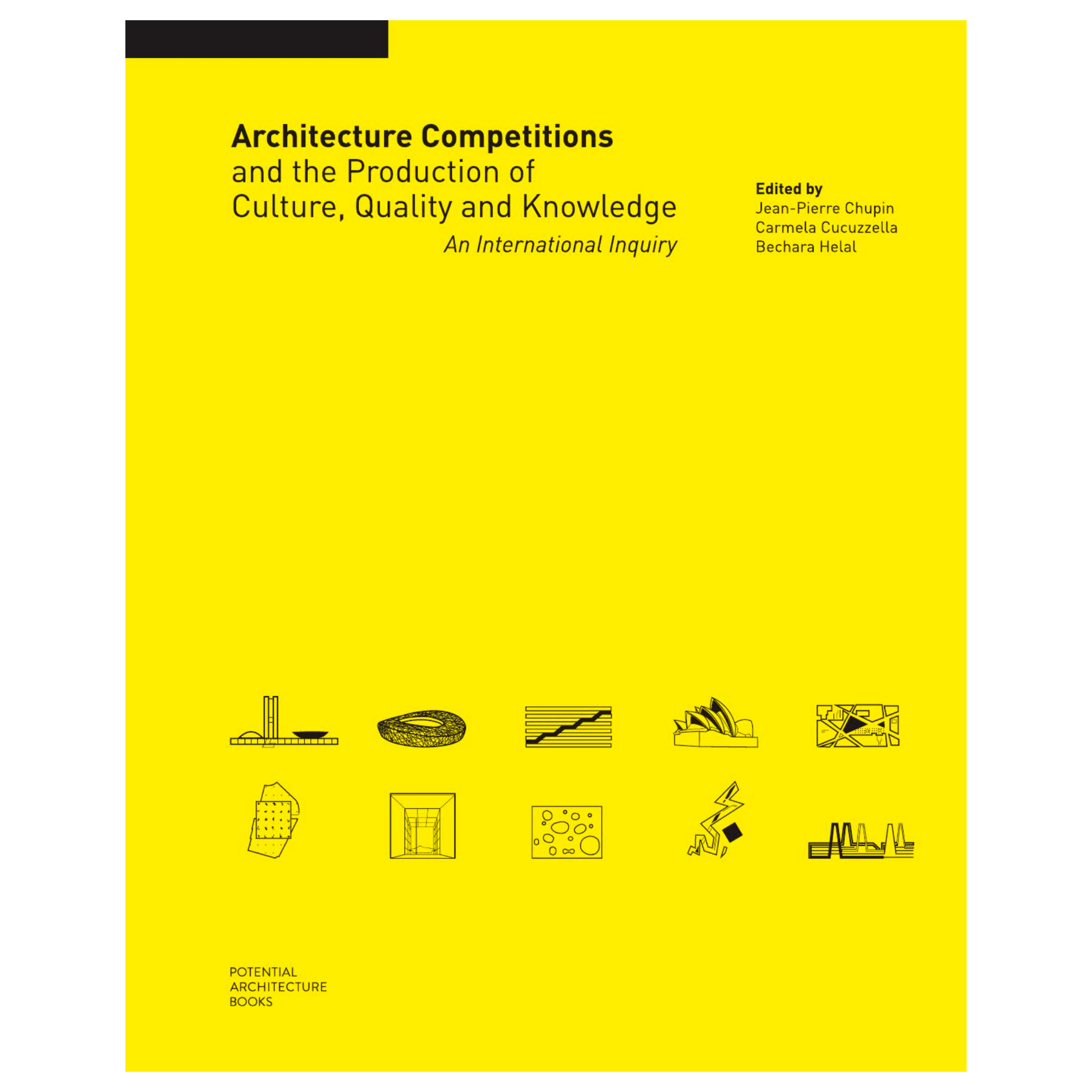
Jean-Pierre Chupin, Carmela Cucuzzella et Bechara Helal codirigent la production d’un nouveau livre sur les concours internationaux – enJune 10, 2016
Jean-Pierre Chupin, Carmela Cucuzzella et Bechara Helal, codirigent la production d’un livre collectif sur les concours internationaux, faisant suite au colloque de 2012 et qui aura pour titre : Architecture Competitions and The Production of Culture, Quality and Knowledge: An International Inquiry. Il rassemblera une vingtaine de textes d’experts internationaux et sera publié aux nouvelles éditions : Potential Architecture Books, Montréal, à l’automne 2014
|
Carmela Cucuzzella et Alessandra Mariani au colloque de l`UAAC 2014, Toronto – enJune 10, 2016
Alessandra Mariani et Carmela Cucuzzella, dirigeront chacune une session thématique du colloque UAAC (University Arts Association of Canada) entre le 23 et le 26 octobre 2014 à Toronto
|