
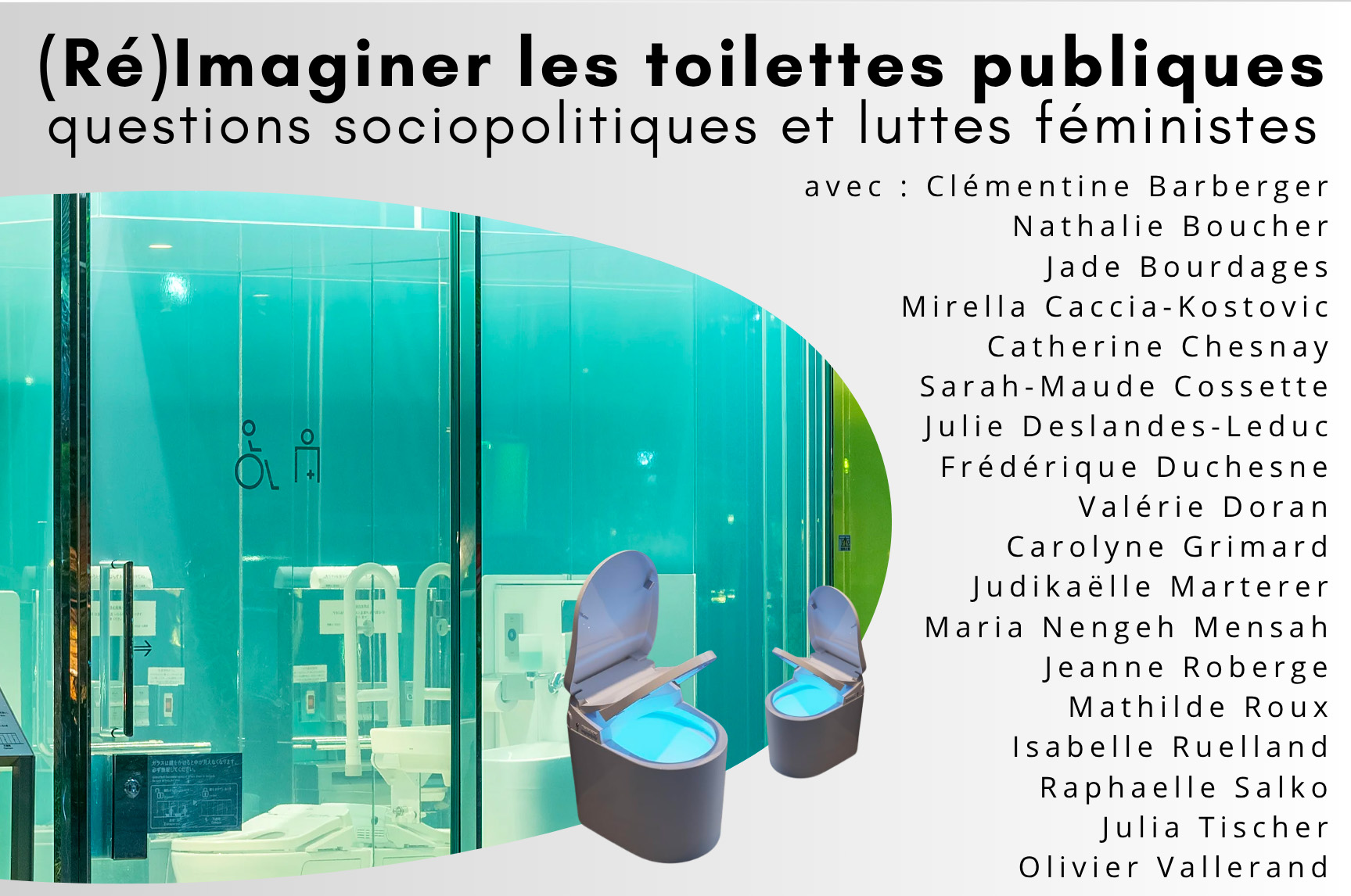
The purpose of this research is to better understand how people experiencing marginalization in the neighborhood (e.g., homelessness, substance use, sexuality, LGBTQI2+, body or ability diversity) use public restrooms, and what power dynamics they face.
Objectives
-To explore the social experience of public restrooms in urban settings from the perspective of marginalized individuals;
-To analyze the challenges these individuals face when using public restrooms in utilitarian, strategic, and emotional ways; and
-To work with marginalized individuals to identify ways to create more inclusive and safe spaces and practices, and to publicize their recommendations.
The research explores the social and emotional dimensions raised by the diverse ways in which different communities use public restrooms. These uses are shaped by the quality and accessibility of the spaces, as well as the nature of the actions and interactions that take place there. Consequently, the experience of public restrooms reveals the social tensions that permeate our daily lives and public spaces.