
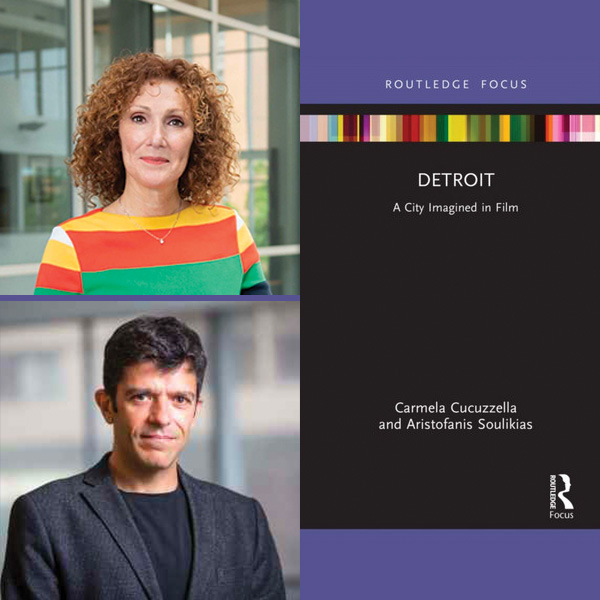
Long associated with the automotive industry, the skyscrapers of the industrial heyday, and images of urban decline, Detroit holds a unique place in the American imagination. A city of stark contrasts, it has been, in turn, a symbol of prosperity, a hotbed of labor struggles and civil rights movements, and an embodiment of deindustrialization and urban violence. For nearly a century, cinema has captured its many facets to tell its story.
It is this relationship between the city and the representations it inspires that Detroit: A City Imagined in Film explores. The authors analyze a body of films shot in Detroit or set there, from 1928 to the present. The book shows how cinema helps shape the city’s lived experience, mold perceptions of it, and, at times, reinforce the narratives that influence its future. Through these films, Detroit emerges as much more than a backdrop. It becomes a character, a symbol, and an imaginary space onto which the hopes, fears, and contradictions of American society are projected.
Carmela Cucuzzella, a professor at the University of Montreal’s School of Design, who co-authored the book with doctoral candidate Aristofanis Soulikias, shares more about this city—which, in film, constantly oscillates between ruin and rebirth—in an interview for UdeMnouvelles.