
ONGOING RESEARCHES
QUALITY IN CANADA’S BUILT ENVIRONMENT: ROADMAPS TO EQUITY, SOCIAL VALUE AND SUSTAINABILITY
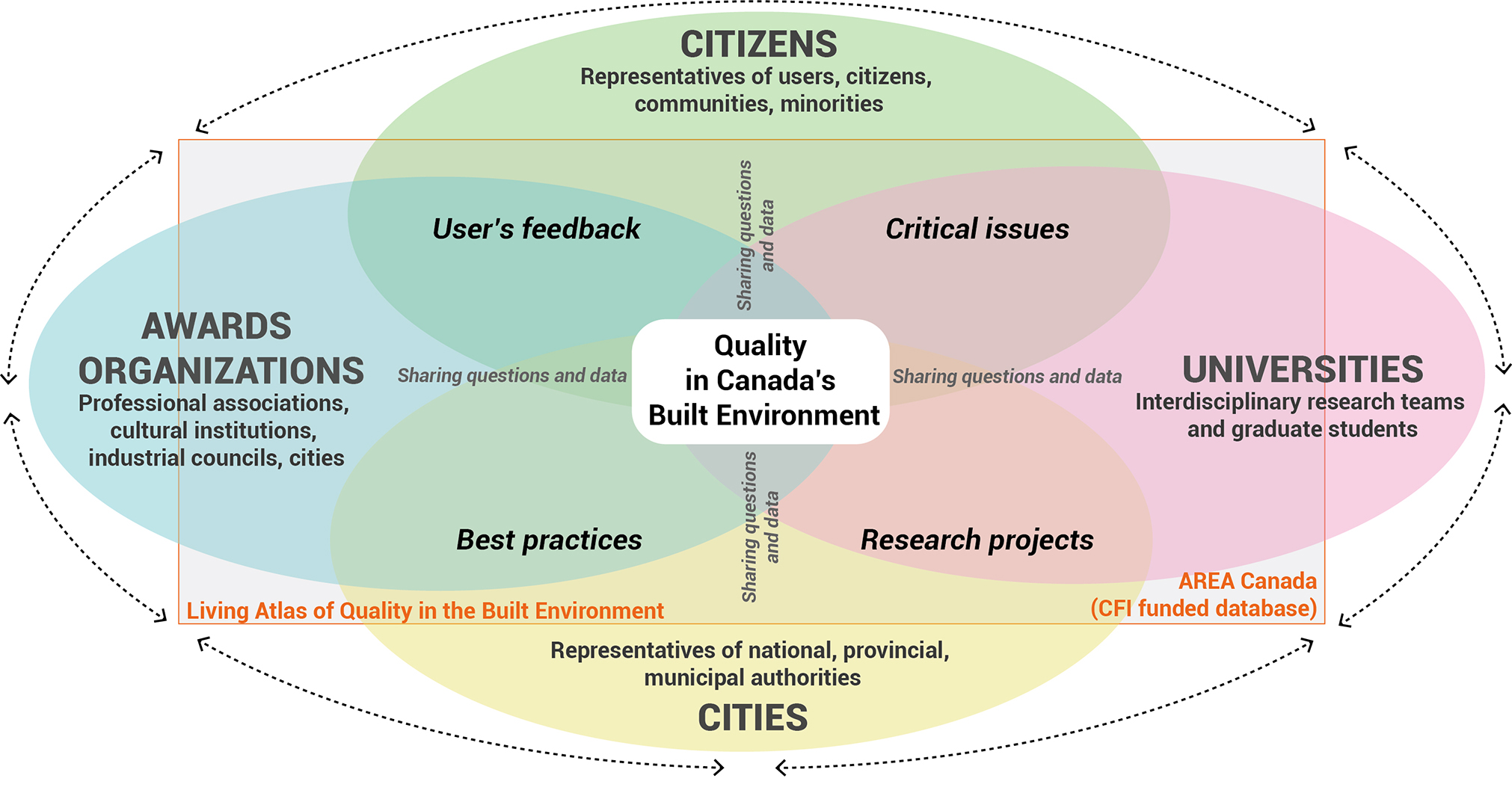
Funded by the Social Sciences and Humanities Research Council of Canada until 2027, this research partnership brings together – for the first time – 14 universities, 70 researchers and 68 public and private organizations at the municipal, provincial and national levels.
The partnership is meant to stimulate a vital dialog demonstrating how those active in considering and creating the built environment across Canada can contribute to a redefinition of quality that moves us to heightened equity, more social value and greater sustainability at a critical moment for our societies and for our planet.
Coordinated, from the University of Montreal, by the Canada Research Chair in Architecture, Competitions and Mediations of Excellence (Prof. Jean-Pierre Chupin), the partnership addresses the diversity of public environments impacting the everyday life of millions of Canadians in urban spaces, buildings and landscapes.
The program has three aims:
- Analyzing the current limitations of environmental norms and sustainability models to bring us closer to the United Nations Sustainable Development Goals (SDGs).
- Co-designing new paths to equity, diversity and inclusion in the built environment.
- Define new definitions and application frameworks to improve the social value of the built environment through roadmaps to quality.
- Citizens (representatives of communities including minorities and underrepresented populations).
- Cities (national, provincial and municipal actors in the public procurement of built environments).
- Organizations assessing quality (professional associations, award-granting institutions, councils, cities).
- Universities (interdisciplinary research teams).
- Spatial justice and heightened quality of life.
- Integrated resilience, material culture and adaptative reuse.
- Inclusive design for health, wellness, aging and special needs.
- Processes and policies supporting the reinvention of built environments.
ARCHIQUALIDATA, THE DATABASE OF QUALITY
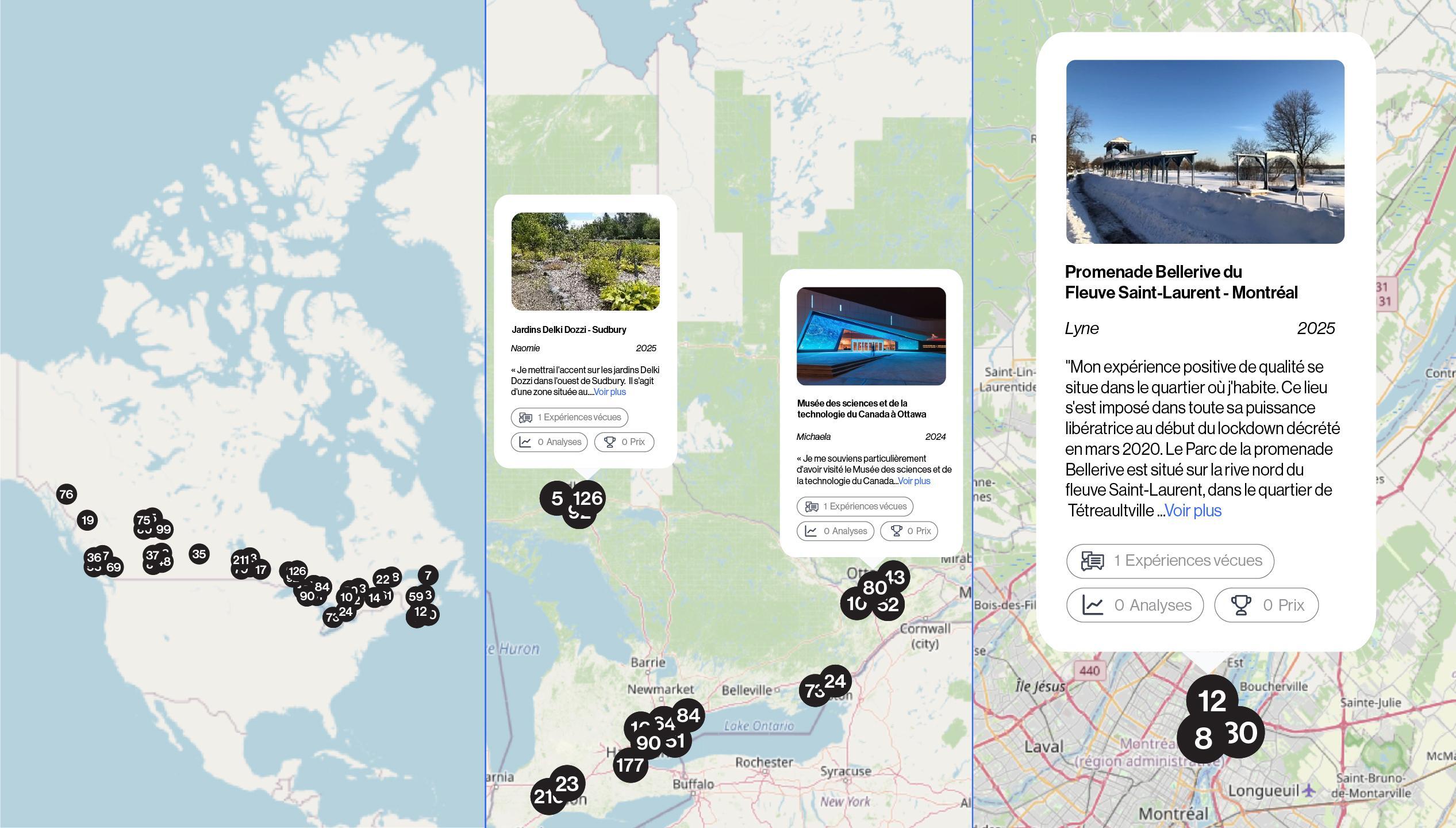
The ArchiQualiData database provides analyses and studies of exemplary and award-winning living environments, real-life experiences and case studies.
DISCOVER detailed studies conducted by researchers, providing unique insights into exceptional buildings and places.
ACCESS testimonials from people who have directly interacted with these entities, enriching understanding through authentic stories.
FIND precise information on each exemplary entity, thanks to a simple interface and advanced search system.

CANADIAN MAP OF AWARD-WINNING BUILDINGS AND PLACES
More than 2,800 award-winning projects - designed by more than 1,000 architectural, urban planning and landscape architecture firms in Canada - first recorded in an Atlas of Architectural Excellence (AEA)
At the initiative of the Canada Research Chair in Architecture, Competitions and the Mediation of Excellence (CRC-ACME), the Atlas of Excellence in Architecture (AEA) is taking shape with the publication of the first historical directory of award-winning projects and achievements.
A prototype of a decentralized and collective digital platform, the AEA is intended to gather data on the quality of built environments. In conjunction with the establishment of a research network, it is intended to offer the information necessary for the dissemination, understanding, training and constitution of quality mediation policies and actions aimed at excellence at all levels. The data, information, analyses, comparisons and visualizations that will gradually be delivered on the open access platform will be based on all the award-winning achievements in Canada. Thanks to the coordination of the awarding institutions and professional teams, the general public can already take the measure of the repertoire of best practices in all areas of the built environment.

LIVING QUALITY EVERY DAY: PROTOCOL FOR INVESTIGATING AND QUALITATIVELY ASSESSING THE SOCIAL VALUE OF PUBLIC BUILDINGS BY COLLECTING USER EXPERIENCES
This proposal is part of the Quality Operation section of the City of Montreal’s Quality Toolkit. In particular, it addresses the strategies of sustainability, reframing and communication. Sustainability, in that the collection of real-life experience of quality is one of the guarantees of a good understanding of life cycles, and should be an integral part of quality monitoring plans. Their dissemination would contribute to better collective learning. As part of a reflexive approach, the collection of lived experience is a determining factor in reframing strategies. But it is also as a point of contact with lived reality in public buildings and places – as a mode of ongoing consultation – that the collection of lived experience should inform communication strategies.
The Quality Toolkit is an excellent exercise in mapping the ins and outs of the quality of built environments, and places the City of Montreal at the forefront of municipal strategies in this field in the landscape of Canadian cities. As the organizer of a vast partnership research project funded by the Social Sciences and Humanities Research Council of Canada (2022-2027), we can already see how the City of Montreal’s proposals are inspiring other Canadian cities involved in our project.
Our research partnership is entitled Quality in Canada’s Built Environment: Roadmaps to Equity, Social Value and Sustainability (for more information, see https://livingatlasofquality.ca/fr/home#). This proposal would build bridges between national and municipal initiatives. By offering to develop a protocol for capturing positive real-life experiences of quality, our proposal is in line with the City of Montreal’s strategy of exemplarity, which is at the root of the Quality Toolkit, and is intended to link up with thinking at the Canadian level. Finally, this project is in line with the logic established by the Politique nationale de l’architecture et de l’aménagement du territoire (Mieux habiter et bâtir notre territoire) unveiled on June 6, 2023 by the Quebec government. It takes note of the eleven guiding principles and “6 conditions favoring architectural quality” formulated in the aide-mémoire “Pour une architecture humaine, durable et créative.”
In public environments, we start from the premise that quality is conceived and built, but above all that quality is shared, and that it is now essential to encourage a broader debate on quality. The aim is to promote the broadest possible understanding of the determinants of quality, with a view to answering the following question: how can we increase the ability of the diversity of users of municipal public buildings to see, express and better understand what defines the quality of built environments in Montreal, by inviting them to share positive experiences of quality?
THE SPACES OF RESTORATIVE AND TRANSITIONAL JUSTICE: ARCHITECTURE, ORAL HISTORY, AND DESIGN
Problematic
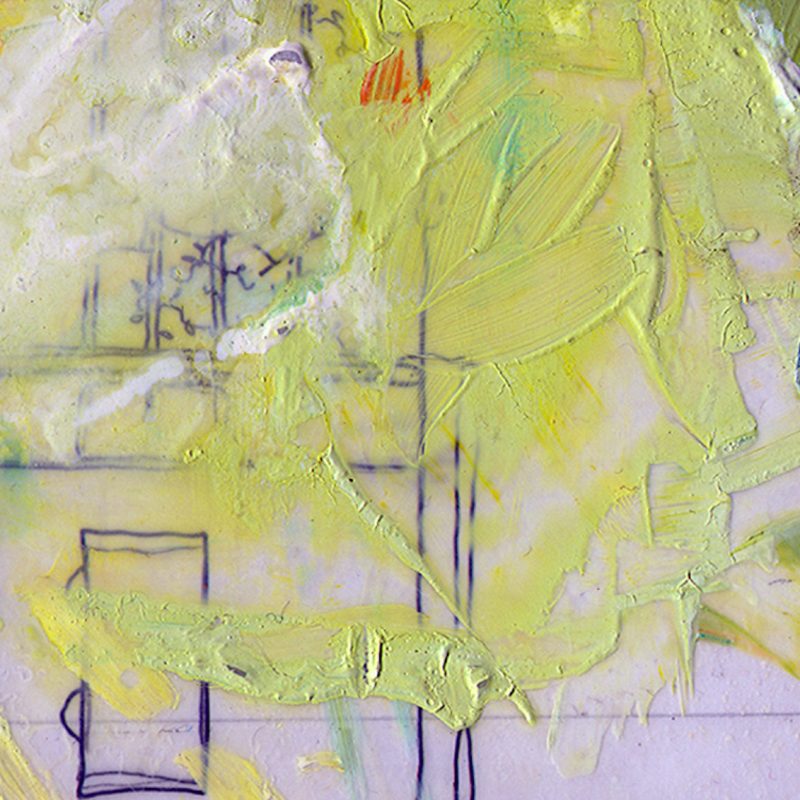
This project aims to understand the built environment as the primary physical context of “restorative justice” and “transitional justice”. These alternative approaches to justice value truth, accountability, reparation, reconciliation, conflict resolution and democratic participation, and are increasingly being used in postcolonial and post-conflict contexts. Despite the rise of alternative justice paradigms, rarely are the spaces of transitional and restorative justice purpose-designed, much less studied in terms of their design. The objective of the proposed project is therefore to produce research and creation that will provide scholarly knowledge and practical service to alternative justice efforts in the specific domain of space. We propose to create practical, open access answers to our core question: how might design support and encourage nontraditional justice paradigms?
Contribution to knowledge
Our project will increase the accessibility, flow, and exchange of knowledge about the spaces of restorative and transitional justice. In Phases I and II of the project, we will gather secondary research, and upload to our open access website/database examples of spaces in which restorative and transitional justice are being practiced. Each item will be accompanied by a short text written by team members. These will explain the example and its significance within the broader scope of restorative and transitional justice design (what precisely is the space, where is it located, what purpose does it serve in terms of restorative and/or transitional justice, and what can be learned from the example). In this way, the project will provide a resource to both the scholarly community and to an international community of practitioners of nontraditional justice models seeking to learn more about the problems and precedents in this field.
Phases III and IV of the project are also designed to mobilize the knowledge that we will produce. The five design prototypes produced in Phase III will be added to our website/database, alongside (with
permission) interview excerpts from our interviewees. These additions will greatly increase the value and dissemination of the project to the public. In Phase IV, the final coauthored, peer-reviewed essay will elicit a broad sector readership across the fields of justice studies, restorative and transitional justice, and justice advocacy.
Impact
This project will benefit knowledge creation/intellectual outcomes by being the first scholarly research project, to our knowledge, to make a publicly-available survey of the spaces of restorative and transitional justice practices in different countries. Because it will address purpose-designed as well as makeshift spaces, it will be of interest to historians of the built environment, and activists alike.
Cynthia Hammond (PI), Ipek Türeli et Luis Sotelo Castro (Concordia University),
recherche subventionnée par le Conseil de Recherche en Sciences Humaines du Canada (Programme développement Savoir) 2020-2022
THE LAYOUT OF THE COMMON. RETHINKING THE MUNICIPAL INTERFACES IN MONTREAL THROUGH THE PROJECT
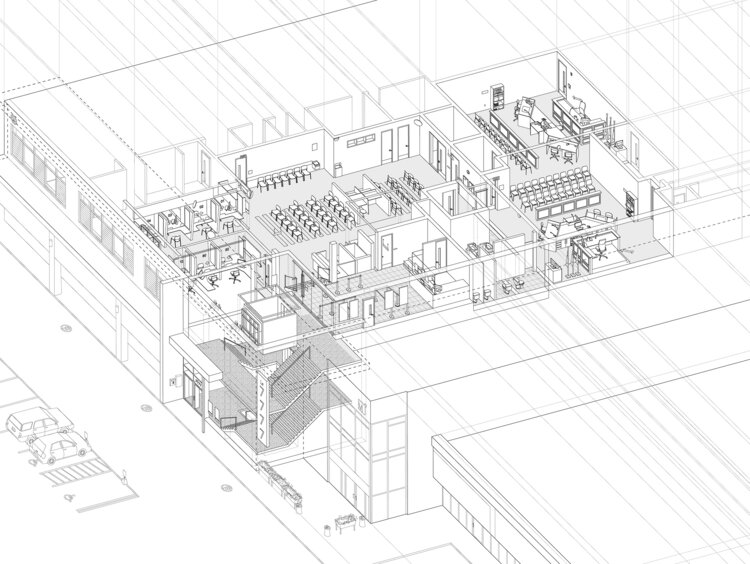
The project, The Layout of the Common, reconsiders and rethinks the design of public spaces in the context of Montreal for the last 25 years. It identifies the trends that mark the production of the built public domain in the Quebec metropolis by proposing to redesign the definition of community-individual relations through research-creation. The project studies how the City of Montreal and its boroughs have implemented or modified the physical interfaces used to connect administrative and political entities to the city's occupants. The research methodology is based on case studies at different scales and of different types, including the recycling bin, bus shelters, Municipal Court service points, eco-centers and Accès Montréal offices. The subject of study is therefore public space in a very broad sense, bringing together urban civic and political space with everyday experience. Over the three-year course of the project we plan to establish a case inventory and conduct in-depth research on a selection of ten to twelve projects. Our methods include documentary research, field photography, analysis by drawing and interviews with people who participated in the development of the projects. Our objective, at the end of these three years, is to be able to establish links between the various projects studied, to synthesize this facet of the development of Montreal's public and political space and to suggest some avenues for reflection on its future development. It is thus a question of renewing our collective conception of public spaces, while raising questions about ethics and representation in the design project, important issues in the current social, economic and political context.
Thomas-Bernard Kenniff, Virginie Lasalle, Anne Cormier and Louise Pelletier
research funded by the Fonds de Recherche Québec Société Culture (soutien à la relève professorale) 2017-2021[vc_gallery interval="5" images="22476,22478,22479,22480" img_size="large"]

Jean-Pierre Chupin holds the Canada Research Chair in Architecture, Competitions, and Quality
CANADA RESEARCH CHAIR IN ARCHITECTURE, COMPETITIONS AND QUALITY
MONTREAL, June 20, 2019 – Canada's science minister Kirsty Duncan announced the April and October 2018 Canada Research Chair Awards, including one in Architecture, Competitions and Quality, granted to Université de Montréal architecture professor Jean-Pierre Chupin. One of the few Tier-1 chairs in Canada dedicated to the study of contemporary architecture, it will help Professor Chupin better define the attributes, parameters and criteria for recognizing quality in architecture and understanding its renewal in current practices.
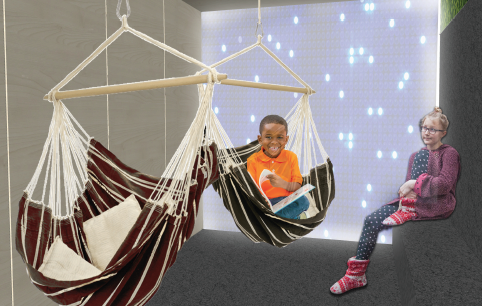
DESIGNING THE LIVING SPACES OF A TRANSITIONAL HOUSING FOR YOUNG PEOPLE AGED 8 TO 14 WITH A COMPLEX MULTI-PROBLEMATIC PROFILE
Context
The Centre intégré universitaire de santé et de services sociaux de la Mauricie-et-du-Centre-du-Québec (CIUSSS MCQ) contacted Professor Virginie LaSalle to help with the interior design of a new model of transitional housing for young people aged 8 to 14 with a complex multi-problematic profile.
These transitional housing spaces must be designed to meet the specific needs of the targeted clientele as well as the clinical practitioners working there. It is essential that the facilities be safe, durable and adapted to the activities taking place in the various spaces. In addition, it is expected that the atmosphere of these places will be different from an "institutional" atmosphere; in this sense, we wish to create a welcoming and soothing atmosphere, adapted to the sensory characteristics of the young people who stay there.
The primary objective of the preferred approach is to ensure the quality of the living spaces whose plans were initially developed by a commissioned architect, and to propose ways of improving these facilities in support of the clinical environment. With this intention, the work is carried out in relation to that of the interior designer Julien Delannoy, mandated for this project by the CIUSSS MCQ. The steps taken must eventually be integrated into a "Design Guide" produced in order to provide recommendations and findings that will inform comparable projects.
Implemented approach
The approach implemented includes (1) the production of a report with general recommendations on the interior design of the transitional housing model for youth with a complex multi-problematic profile, developed for the ICSSS MCQ. This document will focus on design principles to be respected and best design practices, in support of the ICSUSS and design team's decisions. The codesign workshop (2) held in Trois-Rivières with clinical stakeholders, residents' families and ICSUSS officials (October 2019) provided an opportunity to test the preliminary design proposals against the experiential knowledge and expertise of the various future users of the site. Finally, coordination was ensured between the consulting team and the design team to ensure the transfer of knowledge and the smooth functioning of the design process.
Virginie Lasalle, Anne Cormier and Denis Bilodeau
research funded by the Integrated University Center of Health and Social Services of the Mauricie-et-du-Centre-du-Québec
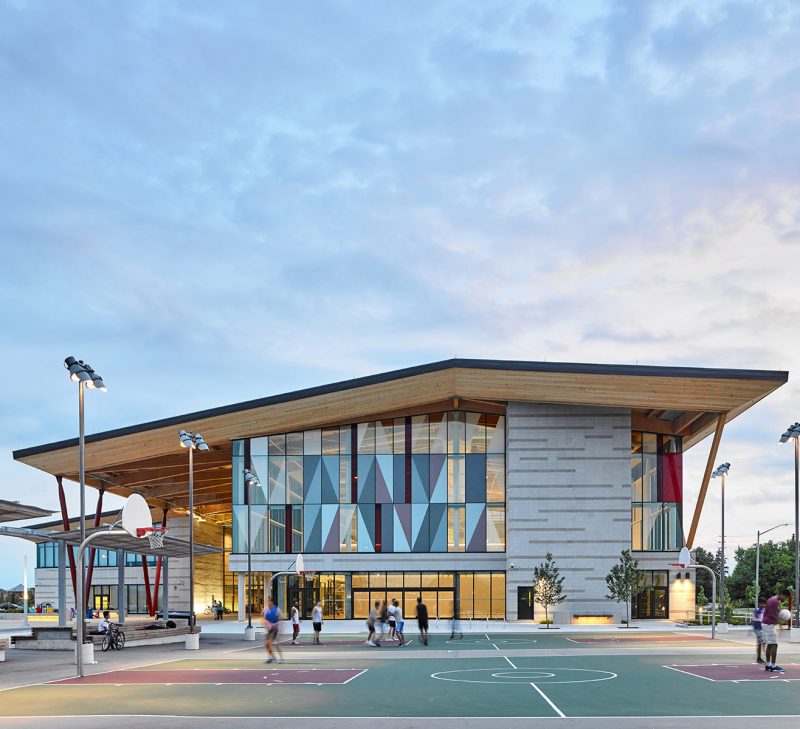
AN ECOLOGY OF WOOD CULTURES IN CANADA (2003-2020) : COMPARING CONSTRUCTIVE CULTURES THROUGH AWARDED ARCHITECTURAL DESIGNS
At the intersection of architectural theory and cultural studies, this research investigates wood architecture as a symbolic universe that allows us to study the presence of nature in human culture. This research will theorize the diversity of expressions of quality in Canadian architecture, from the standpoint of environmental preoccupation, building culture and architectural expression. Considering wood architecture as a form of “cultural ecology”, it has the potential to reveal how Canadian cultures represent and symbolize their relations to the land and natural resources, as well as the cultures of its founding peoples.
Notwithstanding the interest in wood as a major alternative to fossil fuelbased construction materials, this research will highlight the symbolic spectrum of wood buildings, which ranges from local and indigenous traditions to ecological aesthetics, representing forms of making that rely both on traditional architectural practice or recent building technologies and computeraided design. We aim to better interpret and understand how advancements in architectural practice and building techniques affect the way architecture is envisioned and materialized in Canada during the past decades. In parallel to studying the influence of environmental considerations to architectural forms in Canada, we will make sense of a dissonance within the theory of architecture between ideas about the interdependency or autonomy of architectural form (visual appearance), material (what it is made of) and meaning (messages and ideals expressed). This investigation will also provide an empirical study of two theoretical standpoints in architectural theory, that have been presented by authors Kenneth Frampton (Columbia University) and Antoine Picon (Harvard University), who defend opposite views on materiality and digital culture. Considering a corpus of awarded designs centered on wood as a sustainable building material, this research will evaluate exemplary (awarded) Canadian architecture of public cultural buildings and its analytical acknowledgement as a cultural practice. Through a series of comparative analysis within an empirical corpus of 40 awarded projects from Ontario and Quebec, between 2003 and 2020,
our primary objectives and main research phases are:
Identification and illustration of cultural expressions in Canadian wood architecture
To obtain a thorough understanding of the variety of practices and cultures in Canadian wood architecture, we will document and analyze awarded wood buildings (through photographs, drawings, physical models, texts, etc). Second, we will study and identify the tensions between discourses about sustainability and architectural expression, allowing us to probe the place occupied by wood architecture as (1) a symbolic form of environmentalism, as (2) a strategy to engage with aesthetic perceptions, as (3) locus of a debate about traditional and digital cultures in architectural design, and as (4) a means for designers to encourage the vitality of local communities and industries.
Visualization and dissemination of research outcomes
The 40 projects studied will publish in an openaccess source, the Atlas of Excellence in Architecture, a documentation and research platform of Canadian awardwinning architecture. We will also submit scholarly work about Canadian wood architecture to a variety of peerreviewed and openaccess publications, as well as scholarly presentations in academic events. Further documentation will be gathered and organized for an exhibition of exemplary Canadian Wood Architecture.
Izabel Amaral (Laurentian University), Jean-Pierre Chupin and Carmela Cucuzzella,
research funded by the Social Science and Humanities Research Council of Canada (Insight Development Grants) 2020-2022

Ipek Tureli holds the Canada Research Chair in Architectures of Spatial Justice
Prof. Ipek Tureli: holds one of the McGill CRCs: the Tier 2 – Canada Research Chair in Architectures of Spatial Justice announced the 2nd of december 2016 by the Canada Science minister Kirsty Duncan.
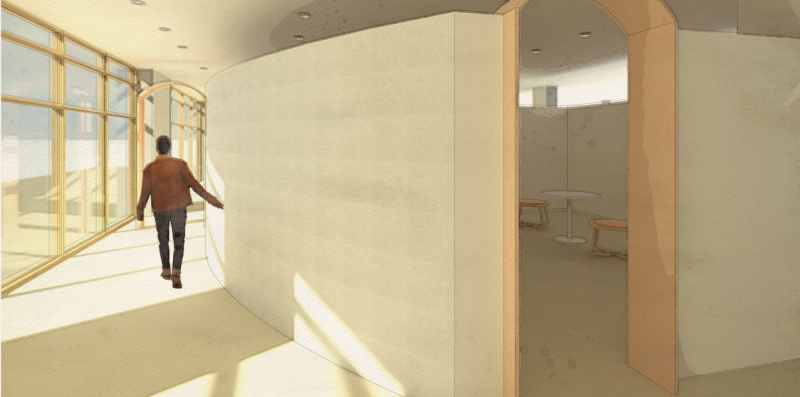
DESIGNING PLACES WITH, BY AND FOR AUTISTIC PEOPLE
While the appropriateness of the architectural framework and its interior design must ensure the safety and functionality of the place, it also has a direct impact on the well-being of the person through the possibility of a meaningful experience of the place, through the level of comfort, through the quality and diversity of social interactions it promotes. This impact is tenfold with autistic people, who are characterized by an exacerbated sensitivity to their environment and by different communication modalities and needs, all of which sometimes have a major impact on their ability to adapt to their environment. Although there is now a significant amount of literature on the design of environments for people with autism from specialists in planning and the human and social sciences, no study has been identified that integrates these different perspectives. The perspective of people with autism itself is rare, as autism is increasingly recognized as a variant of human diversity in its own right, and people with autism as partners in understanding and developing responses to their needs.
It is the need to gain a refined understanding of the experience of people with autism in the built environment and the factors affecting their well-being that led researchers in interior design, psychiatry and information sciences to develop this project with the inclusion of people with autism, in order to implement a design device for the built environment, with, by and for people with autism. This research has three objectives: A] to evaluate design strategies for existing places specifically intended for people with autism and, on this basis, to project paths of innovation; [B] to describe and characterize the components of the built environment influencing the well-being of people with autism; [C] to design a pedagogical formula in interior design for the co-design of the built environment based on the experience of people with autism. The project has three components: 1] a post-occupational evaluation of existing spaces intended for people with autism; [2] the implementation of an educational formula for co-design based on the experience of people with autism, in the university context of interior design workshops; and [3] the online consultation of a large pool of potential users with the help of the virtual environment proposals produced during part 2 of the research.
This research proposes a unique scientific orientation by developing a three-step process to understand, evaluate and integrate into design practices the factors that promote the well-being of people with autism. Its innovative approach stands out by reversing dominant paradigms and placing people with autism in a position of power through their status as co-designers and partners. This study will enable the development of innovative, rigorous design practices rooted in experiential knowledge, necessary for developers of inclusive living environments, designed with neurodiversity in mind and adapted to the plurality of occupants. The targeted results could have a major impact on the well-being and autonomy of people with autism and promote their participation in active social life.
Virginie Lasalle, Cynthia Hammond, Bechara Helal with Baudouin Forgeot d'Arc (psychiatry) and Vincent Larivière (information sciences)
research funded by the Fonds de Recherche Québec Société Culture (programme intersectoriel Audace) 2017-2021
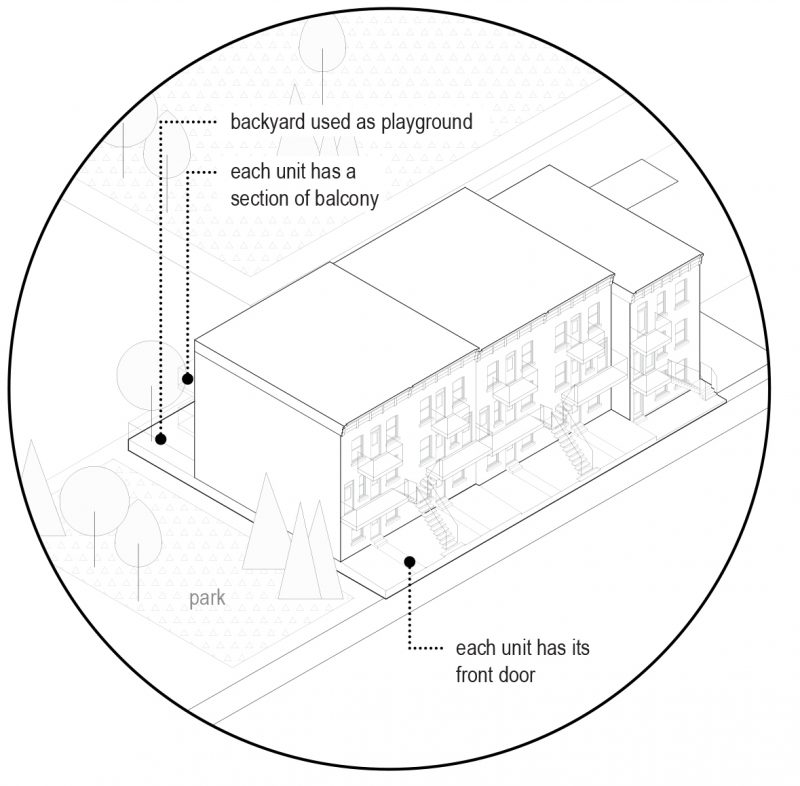
HOUSING FOR SPATIAL JUSTICE: COOPERATIVES FOR WOMEN IN MONTREAL
Montreal is home to hundreds of housing cooperatives. Several of them were founded by activist and professional middle-class women to empower low-income women. This paper studies how the physical (architectural) designs of feminist housing cooperatives sought to empower women and how their design aspects have been received by the residents.
Part of a longer history of women’s organized efforts to improve cities in North America for women since the nineteenth century, starting with material feminists and suffrage and settlement house movements, Second-wave feminism led to competing and complementary perspectives on women, how they experience and use the built environment and how their experience can be improved. One strand advocated for integrating hitherto male-only spaces and institutions, and another for creating women-only spaces such as women’s libraries, women’s housing and women’s shelters (Spain, 2016). Feminist housing cooperatives fit the latter scheme.
This paper examines several cooperatively-owned and managed housing projects established in Montreal for women. Feminist housing activists recognized that women, and especially women-led single parent families, were at a disadvantage in both the labor market and in accessing affordable housing (Wekerle, 1980). Cooperative housing projects helped revitalize inner city neighborhoods by improving the building stock and existing community networks, and importantly without causing displacement. Feminists emphasized collective spaces and shared facilities that would support diversity, but, as this paper will show, such ambitions ran short of the CMHSC and other funding agencies’ goals of standardized units and the reality of meagre budgets. Even when afforded and realized, however, further problems emerged about participation and policing. By examining how these important experiments fared using oral history and cultural landscape analysis, this research will contribute to current discussions on housing activism and gender sensitive housing.
Ipek Tureli et Virginie Lasalle
research funded by the Social Science and Humanities Research Council, the Canada Research Chair in Architectures of Spatial Justice and the Canadian Foundation for Innovation 2018-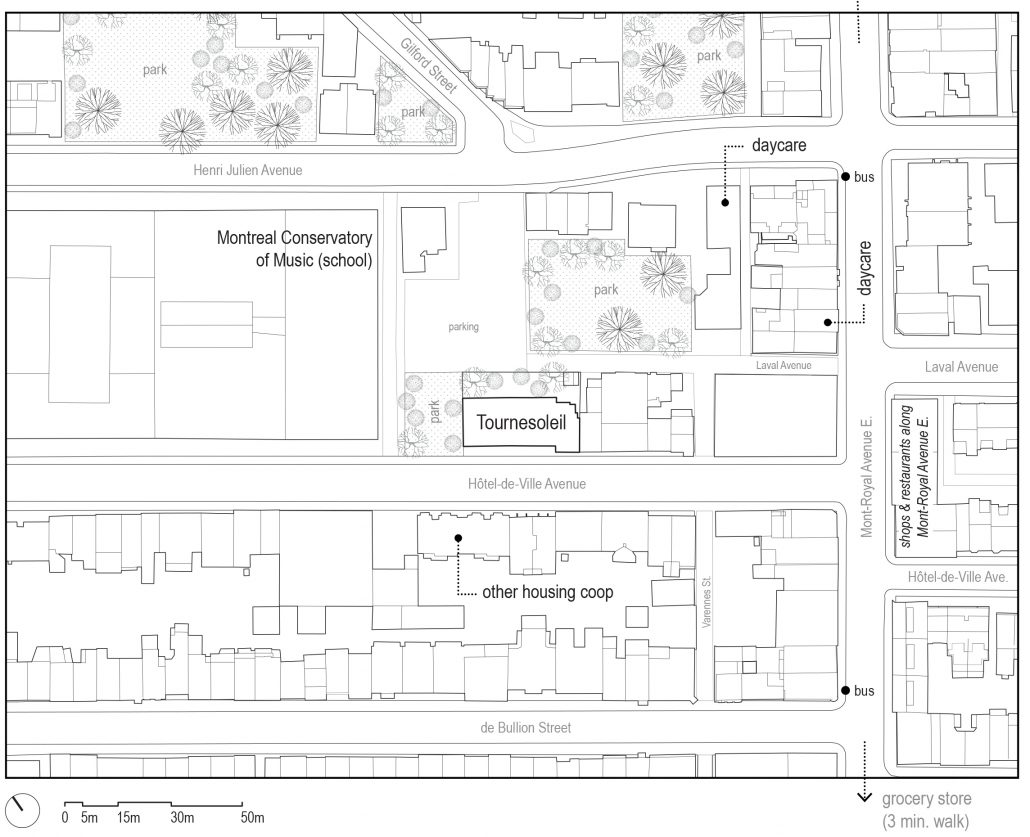

TERRITORY IN MOTION AND BODY AT REST: AN INVENTORY OF QUEBEC'S REST STOPS
This research by design project proposes an inventory of rest stops in the Quebec road network in order to explore, through the design project, their relationship to the territory, the government and the cultural imagination. It is based on seeing, in the rest stop, not only an offer of services to travellers, but also a biopolitical device deployed at the scale of the territory.
The rest stop involves provincial politics and bureaucracy, mechanisms for privatizing public goods, cultural and biological identity, gender issues, body management, public hygiene and illicit practices. Far beyond their potential as places that can enhance the territory and the local landscape, rest stops form a vast constellation of cultural interfaces that link the machinery of government with people on the move. They thus express the assumption of responsibility by the state or municipality for the biological functions of travelers, reinforce the socio-material arrangement of the territory while being a place of differentiation and, above all, actively participate in the control and regulation of these functions and this organization by territorializing them.
In Quebec, the development of road parks went hand in hand with the modernization of the state and the construction of the road network in the second half of the 20th century. The great majority of roadside rest areas were built in the 1960s and 1970s, and they retain an allusive architectural language in the vernacular and a link with the state (management). Although they are models of "non-places", their architecture and the government responsibility give the park of Quebec rest stops a symbolic link to the cultural identity inscribed in the territory and the public assumption of responsibility for services to travellers. The project to modernize the rest stops in Quebec, managed by the Ministère des Transports du Québec (MTQ), has been developing slowly for nearly 30 years but has accelerated in the 2000s. The MTQ, which manages 102 of the province's rest stops (213 are municipal), is in the process of producing surveys for their modernization and potential privatization. We are therefore at a key moment in the transformation of the road park network, a situation that calls for and justifies a look at the place these rest stops occupy in the collective imagination and their links with the territory. Incidentally, one of the main contributions of the project lies in the particular context of the lack of documentation of rest stops and the importance of making a survey (other than technical) in the wake of their modernization.
The project includes documentation in the field, exploration through photography and drawing in a first phase of investigation, data synthesis and experimentation leading eventually, in a second phase, to the realization of a book and an exhibition.
Thomas-Bernard Kenniff, Bechara Helal and Virginie Lasalle
research funded by l'Université du Québec à Montréal[vc_gallery interval="5" images="22473,22472,22471,22470" img_size="large"]

(Ongoing research program on competitions and online public ressource)
 CCC : The digital library for architecture, urbanism, design and landscape architecture projects designed in the context of competition in Canada designed and updated by :
Université de Montréal Research Chair on Competitions and Contemporary Practices in Architecture (Jean-Pierre Chupin).
CCC : The digital library for architecture, urbanism, design and landscape architecture projects designed in the context of competition in Canada designed and updated by :
Université de Montréal Research Chair on Competitions and Contemporary Practices in Architecture (Jean-Pierre Chupin).