From Design Injustice to Design Justice: Why the Built Environment Must Change

Lecture by Marie Cecile Kotyk, University of Calgary

Date : Wednesday, March 18th at 5.30pm

Location : Université de Montréal, Faculté de l’Aménagement, Amphi 1120

Lecture series of the LEAP and the École d’architecture

Architecture and urban planning have historically produced inequalities, but designing projects from a “spatial justice” perspective makes it possible to envision more equitable, inclusive, and community-oriented built environments.

Design is never neutral. From outright discrimination through urban renewal to hostile architecture and exclusive zoning, the built environment has historically been used to reinforce inequalities in access to housing, safety, mobility, and opportunity. This presentation introduces the concept of “justice through design” as a critical framework for confronting this legacy and transforming the way we plan, design, and govern cities. Historical examples, contemporary case studies, and community initiatives in the areas of housing, public spaces, climate resilience, and education show how design can shift from perpetuating injustice to actively redistributing power. Based on lived experience and participatory practice, the lecture explains why justice in design is not optional, but essential to creating inclusive, equitable, and just communities.

Dr. Marie Cecile Kotyk

Assistant Professor / Design Justice Research Chair

School of Architecture, Planning, and Landscape Architecture (SAPL)

University of Calgary


Marie Cecile Kotyk is an award-winning urban planner, housing professional, and spatial justice researcher with over 15 years of experience promoting equity in the public and nonprofit sectors. As a leading figure in community-based research and spatial justice, her work addresses the systemic forces that produce racial inequalities in the built environment, particularly for Black, Indigenous, and structurally marginalized communities. Her doctoral research led to the creation of the Black Housing Equity Framework, which aims to combat anti-Black racism in housing policy and design. Through her leadership in creating the UDesign Justice initiative at the University of Calgary, Dr. Kotyk is establishing a transdisciplinary center that brings together academics, community members, and practitioners to co-create equity-focused solutions for spatial, social, and systemic transformation.

Contact : Jean-Pierre Chupin, Chaire de recherche du Canada en architecture, concours et qualité (CRC-ACQUA) + Laboratoire d’étude de l’architecture potentielle (LEAP)

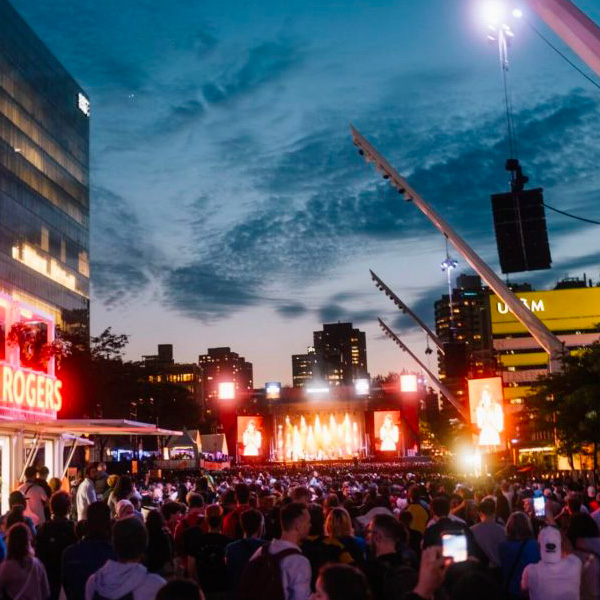
For an inclusive festive city: Article published on the Entretiens Jacques Cartier study day held in Lyon

Professor Jean-Pierre Chupin and student Laurène Smith presented UdeM’s research on the concept of inclusion in festive activities at the Entretiens Jacques Cartier conference in Lyon. 

“Montreal and Lyon are both known as festive cities, hosting multiple events each year. But not everyone has the right to celebrate. “Festivals are places of contradiction. They are celebrations that are supposed to be open to everyone, yet they exclude people,” says Laurène Smith, a master’s student in architecture under the supervision of Professor Jean-Pierre Chupin at the University of Montreal. 

In an attempt to answer the question “Is the festive city inclusive?” and to discuss their research, these representatives from the UdeM School of Architecture participated in the Entretiens Jacques Cartier 2025, which took place this year in Lyon from October 6 to 8. “Last year, I organized a series of round tables on universal accessibility awareness for the Entretiens. As a continuation of this reflection, the organization Cité anthropocène suggested that we look at the festive city,” summarizes the professor, who works on the issue of inclusion in the organization of cities…” 

Read more on the UdeMNouvelles website. 

This event, dedicated to festive cities and their mechanisms of inclusion or exclusion, was also documented by the Cité Antropocène and McGill’s Night-time Design Research Group. These resources provide further insights from the collaborating institutions: 

Photo by Getty. 

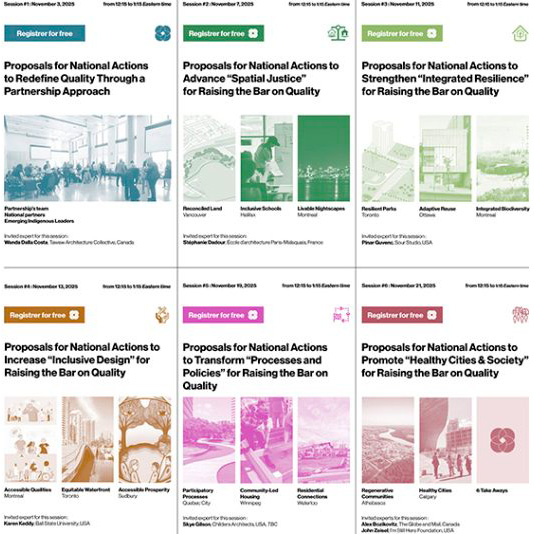
Join the online public debate on quality in Canada!


Six one-hour sessions from November 3 to 21 (12:15 p.m. ET) (GMT-4)


Topics:

1 – Redefining quality in a partnership approach (Nov. 3)

2 – Advancing spatial justice (Nov. 7)

3 – Building more integrated resilience (Nov. 11)

4 – Accelerating inclusive design (Nov. 13)

5 – Transforming processes and policies (Nov. 19)

6 – Promoting urban health (Nov. 21)


It is with great pleasure that we invite the public to join the Public Forum on Quality organized by the SSHRC Partnership on Quality.  In November, no less than 6 one-hour sessions will stimulate cross-site thematic clusters addressed to Canadians and beyond.

Research sites have been asked to select their most impactful proposed national action to raise the bar on quality. But they will only get 3 minutes to present their proposal in a pitch designed to convince you, the public, of its urgency, modalities and seeked impact.

For each session, Canadian and international invited experts will join members of the steering committee to share comments during a maximum of 10 minutes per proposed action. Everything will happen very quickly, and your reactions will be welcome.

For this public forum on Quality, we aim to target the wider public. We invite everyone to join as many of the sessions you find interesting, you do not have to be affiliated to the research project to join this event, the broader public is very much welcome. This event is public and is completely free.


Please register to as many sessions as you can. Registration is free but mandatory to receive the appropriate link.

Follow this link to register: https://forms.office.com/r/q7mJqsyENh

Exhibition “Quality Issues in Canada’s Built Environment” and Launch of ArchiQualiData.ca

As part of a research partnership funded by the Social Sciences and Humanities Research Council of Canada and numerous partners, the Canada Research Chair in Architecture, Competition and Quality at the Université de Montréal, under the direction of Professor Jean-Pierre Chupin, brought together 14 universities and more than 60 academics. Together, they convinced the Rick Hansen Foundation, Public Services and Procurement Canada, the Royal Architectural Institute of Canada, and more than 60 citizen groups, professional organizations, and municipal services to form 15 collaborative research teams, including a team of young Indigenous leaders.

In May 2025, these cross-sector groups presented an initial status report on their roadmaps toward more equitable, sustainable, and socially valuable quality at the annual convention at the University of Toronto and then, in June, at Place Bonaventure during the RAIC’s annual conference.

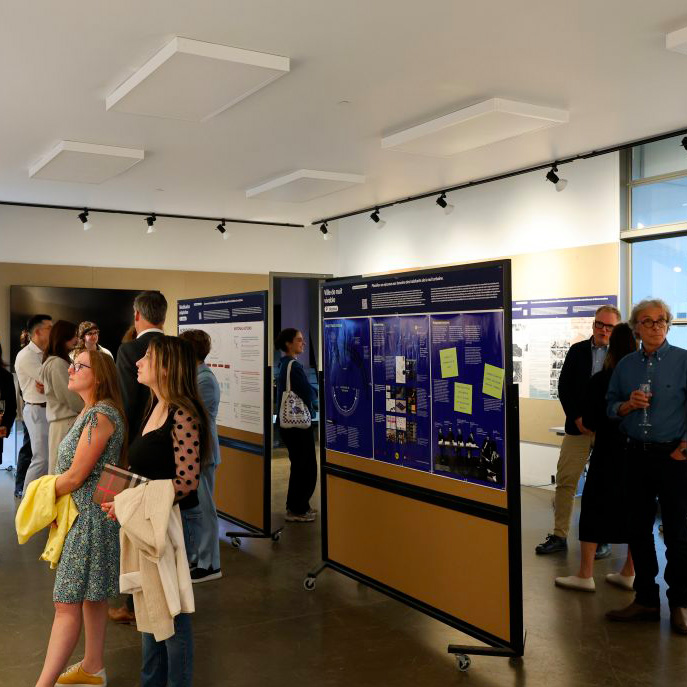
In Room 2081 of the Faculty of Environmental Design, from August 29 to September 19, 2025, this exhibition of work in progress provides an overview of research undertaken since 2022 and which will continue until 2027. This is an ongoing national project and not a finished product. Videos made by students accompany the panels, which summarize the major issues of quality, the steps taken, and the actions proposed.

A roadmap outlines key elements such as the initial problem, overall objectives, resources, process steps, and proposed short-, medium-, and long-term actions. There are many gray areas in our current definitions of quality: accessible quality, adaptive reuse, participatory processes, resilient parks, inclusive schools, integrated biodiversity, etc. Following a bottom-up process, these stakeholder teams conduct analyses and consultations in specific contexts, addressing issues that challenge current definitions of quality in architecture, landscape, design, and urban planning. The research highlights the importance of collecting lived experiences to break down silos while updating expertise.

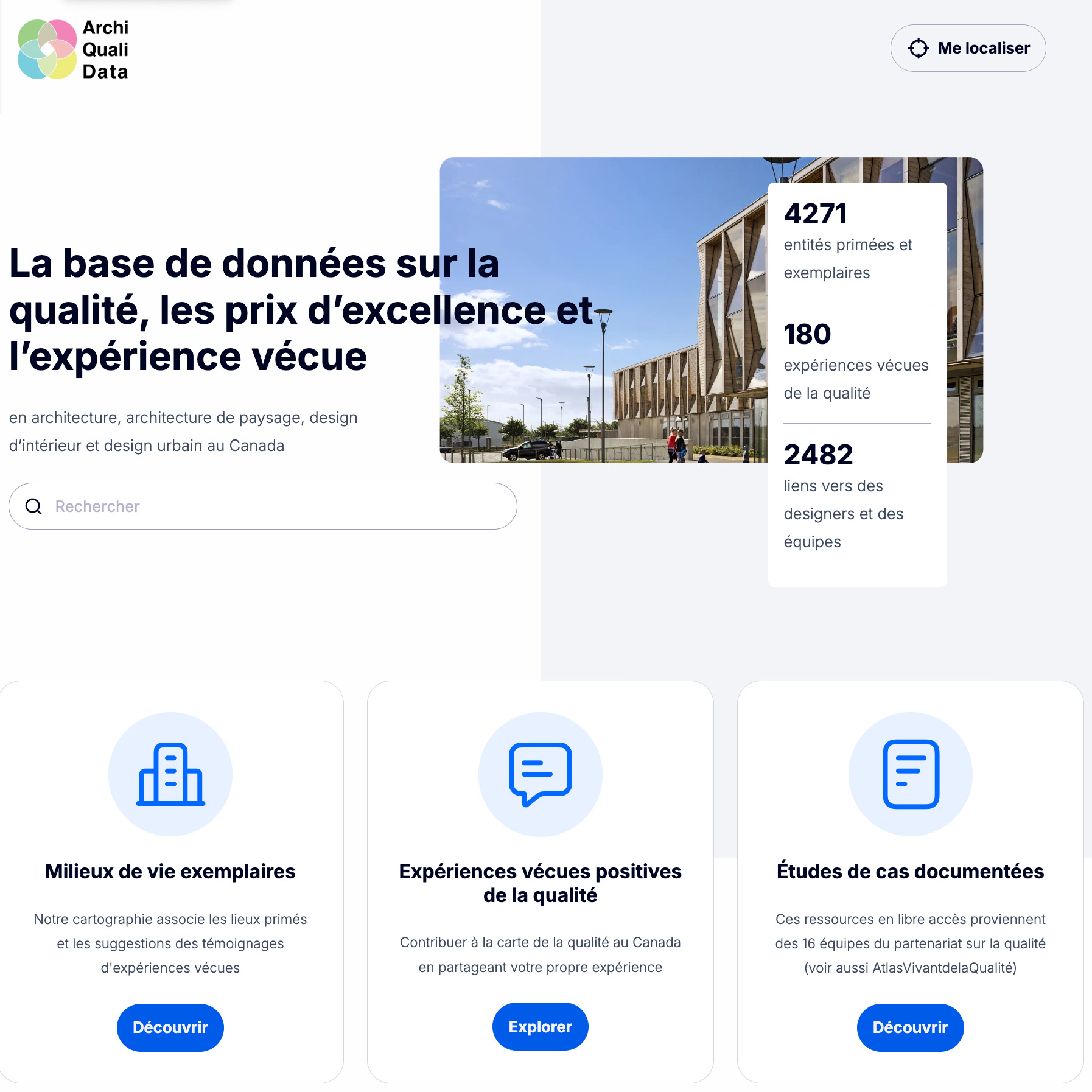
The exhibition vernissage, held on September 10, 2025, also marked the launch of ArchiQualiData.ca, the resource platform on quality, experience, and awards of excellence in architecture, landscape architecture, interior design, and urban design in Canada.

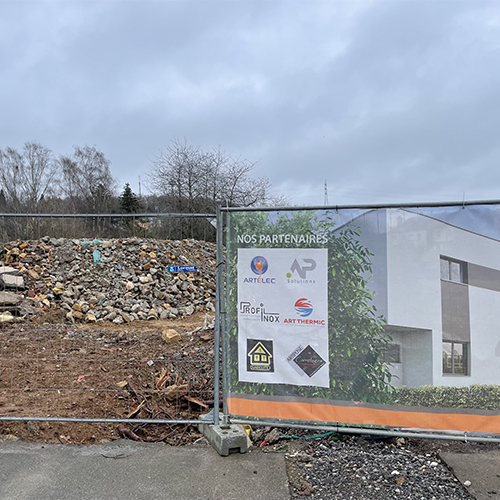
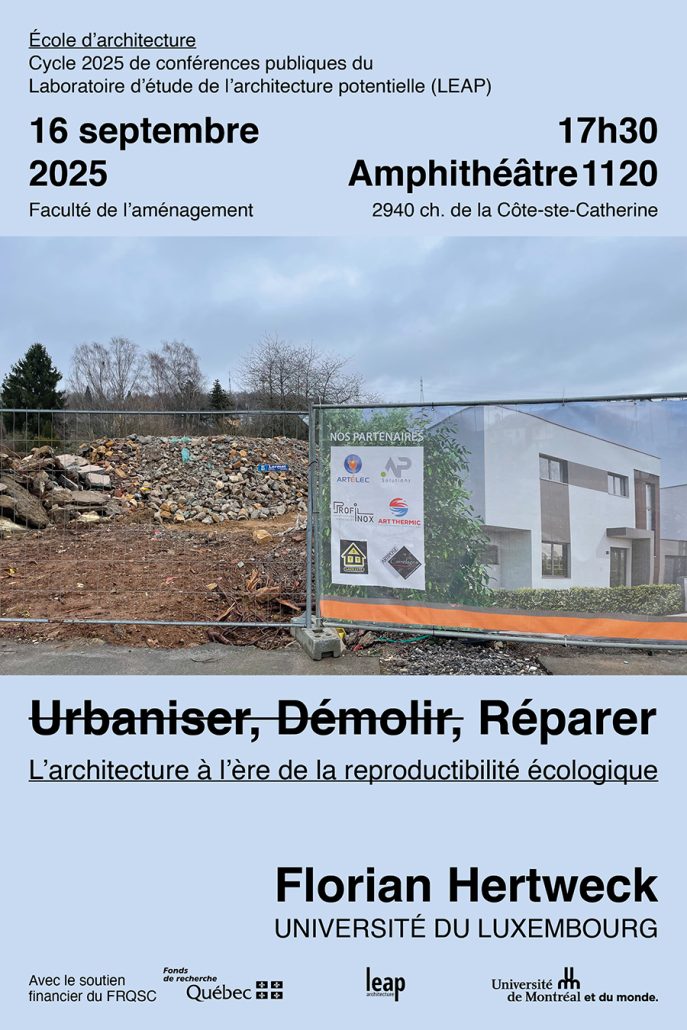
Public conference presented by Florian Hertweck: Urbanize, Demolish, Repair. Architecture in the Age of Ecological Reproducibility

 Conference by Florian Hertweck, Université du Luxembourg

Date: Tuesday, September 16th at 5:30 pm.

Location: Amphitheatre 1120, Faculté de l’aménagement, Université de Montréal

Lecture series of the Laboratoire d’étude de l’architecture potentielle


URBANIZE, DEMOLISH, REPAIR

Architecture in the Age of Ecological Reproducibility


Summary:

In the face of climate change and resource scarcity, two practices that have been commonplace in spatial development until now seem obsolete: the expansion of urban areas and the demolition of existing buildings in order to build denser and more modern structures.

Does this spell the end of architecture?

This conference explores how it is still possible to produce architecture under these conditions and on what theoretical basis a socio-ecological architecture can be founded.


Florian Hertweck is a professor of architecture at the University of Luxembourg and co-founder of Less Yellow architecture urbanisme. He has led consortiums of architects, urban planners, and researchers for the Luxembourg in Transition and Greater Geneva Consultation foresight programs. He is a member of the Luxembourg Higher Council for Spatial Planning and the scientific committee of the German Institute for Energy Transition Research (IKEM). Among other projects, he designed the Luxembourg pavilion for the 16th Architecture Biennale and the exhibition The Great Repair at the Akademie der Künste in Berlin and the Pavillon de l’Arsenal in Paris. He is also an organizing member of the European initiative HouseEurope! against demolition and for renovation. Hertweck is the author of numerous publications on the socio-ecological production of space, the most recent of which are The Great Repair. Politics of the Repair Society (Spector Books 2023) and Architecture on Common Ground. Positions and Models on the Question of Land (Lars Müller Publishers 2020).

Exhibition: “Quality Issues in Canada’s Built Environment”

Traveling exhibition showcasing the work in progress on roadmaps developed by 15 cross-sector teams from coast to coast

As part of a research partnership funded by the Social Sciences and Humanities Research Council of Canada and numerous partners, the Canada Research Chair in Architecture, Competition and Quality at the Université de Montréal, under the direction of Professor Jean-Pierre Chupin, brought together 14 universities and more than 60 academics. Together, they convinced the Rick Hansen Foundation, Public Services and Procurement Canada, the Royal Architectural Institute of Canada, and more than 60 citizen groups, professional organizations, and municipal services to form 15 collaborative research teams, including a team of young Indigenous leaders.

In May 2025, these cross-sector groups presented an initial status report on their roadmaps toward more equitable, sustainable, and socially valuable quality at the annual convention at the University of Toronto and then, in June, at Place Bonaventure during the RAIC’s annual conference.

In Room 2081 of the Faculty of Environmental Design, from August 29 to September 19, 2025, this exhibition of work in progress provides an overview of research undertaken since 2022 and which will continue until 2027. This is an ongoing national project and not a finished product. Videos made by students accompany the panels, which summarize the major issues of quality, the steps taken, and the actions proposed.

A roadmap outlines key elements such as the initial problem, overall objectives, resources, process steps, and proposed short-, medium-, and long-term actions. There are many gray areas in our current definitions of quality: accessible quality, adaptive reuse, participatory processes, resilient parks, inclusive schools, integrated biodiversity, etc. Following a bottom-up process, these stakeholder teams conduct analyses and consultations in specific contexts, addressing issues that challenge current definitions of quality in architecture, landscape, design, and urban planning. The research highlights the importance of collecting lived experiences to break down silos while updating expertise.Don’t miss the launch of the ArchiQualiData.ca platform on September 10 at 5:15 p.m.

Launch of the ArchiQualiData.ca platform!

On Wednesday, September 10, at 5:15 p.m. in rooms 2081 and 2083 of the Faculty of Environmental Design, the Canada Research Chair in Architecture, Competition, and Quality, led by Professor Jean-Pierre Chupin at the University of Montreal, will present the large open-access digital platform: ArchiQualiData.

ArchiQualiData is being launched as part of the traveling exhibition “Quality Issues in Canada’s Built Environment,” on display from August 29 to September 19.

ArchiQualiData is the resource platform for quality, lived experience, and awards of excellence in architecture, landscape architecture, interior design, and urban design in Canada.

This major national collaboration has received funding from the Canada Foundation for Innovation, the Quebec Ministry of Education, the University of Montreal, the Canada Research Chairs Program, and the Social Sciences and Humanities Research Council of Canada.

ArchiQualiData is hosted on the secure servers of the Digital Research Alliance of Canada.

  • Using filters, ArchiQualiData reveals more than 4,000 award-winning projects with links to design and architecture firms and agencies, as well as a map-based tracking system.
  • You can also discover an initial collection of more than 160 “positive experiences of quality” that provide a better understanding of what users and citizens feel and appreciate in public places (some award-winning, some lesser known, but always worth discovering), whether they are buildings or public spaces.
  • Finally, month after month, visitors will discover all the case studies, analyses, action plans, conferences, courses, and round tables, as well as, perhaps most importantly, roadmaps toward a more equitable, inclusive, and socially valuable quality. The ArchiQualiData platform is powered by researchers, students, and professional and social partners brought together in the Canada-wide SSHRC Partnership on Quality under the scientific direction of Professor Chupin.

Enjoy your discovery and, above all, learn to share your own experience of quality so that disciplines, professions, and decision-makers can think about and produce the built environment beyond silos and habits, in increasingly inclusive and sustainable ways.

Letʼs build a map of Canadaʼs public buildings and places that incorporates your own experience of quality!

Why does your experience matter to improve quality?

Our buildings, parcs and cities are still designed and based on visions that poorly consider the diverse experiences of the public. By informing decision-makers,students and designers, your voice can help make public buildings and places more inclusive, more valuable and more sustainable.

3 ways to contribute:

📷 Take a picture showing what you like in a public building or public space, along with a short description (300 words).

🎤 Record a voice message on your phone while experiencing the place you like and take a picture.

🎥 Take a short video and record your voice describing the place you like and take a picture.

Launch of the ArchiQualiData.ca platform

The resource platform on quality, lived experience, and awards of excellence in architecture, landscape architecture, interior design, and urban design in Canada

September 10th, 2025, at 5:15 p.m.

Room 2083, UdeM Planning Pavilion


During a celebration on Wednesday, September 10, at 5:15 p.m., in the presence of representatives from the Vice-Rectorate for Research and Innovation, Montreal representatives of the partnership will present the major digital platform ArchiQualiData.ca.

Originally funded by the Canadian Foundation for Innovation, the Quebec Ministry of Education, and the Vice-Rectorate for Research and Innovation at the Université de Montréal, this open-access resource platform brings together data on quality, lived experience, and awards of excellence in architecture, landscape architecture, interior design and urban planning in Canada.

In attendance:

  • Francis Gingras, Assistant Vice-Rector of Research, Society and Culture Sector
  • Carmela Cucuzzella, Dean of the Faculté de l’aménagement
  • Isabelle Bayard, Executive Director of Research Support Services
  • Donald Tremblay, Director of Granted Research at BRDV

And numerous professional, associative, and academic partners from Montreal.

New article by Yolene Handabaka Ames: What’s behind the demolition of the Chocolats favoris building in Vieux-Lévis?

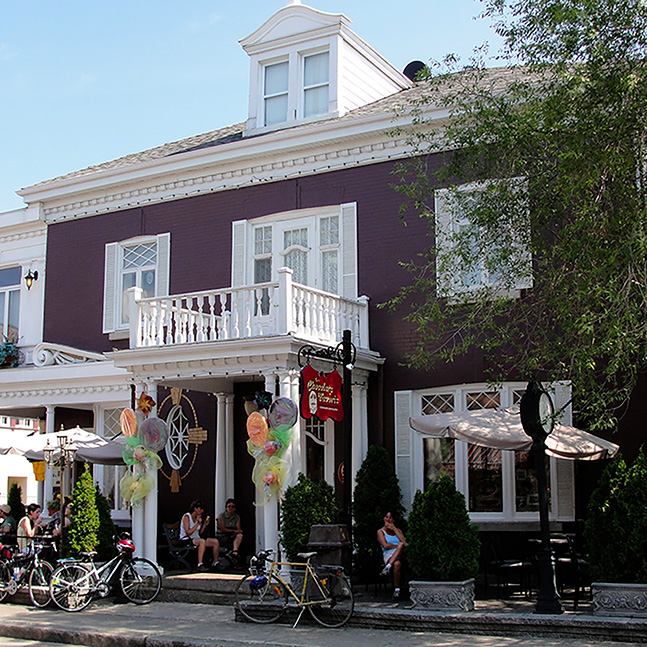
New article published in Le Devoir by Yolene Handabaka Ames, student of the individualized doctorate in architecture at the École d’architecture de la Faculté de l’aménagement: What’s behind the demolition of Chocolats favoris’ building in Vieux-Lévis?

“The case of the imminent demolition of Chocolats favoris has been making headlines since October 2023, when a public notice of demolition request from the City of Lévis was posted on the building’s façade.

The saga, which lasted almost two years, revealed recurring conservation issues surrounding Quebec’s built heritage. So much so that the Lévis residence has become an emblematic case of what lies behind most heritage building demolition projects: the social value of a “living” heritage.

In autumn 2022, the house that had housed Chocolats favoris since 1996 was closed due to water infiltration and deteriorating masonry. After professional appraisals, letters signed by heritage advocates, requests for review and the active participation of Lévis residents at public hearings, demolition was approved on December 16. A request for a one-year moratorium did not change the building’s fate either. On June 19, at a regular meeting of the municipal council, elected officials voted against accepting the request. The house of Chocolats favoris will soon fall under the demolition pick… ”

Read more on Le Devoir’s website.

Photo by René Bélanger (Flickr).