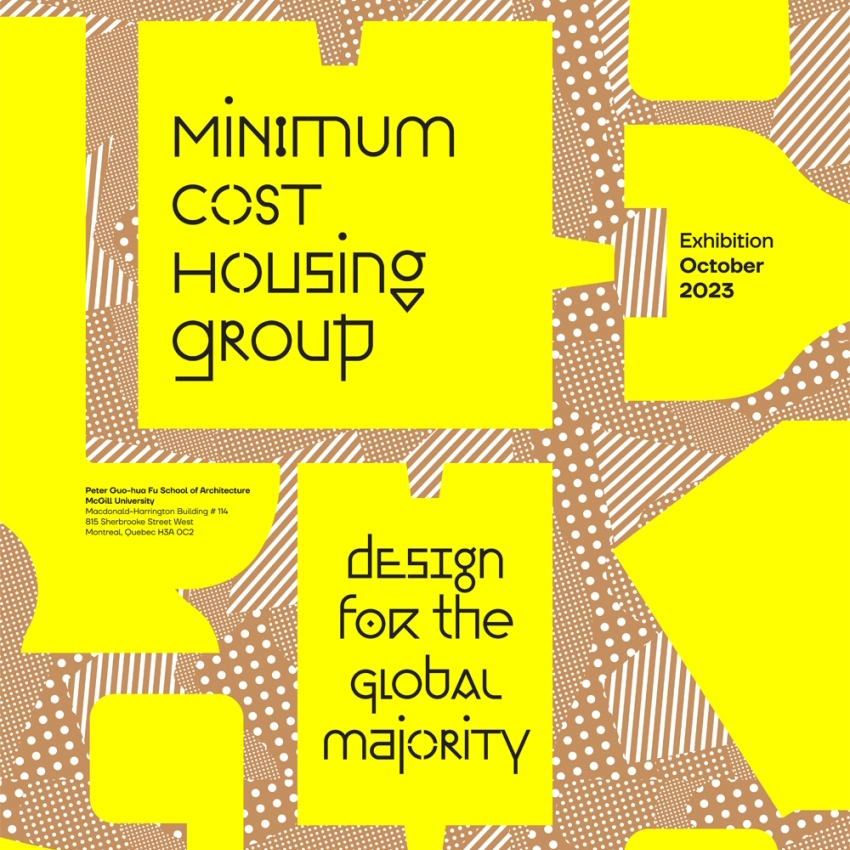
Exposition et symposium : Conception pour la majorité mondiale – en

Événement 1

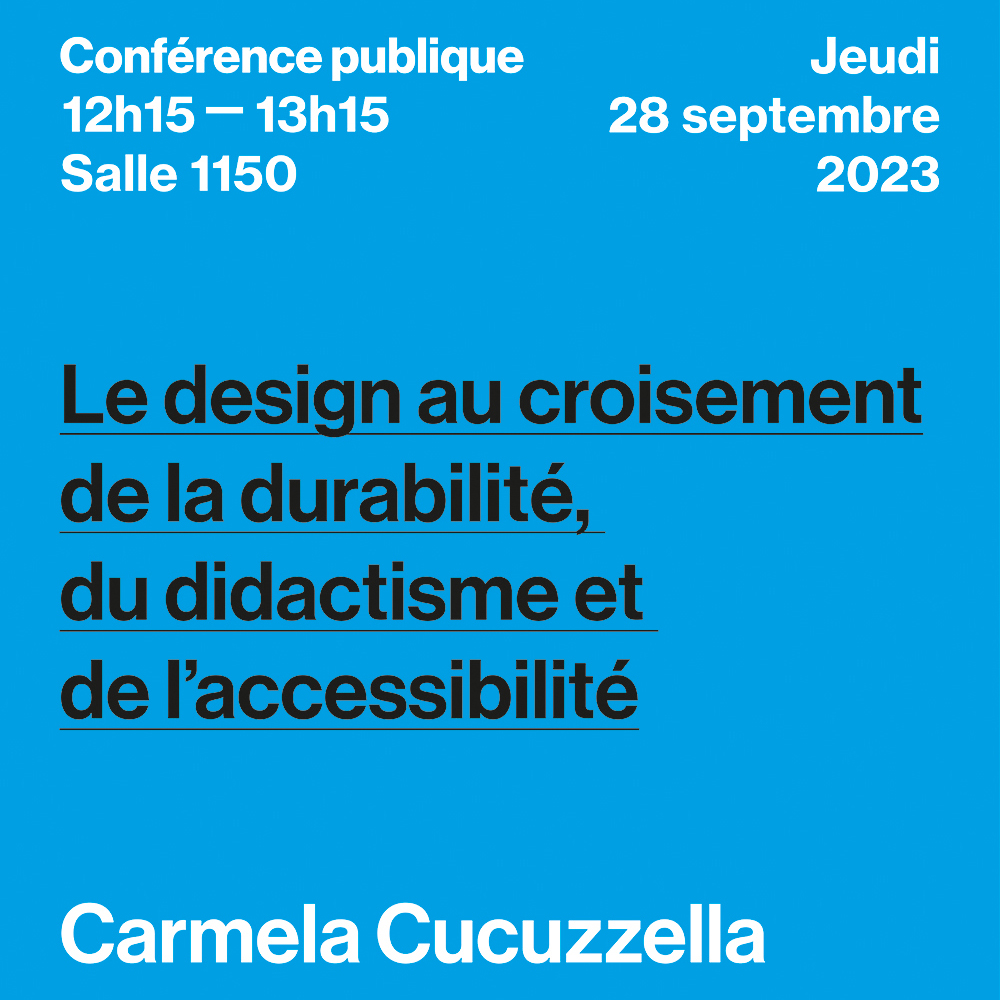
Titre : « Mille millions de clients » Discours par Vikram Bhatt (McGill) en conversation avec Ipek Türeli (McGill) et Carmela Cucuzzella (UdeM)

Date : Jeudi 19 octobre, 2023

Heure :   Vernissage à 17h00 (salle 114) suivi de la conférence à 18h00 (salle G-10)

Lieu : École Peter Guo-hua Fu École d’architecture Peter Guo-hua Fu, édifice Macdonald-Harrington, 815, rue Sherbrooke Ouest, Montréal (Québec) H3A OC2

Description : Cet événement fait partie du projet Conception pour la majorité mondiale. Le vernissage de l’exposition sera suivi d’un discours de Vikram Bhatt, professeur émérite à l’Université McGill et ancien directeur du MCHG, et d’une conversation avec Ipek Türeli, professeure associée et titulaire de la Chaire de recherche du Canada sur les architectures de justice spatiale à l’Université McGill, et Carmela Cucuzzella, doyenne de la Faculté de l’aménagement de l’Université de Montréal.


Événement 2

Titre : Symposium « Conception pour la majorité mondiale »

Date : Vendredi 20 octobre, 2023

Heure : 9h00 à 16h00

Lieu : Maison Thomson, 3e étage, 3650, rue McTavish, Montréal, Québec H3A 1Y2

Description de l’événement : Cet événement fait partie du projet Conception pour la majorité mondiale. Symposium international avec des présentations présentations d’anciens élèves et d’universitaires de MCHG.


Événement 3

Titre : « Le vert avant le vert » Discours de clôture par Witold Rybczynski (UPenn)

Date : Vendredi 20 octobre, 2023

Heure : 18h00

Lieu : Faculté de droit, New Chancellor Day Hall (salle 100), 3644 rue Peel, Montréal, Québec H3A 1W9

Description : Cet événement fait partie du projet Conception pour la majorité mondiale. Discours de clôture par Witold Rybczynski, professeur émérite d’urbanisme Martin et Margy Meyerson, Université de Pennsylvanie, et ancien directeur du MCHG.

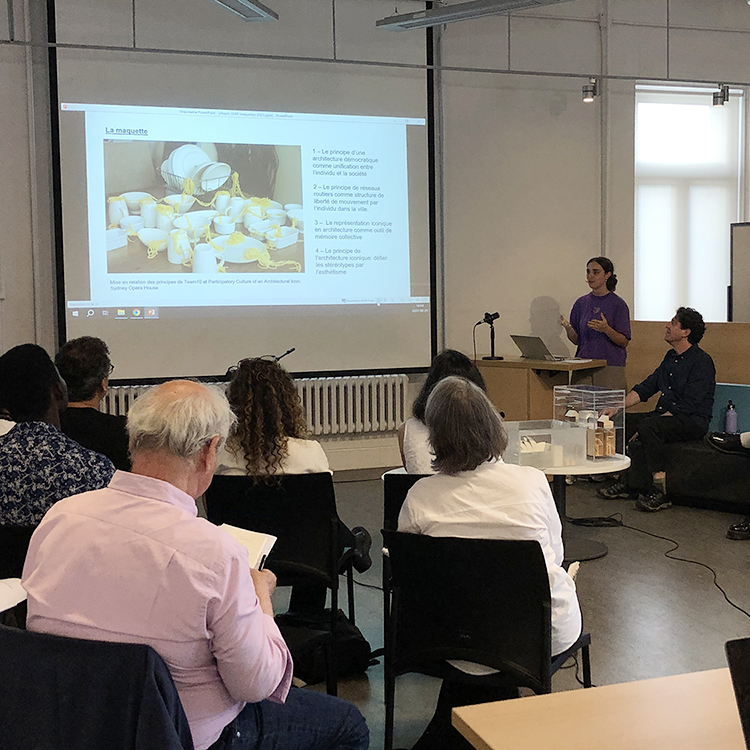
Journée d’étude du LEAP : À quoi sert la maquette en architecture? – en

Date : Le 29 août 2023, 8h30 à 17h30

Lieu : Salle 1150, Faculté de l’aménagement de l’Université de Montréal.

Organisation : Denis Bilodeau et Virginie LaSalle

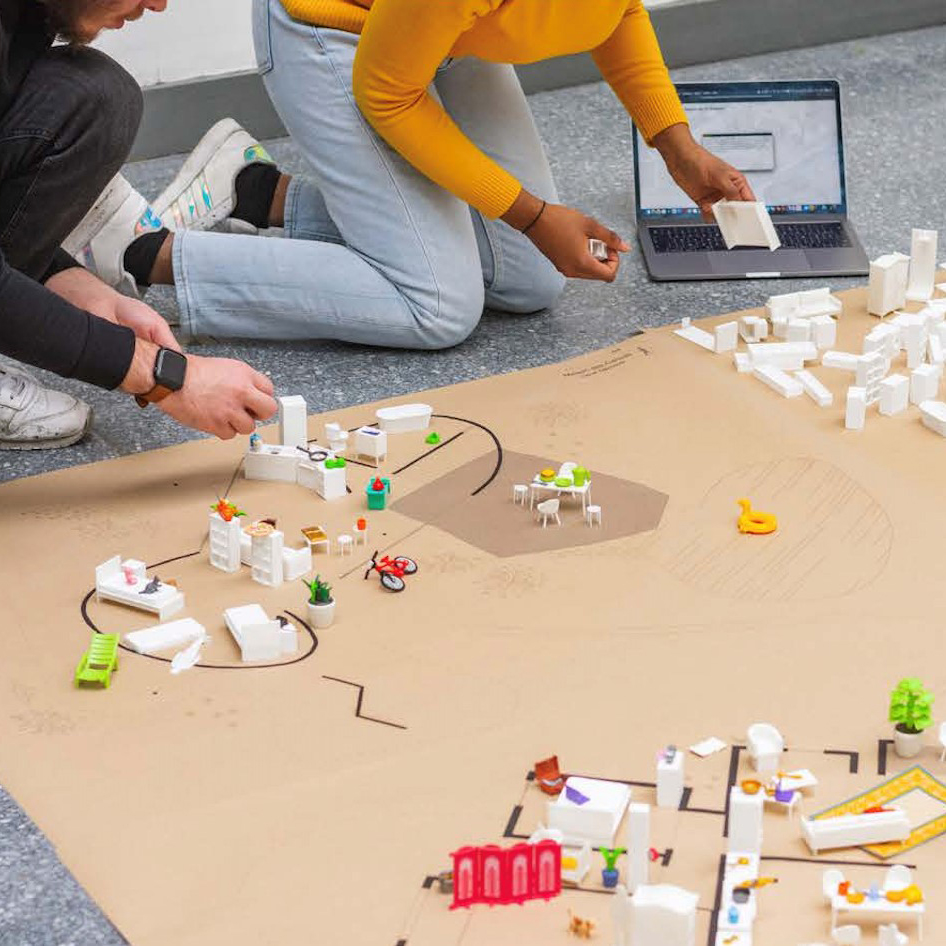
La journée d’étude du LEAP qui pose la question À quoi sert la maquette en architecture? se présente comme une exploration initiale du thème et de son potentiel appréhendé depuis de multiples perspectives. Lors de cette rencontre les intervenants sont invités à présenter leurs réflexions et leurs recherches sous la forme de brefs exposés (15 minutes) portant sur des situations ou des cas précis d’utilisation de la maquette dans différents contextes, professionnels, artistiques, pédagogiques ou autres. Cette journée d’étude vise à ouvrir un champ d’investigation multidisciplinaire sur une pratique commune dont les dimensions cognitives, culturelles et communicationnelles restent encore à élucider. Trois tables rondes de 1h30 chacune proposent, selon des thèmes généraux qui se rencontrent et s’entrecroisent, des pistes de réponse à la question titre de la journée.

Déroulement de la journée :

8h30-9h Arrivée et installation

9h-10h30 Table 1 : SIMULER ET APPRENDRE
• Bechara Helal
• Anne Cormier et Paloma Castonguay-Rufino
• Maurilio Lima Lobato
• Izabel Amaral
Répondante lors de la discussion : Lucie Palombi

11h-12h30 Table 2 : TRANSMETTRE ET DIALOGUER
• Georges Adamczyk
• Ipek Tureli
• Virginie LaSalle et Victorian Thibault-Malo
• Morteza Hazbei et Carmela Cucuzzella
Répondant lors de la discussion: Maurilio Lima Lobato

12h30-14h Pause dîner

14h-15h30 Table 3 : PENSER ET COMPRENDRE
• Denis Bilodeau
• Aurelien Catros
• Jean-Pierre Chupin et Joelle Tétreault
• Louis Martin
Répondante lors de la discussion : Paloma Castonguay-Rufino

16h-17h30 Discussion ouverte (participants et auditoire)

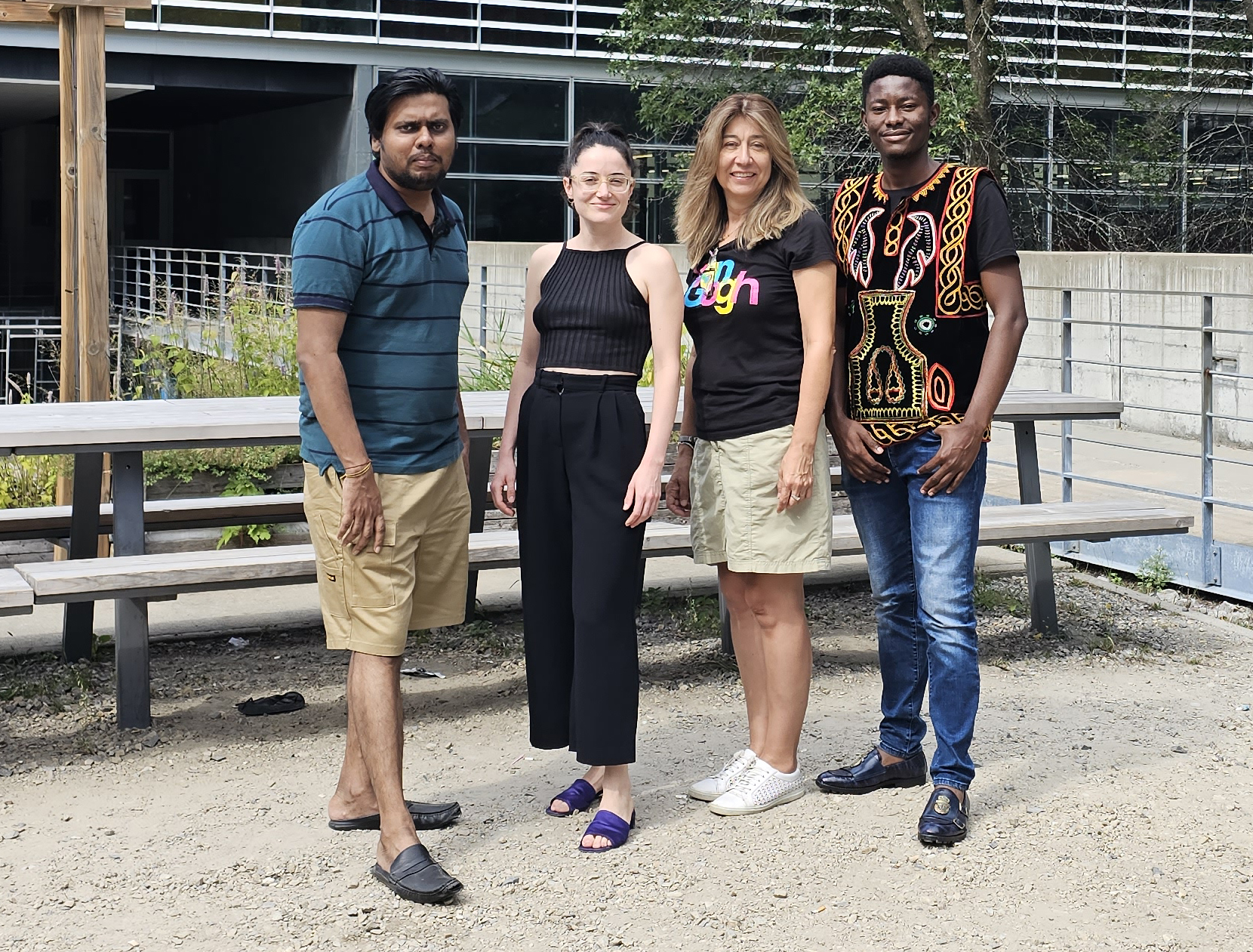
Students from Concordia, UdeM and Calgary participate in the Accessibility Professional Network 2023 (RHF) National Forum

From left to right: Catherine Gauthier (MArch, Université de Montréal), Morteza Hazbei (PhD candidate, Concordia University), Jean-Pierre Chupin (UdeM), Doramy Ehling (CEO, Rick Hansen Foundation), Marco Pasqua (Rick Hansen Foundation), Nooshin Esmaeili (UCalgary)

On March 1-2, 2023, several student members of the SSHRC Quality Partnership were invited to participate in person or online in the annual APN2023 Building Together Symposium, which brought together industry leaders, accessibility professionals, and global thought leaders to discuss how we can continue to build an inclusive and accessible world for people of all ages and abilities. [Accessibility Professional Network 2023.](On March 1-2, 2023, several student members of the SSRC Quality Partnership were invited to participate in person or online in the annual APN2023 Building Together Symposium, which brought together industry leaders, accessibility professionals, and global thought leaders to discuss how we can continue to build an inclusive and accessible world for people of all ages and abilities. Accessibility Professional Network 2023.

A new LEAP seminar: “Material Cultures through the filter of the Cecobois and Woodworks Awards” by Izabel Amaral. March 16, 2023.

A seminar presented by Izabel Amaral (UdeM) around a SSHRC Insight Development Grant: (in collaboration with Carmela Cucuzzella (Concordia) and Jean-Pierre Chupin (UdeM)

An Ecology of Wood Cultures in Canada (20032020): comparing constructive cultures through awarded architectural designs

At the  intersection of  architectural theory and  cultural studies, this  research investigates wood  architecture as a symbolic universe that allows us to study the presence of nature in human culture. This research will theorize the diversity of expressions of quality in Canadian architecture, from the standpoint of environmental preoccupation, building culture and architectural expression. Considering wood architecture as a form of “cultural ecology”, it has the potential to reveal how Canadian cultures represent and symbolize their relations to the land and natural resources, as well as the cultures of its founding peoples.

Notwithstanding the interest in wood as a major alternative to fossil fuelbased construction materials, this research will highlight the symbolic spectrum of wood buildings, which ranges from local and indigenous traditions to ecological aesthetics, representing forms of making that rely both on traditional architectural practice or recent building technologies and computeraided design. We aim to better interpret and understand how advancements in architectural practice and building techniques affect the way architecture is envisioned and materialized in Canada during the past decades. In parallel to studying the influence of environmental considerations to  architectural forms in  Canada, we  will make sense of  a  dissonance within the theory of architecture between ideas about the interdependency or autonomy of architectural form (visual appearance), material (what it is made of) and meaning (messages and ideals expressed).

Conference-debate on the history of architecture schools in France and Quebec

Date: January 31, 2023, 5:30 pm.

Location: Amphitheatre 1120, Faculté de l’aménagement, Université de Montréal.

On the occasion of the publication in 2022 of L’architecture en ses écoles, une encyclopédie, we welcome Daniel Le Couédic, architect and historian, professor at the University of Western Brittany, and co-director of the book. Around Lucie K. Morisset, professor at UQAM and holder of the Canada Research Chair in Urban Heritage, this conference-debate will also bring together two Quebec contributors to the encyclopedia, François Giraldeau, honorary professor at UQAM’s School of Design, and Jean-Pierre Chupin, professor at UdeM’s School of Architecture and holder of the Canada Research Chair in Architecture, Competitions and Mediation of Excellence,

  • Anne-Marie Châtelet, Amandine Diener, Marie-Jeanne Dumont and Daniel Le Couédic, (under the direction of), L’architecture en ses écoles (une encyclopédie de l’enseignement de l’architecture au XXe siècle), Châteaulin, Éditions Locus Solus, 2022.
  • Jean-Pierre Chupin and François Giraldeau, article Québec, relations et échanges. p. 568.

Summary

With its 704 pages and 341 notes written by 147 authors, this work is the result of a vast collective effort to gather and deepen, in an unprecedented way, a state of knowledge that was fragmentary until now. This history of architectural education in France in the twentieth century addresses multiple dimensions – pedagogical, professional, territorial, political, institutional and material – and covers a range of institutions involved in architectural education, such as engineering schools.

In France, the history of architectural education was long reduced to its alleged shortcomings and to the story of the struggle of the champions of modernity against the École des Beaux-Arts in Paris. The earthquake of 1968 buried even the memory of that bygone era. The revival came from the United States, where the École had once enjoyed great prestige, but at first it concerned only the nineteenth century. It was not until the 1980s that the complexity of the things debated and experienced in the twentieth century began to be illuminated and, above all, that the investigations of architecture, its teaching, the profession and its practice were correlated.

In this movement, one rediscovered the long exacerbated debate between the architects defending the Parisian monopoly and their provincial colleagues, which had preluded the creation of the first regional schools in 1903. The Regional School of Rennes – which became the Regional School of Brittany in 1984 – was the second to open its doors; its history thus allows us to understand all the stages of this bumpy path which, well beyond architecture, provides information on the reinvention of higher education in France and on the role it played in the structuring of the national territory.

The discussion will also be based on another book by our guest: Le Couédic Daniel, Sauvage André, L’École d’architecture de Bretagne : Un siècle de fabrique des architectes, Châteaulin, Locus Solus, 2022.

Video of the roundtable: What is an architecture award worth?

This debate was organized at the BAnQ’s National Archives in Montreal (535 Viger Avenue East) on November 24, 2022.

Once a symbol of excellence and exception, architecture and design awards, which aim to reward achievements, have multiplied exponentially in recent years. We no longer count the number of companies, associations, municipalities and specialized publications that have set up their own awards, many of which have greatly multiplied their categories over the years. The situation is such that we can now speak of a veritable awards “industry”, both in Quebec and internationally.
In this context, we may wonder about the value of these awards. Do they always reward excellence? Do the entries focus excessively on aesthetics, or even the “Instagrammable” side of architecture, rather than on the public experience? Why do architectural firms feel the need to participate? How can we ensure the real value of an architecture award?

The event was organized by Kollectif, in partnership with Jean-Pierre Chupin, Canada Research Chair in Architecture, Competitions and Mediations of Excellence (Université de Montréal) and co-editor of the collective book The Rise of Awards in Architecture (Vernon Press, 2022) with Carmela Cucuzzella and Georges Adamczyk.

Presenter: Marc-André Carignan, Content Manager for Kollectif
Moderator: Jean-Pierre Chupin, Canada Research Chair in Architecture, Competitions and Mediations of Excellence, Université de Montréal

Our panelists:

Our guests of honour:

Video production:

  • Video editing and recording: Jonathan Haxhe, M.A. in communication, Université de Montréal.
  • Recording: Théo Pagé-Robert, Bachelor of Architecture, Université de Montréal.

Funding: Canada Research Chair in Architecture, Competitions and Mediations of Excellence.

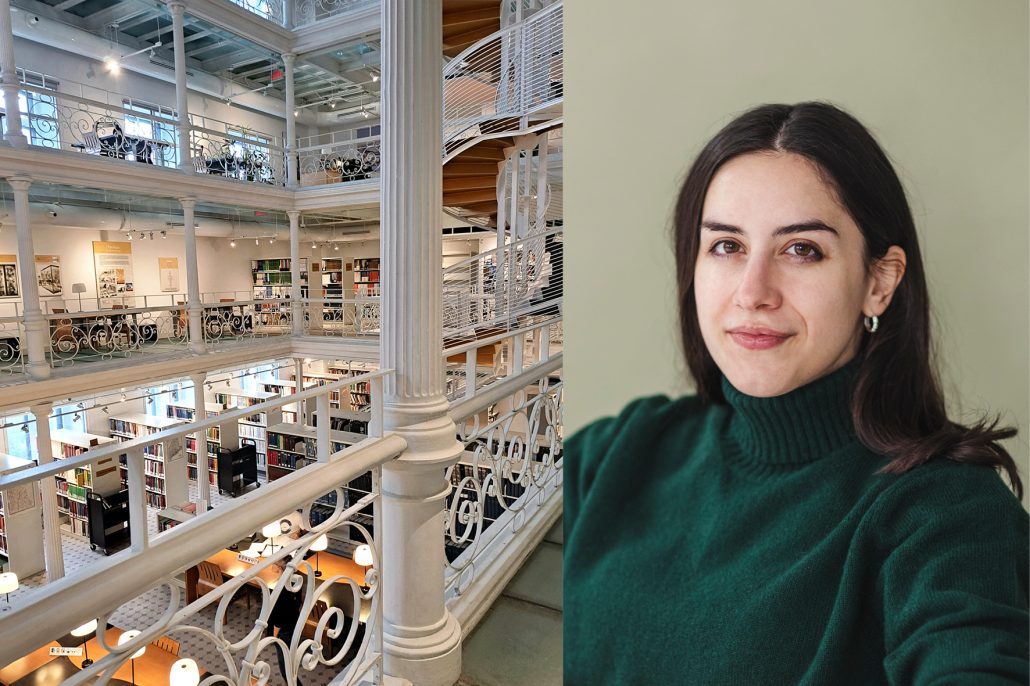
Two CRC-ACME doctoral grants for Paloma Castonguay-Rufino and Shantanu Biswas-Linkon

Two grants to support two doctoral students of the Canada Research Chair in Architecture, Competitions and Mediations of Excellence: Paloma Castonguay-Rufino and Shantanu Biswas-Linkon.

These two $12,000 scholarships are awarded by the Canada Research Chair in Architecture, Competitions and Mediations of Excellence for the quality of their academic record. Paloma Castonguay-Rufino is working on a redefinition of the notion of “industrial heritage” in the Canadian context, while Shantanu Biswas-Linkon is studying the notion of “social value” (Re-evaluating the Social Value of Architecture in the Public Realms through Inclusiveness and Environmental Justice).

Two grants awarded to Aurélien Catros, Ph.D. candidate at UdeM

Under the supervision of professors Jean-Pierre Chupin and Bechara Helal in the Individualized Doctoral Program in Architecture, Aurélien Catros has received two prestigious grants for his thesis:

  • Daniel Arbour and Associates excellence grant

Amount: 20 000$CAD (Travel grant for England and Japan)
Title of funded topic: “Projection between design models in the era of the second digital revolution

  • Doctoral grant from the Fonds de Recherche du Québec Société et Culture

Amount: 28 000$CAD (spread over 16 months)
Title of funded subject: “Epistemology of the model in architecture and the transfer of project design in the era of the second digital revolution