

In her Ph.D. project under the direction of Ipek Türeli, Meltem Al investigates how the entanglement between capital, ideology, and religion transforms the built environment, through the analysis of selected housing enclaves in Istanbul. She argues how neoliberal urbanism and political Islam have played a role in the transformation of Istanbul and how this spatial transformation has affected society. Questioning how Başakşehir— a satellite city founded in the 1990s, in the North-West peripheries of Istanbul—has turned into a conservative housing landscape, she analyzes the spatial and social characteristics of the selected housing enclaves and the appropriated public spaces (schools, public gardens, libraries, and city centers) in the district.
Archives: Doctorants (doctorant)
Anne Sabourin

Anne Sabourin is a scenographer, designer, director and performer. She holds a bachelor’s and master’s degree from the School of Architecture of the Université de Montréal as well as professional training in dance. She is currently pursuing a doctorate in arts studies and practices at UQAM. She has worked for various firms in architecture and energy efficiency. She has also designed several scenographies, notably for the Ballets de la Parenthèse, Territoire 80, the DR collective and the Musée des Ondes Émile Berliner. She has collaborated with artist Rose-Marie Goulet on various architectural and visual installation projects. In collaboration with Christian Leblanc, she has created and directed various plays including Le Vestibule and La couleur du gris presented at Théâtre Espace libre. Anne has been teaching as a lecturer at Concordia University since 2015.
Title of scientific project: The experience of architecture activated, revealed, intensified by the scenographic system
The research-creation project aims to develop an in situ device that has an agentivity conducive to experimenting with architecture in a sensitive manner. A scenographic device, like a catalyst, that activates, intensifies and reveals architecture; a journey that stages architecture and gives it the leading role. At the theoretical level, the research project will contribute to the knowledge of the modalities of the architectural experience, while at the practical level, it will identify staging principles and scenographic mechanisms that will allow the integration of the subject in all its dimensions in future architectural and scenographic projects.
Mohammad Abdolrezazadeh
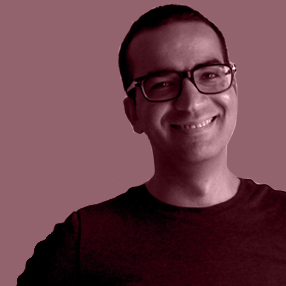
Mohammad is an INDI PhD student at Concordia University. He investigates the potentials of design education for developing community-university-industry partnership. His curiosity about the social responsibility of design grew in volunteer working with local and International NGOs in Iran. He believes that community-based design is an inevitable aspect of a democratic society.
Fatemeh Mehrzad
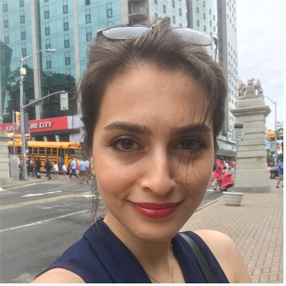
Title of the research: Social Media as a means to influence, collect, and enable social values for public space regeneration
under the supervision of Dr. Carmela Cucuzzella
Abstract: Fatemeh’s research explores how social media can help reveal the social values attached to public spaces undergoing regeneration. She views public space not simply as a physical setting, but as something shaped by everyday experiences, social relationships, shared meanings, and changing patterns of use. Her work addresses the possible gap between what designers intend and how people actually experience regenerated spaces. Since formal participation methods may overlook some everyday meanings and experiences, she examines social media as a complementary source of evidence. The aim is to develop a framework for identifying and interpreting social media expressions and relating them to spatial qualities, design decisions, and lived experience.
Morteza Hazbei

Morteza Hazbei is a Ph.D. student at Concordia University. He completed his Master’s and Bachelor’s in Architecture, specifically on Designing Cultural Spaces. His interdisciplinary Ph.D. research focuses on parametric design, optimization, and genetic algorithm. He investigates how are our rapidly developing computer tools changing our building forms and the character of our cities and how can advanced computer tools facilitate the optimization of complex and culturally appropriate forms.
Title of research: Bridging culture with environmental performance through the parametric design in architecture
Supervisors: Dr. Carmela Cucuzzella, Dr. Nawwaf Kharma, Dr. Bruno Lee and Prof. Richard Foltz.
Research Summary: The over use of parametric tools in façade design with a lots of environmental focus is distorting the cultural significance of the urban. There is an explosion of parametric design that is changing the face of the architecture. Nowadays, architects do not draw or sketch in the first stages of making forms. They prefer to use computer application to creates complex forms, and most recently, they use computer code and genetic algorithm to give them pleasant forms. The form and envelope of the building is one of its architectural elements that directly represent not only the performance but also the aesthetical aspects of it. building envelope covers the most exterior part of a building and thus plays a key role in achieving an ideal architecture. It is one of the most parts of the building in terms of expressive and form features. If we go back to history this form meant something religiously or symbolize regardless of the geography that they have been used. Today is the best arena to bridge computer parametric software with the cultural aspect of building which has been neglected by the progress of computer architectural software.
Keywords: Parametric Design, Architecture, Genetic Algorithm, Cultural Relevance, Form Aesthetic, environmental performance
Aurélien Catros

Aurélien Catros est architecte HMONP diplômé de l’École d’Architecture de Lyon.
Il travaille d’abord aux côtés d’architectes du patrimoine, en France, avant d’entreprendre une thèse de doctorat à l’Université de Montréal sous la direction de Jean-Pierre Chupin et Bechara Helal.
Titre du projet de thèse : “Transferts réciproques entre maquettes physiques et modèles numériques dans le projet d’architecture”
À l’instar de leurs homologues analogiques, les modélisations numériques contemporaines influencent l’appréciation des projets par les architectes tout au long du processus de conception. Ces objets théoriques singuliers suscitent nombre d’analyses critiques mais sont rarement théorisés conjointement aux maquettes analogiques bien que ces modèles soient régulièrement utilisés de concert. Sur le plan ontologique, ces productions sont dissemblables : que ce soit en termes de supports (de quoi le modèle est-il fait ?), d’objectifs (quel est le but du modèle ?) et de temporalités (est-ce un modèle statique ou dynamique ?). Les transferts réciproques entre les différents supports se diversifiant, les productions de part et d’autre de ces opérations admettent potentiellement de nouveaux usages et donc critères d’évaluation. Du point de vue théorique, il apparaît aujourd’hui indispensable d’interroger les facteurs mis en crise lors des transferts entre ces différents supports puisque ces critères participeront réciproquement à définir la qualité architecturale. Comment les modélisations numériques contribuent-elles à redéfinir les critères d’évaluation du projet d’architecture avec ou à l’encontre des maquettes analogiques ?
Cette recherche traite conjointement des modèles analogiques et numériques comme instruments de représentation et de simulation du projet d’architecture. Nous proposons de : 1) Compléter et actualiser les catégorisations existantes des modélisations en architecture pour situer ces productions au sein de la théorie générale des modèles, 2) Comparer les différents modèles numériques à leurs «équivalents» analogiques supposés d’après la catégorisation proposée pour comprendre modalités de transferts entre eux au sein de la pratique contemporaine, 3) Identifier les biais et potentiels des usages conjoints et disjoints de ces modélisations à travers leurs interactions afin d’améliorer et d’optimiser leurs utilisations respectives par les concepteurs.
Notre cadre théorique se fonde sur des catégorisations générales des modèles qui ont déjà fait l’objet de tentatives d’adaptation aux maquettes analogiques et numériques en architecture. Cette catégorisation constituera la grille d’analyse qui nous permettra d’étudier les itérations successives des modélisations de différents projets. Considérant que ces itérations permettent l’évaluation du projet par l’architecte et donc son évolution, notre approche méthodologique s’inscrit dans le comparatisme qualitatif et théorique proposée par l’analyse comparative quali-quantitative (qualitative Comparative Analysis – QCA). Nous identifierons les similitudes et différences entre les maquettes d’étude successives pour identifier la manière dont les caractéristiques de ces modèles (supports, objectifs, temporalités) influencent la modification du projet et la création du modèle suivant. Nous chercherons en particulier à isoler différents facteurs d’évaluation de la qualité des modélisations d’architecture qui se révéleraient – le cas échéant – spécifiques à la conception du projet à l’ère numérique.
Angie Arsenault

Angie Arsenault is an artist and researcher currently enrolled in the HUMA PhD Program at Concordia University where she focuses on fine art, deindustrialization and oral history. Angie is from the deindustrialized island of Cape Breton and much of her art practise and research employs memory, material culture and storytelling to examine life in and around ruination on the island. Angie’s artistic explorations generally manifest in sculpture, installation and performance, but she has recently been exploring book work. She holds both a BFA (2004) and MFA (2017) from NSCAD University where her Masters thesis project, Keeper of Industrial Memory, was awarded both a SSHRC and the Governor General Academic Gold Medal. Angie is also a trained goldsmith (VCC, 2009) and was the sole proprietor of a fine jewellery business for six years.
Title of research: Working through deindustrialization: Art and ruination.
Supervisors: Cynthia Hammond, Steven High and MJ Thompson[/vc_column_text][/vc_column][/vc_row]{:}{:en}[vc_row][vc_column][vc_column_text]Angie Arsenault is an artist and researcher currently enrolled in the HUMA PhD Program at Concordia University where she focuses on fine art, deindustrialization and oral history. Angie is from the deindustrialized island of Cape Breton and much of her art practise and research employs memory, material culture and storytelling to examine life in and around ruination on the island. Angie’s artistic explorations generally manifest in sculpture, installation and performance, but she has recently been exploring book work. She holds both a BFA (2004) and MFA (2017) from NSCAD University where her Masters thesis project, Keeper of Industrial Memory, was awarded both a SSHRC and the Governor General Academic Gold Medal. Angie is also a trained goldsmith (VCC, 2009) and was the sole proprietor of a fine jewellery business for six years.
Title of research: Working through deindustrialization: Art and ruination.
Supervisors: Cynthia Hammond, Steven High and MJ Thompson
Aristofanis Soulikias
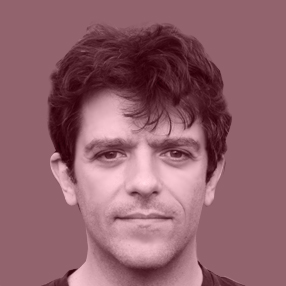
Aristofanis Soulikias is an architect and film animator. He is a PhD student at Concordia University, in the Individualized Program (INDI), under the supervision of Dr. Carmela Cucuzzella, Dr. Cynthia Hammond and Prof. Luigi Allemano, pursuing an interdisciplinary research-creation study with the title: Architecture and Film Animation: Visualizing and educating on the built environment through stop-motion and under-camera techniques, which aims at examining how Architecture and Film Animation can inform each other and evolve with the use of traditional stop-motion techniques that have re-emerged, owing to adapted digital technologies, as to engage citizens with their urban built environment and its intangible realms.
His B.Sc in Architecture and a B.Arch from McGill University were followed by a period of professional conservation work on Mediaeval and Post-Mediaeval monuments in Greece which, in turn, led to a scholarship by the Hellenic Society for the Environment and Cultural Heritage towards an MA in Conservation Studies at the Archaeology Department of the University of York, UK, completed in 2010.
After a two-year fellowship at the Prince’s Foundation in London, UK, where he worked and received training on sustainable urbanism, Aristofanis returned to his native Montreal to learn the craft of film animation at the Mel Hoppenheim School of Cinema of Concordia University, where he completed a BFA with distinction. His graduation film Last Dance on the Main, an animated documentary on the perilous state of Montreal’s built heritage and social fabric was selected by TIFF’s Canada’s Top Ten for the year 2014, and won four awards in international festivals. That same year he received the Mel Hoppenheim’s Emru Townsend award in Film Animation.
Title: Architecture and Film Animation: Visualizing and educating on the built environment through stop-motion and under-camera techniques
Supervisors: Dr. Carmela Cucuzzella, Dr. Cynthia Hammond and Prof. Luigi Allemano
Alexandra Paré

Alexandra is currently a PhD student in the Doctorate Program in Architecture at the University of Montreal under the supervision of Jean-Pierre Chupin at the Laboratoire d’étude de l’architecture potentielle (LEAP). She holds a Master of Applied Science degree from the University of Montreal and a Bachelor’s degree in Environmental Design from UQAM. She also holds a Bachelor’s degree in Education from the University of Ottawa.
Her master’s thesis was on Steiner-Waldorf schools architecture, an international pedagogical movement born at the beginning of the 20th century that gave rise to innovative school design. Her doctoral research project now aims to explore the epistemological, pedagogical and aesthetic underpinnings of contemporary school architecture.
Title: Comparative Analysis of the Relationship Between Architectural Strategies and Theories of Child Development in a Canadian Corpus of Contemporary Elementary Schools.
Research Summary: This dissertation focuses on the analysis of the forms and architectural spaces of newly constructed elementary schools in order to identify criteria for assessing the pedagogical and aesthetic value of school building architecture. This research will draw on a series of case studies to examine the relationship between form, spatiality and functionality as well as the role of architecture in child development. It aims to contribute to the development of a theoretical model that will better understand the didacticism of school building architecture as well as the social and cultural issues related to it. Methodologically, it will examine further elementary school projects in Canada that have received architectural excellence awards as well as school design competition.
Keywords: Architecture, School Building Architecture, Architecture Project, History and Theory of Architecture, Architectural Criticism, Education, Child Development, Architecture Competitions, Awards of Excellence
Elijah Borrero

I am a PhD student in the School of Architecture at McGill University. My research, under the supervision of David Theodore, focuses on exchanges between architecture, planning and military production during the Cold War. My dissertation, titled Cold War Architectures: Four US Military Building Campaigns in the 1950s, examines the collaborative efforts of architects, engineers, planners, and military personnel at the start of the Cold War and seeks to examine how and why progressive architectural thought was adopted and adapted for military-war purposes.
I received a B.A. in mathematics from SUNY Albany, professional M.Arch I from Parsons School of Design, and post-professional M.Arch in history and theory of architecture from McGill. I am also a member of the Laboratoire d’étude de l’architecture potentielle (L.E.A.P).
Title: Cold War Architectures: Four US Military Building Campaigns in the 1950s
Supervisor: Prof. David Theodore
Keywords: architecture, planning, military, cold war, US Army, West Germany