
Archives: Recherches
UNDERSTANDING AND COUNTERING THE IMPACTS OF POLARIZED DISCUSSIONS ON SEXUAL AND GENDER DIVERSITY IN QUEBEC SCHOOLS AND ON THEIR STUDENTS

For the past 30 years, research by GRIS-Montréal has documented changes in adolescents’ attitudes toward the realities faced by LGBTQ+ people. These data showed a steady improvement in these attitudes until recent years, which instead reveal a deterioration in the school climate. Our staff members have also observed an increase in hostility among the young people they encounter, as well as a resurgence of homophobic and transphobic remarks.
This deterioration is linked to a rise in hate speech and an increase in moral panic surrounding the existence of trans people, who are portrayed as threats to children and women. This decline in openness toward trans people is reflected in the results of recent surveys, particularly those conducted in the United States.
This research aims to document the attitudes of young people in Quebec toward sexual and gender diversity, in the context of polarized discourse on these issues. In addition to other analyses and interviews (both individual and group), we are conducting an online survey and focus groups with our volunteers to gauge their perceptions of the changes that have taken place in recent years.
The findings of this research will enable adults who work with young people to better understand the context in which they are called upon to address issues of sexual and gender diversity.
THE SOCIAL EXPERIENCE OF PUBLIC RESTROOMS IN VILLE-MARIE
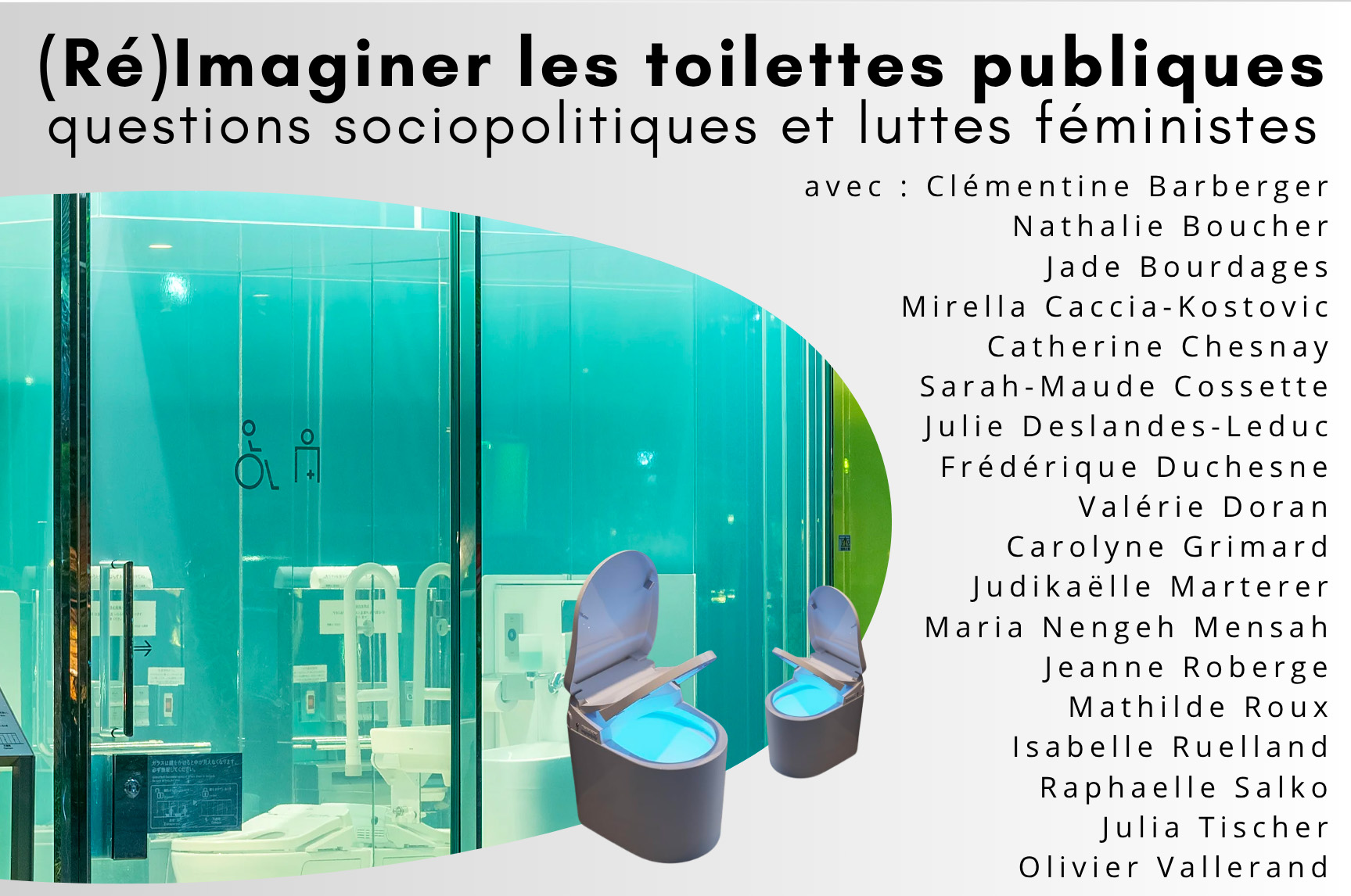
The purpose of this research is to better understand how people experiencing marginalization in the neighborhood (e.g., homelessness, substance use, sexuality, LGBTQI2+, body or ability diversity) use public restrooms, and what power dynamics they face.
Objectives
-To explore the social experience of public restrooms in urban settings from the perspective of marginalized individuals;
-To analyze the challenges these individuals face when using public restrooms in utilitarian, strategic, and emotional ways; and
-To work with marginalized individuals to identify ways to create more inclusive and safe spaces and practices, and to publicize their recommendations.
The research explores the social and emotional dimensions raised by the diverse ways in which different communities use public restrooms. These uses are shaped by the quality and accessibility of the spaces, as well as the nature of the actions and interactions that take place there. Consequently, the experience of public restrooms reveals the social tensions that permeate our daily lives and public spaces.
IN DOWNTOWN: ARCHITECTURE AT CHILDREN’S HEIGHT
Collective research published in June 2024
LIVING QUALITY EVERY DAY: PROTOCOL FOR INVESTIGATING AND QUALITATIVELY ASSESSING THE SOCIAL VALUE OF PUBLIC BUILDINGS BY COLLECTING USER EXPERIENCES

LEAP Researchers: Jean-Pierre Chupin + Carmela Cucuzzella + Bechara Helal
Period: 2023 – 2025
This proposal is part of the Quality Operation section of the City of Montreal’s Quality Toolkit. In particular, it addresses the strategies of sustainability, reframing and communication. Sustainability, in that the collection of real-life experience of quality is one of the guarantees of a good understanding of life cycles, and should be an integral part of quality monitoring plans. Their dissemination would contribute to better collective learning. As part of a reflexive approach, the collection of lived experience is a determining factor in reframing strategies. But it is also as a point of contact with lived reality in public buildings and places – as a mode of ongoing consultation – that the collection of lived experience should inform communication strategies.
The Quality Toolkit is an excellent exercise in mapping the ins and outs of the quality of built environments, and places the City of Montreal at the forefront of municipal strategies in this field in the landscape of Canadian cities. As the organizer of a vast partnership research project funded by the Social Sciences and Humanities Research Council of Canada (2022-2027), we can already see how the City of Montreal’s proposals are inspiring other Canadian cities involved in our project.
Our research partnership is entitled Quality in Canada’s Built Environment: Roadmaps to Equity, Social Value and Sustainability (for more information, see https://livingatlasofquality.ca/fr/home#). This proposal would build bridges between national and municipal initiatives. By offering to develop a protocol for capturing positive real-life experiences of quality, our proposal is in line with the City of Montreal’s strategy of exemplarity, which is at the root of the Quality Toolkit, and is intended to link up with thinking at the Canadian level. Finally, this project is in line with the logic established by the Politique nationale de l’architecture et de l’aménagement du territoire (Mieux habiter et bâtir notre territoire) unveiled on June 6, 2023 by the Quebec government. It takes note of the eleven guiding principles and “6 conditions favoring architectural quality” formulated in the aide-mémoire “Pour une architecture humaine, durable et créative.”
In public environments, we start from the premise that quality is conceived and built, but above all that quality is shared, and that it is now essential to encourage a broader debate on quality. The aim is to promote the broadest possible understanding of the determinants of quality, with a view to answering the following question: how can we increase the ability of the diversity of users of municipal public buildings to see, express and better understand what defines the quality of built environments in Montreal, by inviting them to share positive experiences of quality?
ROADMAPS TO IMPROVE QUALITY FOR SPACES OF HEALTH AND AGING IN THE LOCALIZATION OF UNITED NATIONS SUSTAINABLE DEVELOPMENT GOALS
LEAP Researchers: Carmela Cucuzzella + Carly Ziter
Period: 2023
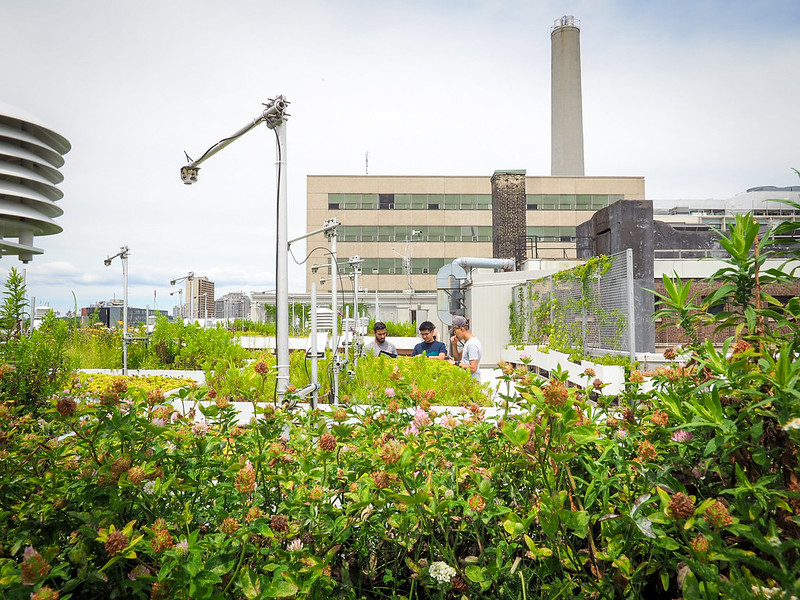
This research focuses on the structure of the United Nations Sustainable Development Goals (UN SDGs) and their applicability to urban design projects. Systems thinking was introduced as a method to help understand how the UN SDGs can be localized in the design process, and specifically in articulating the design situation and its stakeholders. We presented a series of case studies that show how the UN SDGs can be integrated by thinking about the municipal operations, the actors, and the metrics for understanding this alignment.
CIVIC ARCHITECTURE AS A MUNICIPAL INTERFACE
LEAP Researchers: Thomas-Bernard Kenniff + Anne Cormier + Jean-Pierre Chupin
Period: 2021
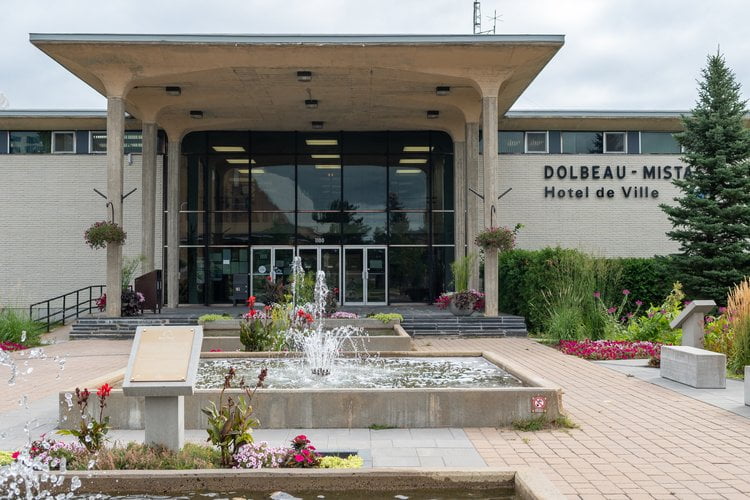
A research-creation project aimed at documenting, analyzing, and anticipating the development of political and judicial frameworks within the context of Quebec’s regional municipal system.
In the context of regional planning, in-person access to municipal services raises issues of geographic exclusion and the adaptation of architectural facilities to the territory they serve. The current shift of services toward online platforms and the perceived devaluation of civic architecture call into question the importance of these facilities and their role in a sustainable political culture. Our project focuses on the design of two types of facilities in Quebec municipalities: city halls and municipal courts. Understood as municipal interfaces between citizens and the administrative, political, and judicial entities, these facilities—which are of paramount social importance—reveal the functioning of the municipal apparatus within which they operate and the way in which this apparatus serves citizens. By studying the formalization of public services in municipal architecture and their adaptation to urban forms, what new designs can we anticipate while preserving the significant aspects of the physical encounter between the municipality and its citizens?
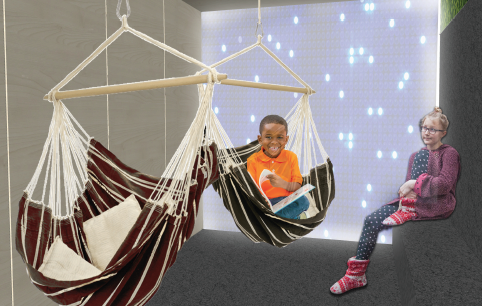
DESIGNING THE LIVING SPACES OF A TRANSITIONAL HOUSING FOR YOUNG PEOPLE AGED 8 TO 14 WITH A COMPLEX MULTI-PROBLEMATIC PROFILE
LEAP Researchers: Anne Cormier + Denis Bilodeau + Virginie Lasalle
Period: 2020
Context
The Centre intégré universitaire de santé et de services sociaux de la Mauricie-et-du-Centre-du-Québec (CIUSSS MCQ) contacted Professor Virginie LaSalle to help with the interior design of a new model of transitional housing for young people aged 8 to 14 with a complex multi-problematic profile.
These transitional housing spaces must be designed to meet the specific needs of the targeted clientele as well as the clinical practitioners working there. It is essential that the facilities be safe, durable and adapted to the activities taking place in the various spaces. In addition, it is expected that the atmosphere of these places will be different from an “institutional” atmosphere; in this sense, we wish to create a welcoming and soothing atmosphere, adapted to the sensory characteristics of the young people who stay there.
The primary objective of the preferred approach is to ensure the quality of the living spaces whose plans were initially developed by a commissioned architect, and to propose ways of improving these facilities in support of the clinical environment. With this intention, the work is carried out in relation to that of the interior designer Julien Delannoy, mandated for this project by the CIUSSS MCQ. The steps taken must eventually be integrated into a “Design Guide” produced in order to provide recommendations and findings that will inform comparable projects.
Implemented approach
The approach implemented includes (1) the production of a report with general recommendations on the interior design of the transitional housing model for youth with a complex multi-problematic profile, developed for the ICSSS MCQ. This document will focus on design principles to be respected and best design practices, in support of the ICSUSS and design team’s decisions. The codesign workshop (2) held in Trois-Rivières with clinical stakeholders, residents’ families and ICSUSS officials (October 2019) provided an opportunity to test the preliminary design proposals against the experiential knowledge and expertise of the various future users of the site. Finally, coordination was ensured between the consulting team and the design team to ensure the transfer of knowledge and the smooth functioning of the design process.
Virginie Lasalle, Anne Cormier and Denis Bilodeau
research funded by the Integrated University Center of Health and Social Services of the Mauricie-et-du-Centre-du-Québec
TERRITORY IN MOTION AND BODY AT REST: AN INVENTORY OF QUEBEC’S REST STOPS

LEAP Researchers: Thomas-Bernard Kenniff + Bechara Helal + Virginie Lasalle
Period: 2020
This research by design project proposes an inventory of rest stops in the Quebec road network in order to explore, through the design project, their relationship to the territory, the government and the cultural imagination. It is based on seeing, in the rest stop, not only an offer of services to travellers, but also a biopolitical device deployed at the scale of the territory.
The rest stop involves provincial politics and bureaucracy, mechanisms for privatizing public goods, cultural and biological identity, gender issues, body management, public hygiene and illicit practices. Far beyond their potential as places that can enhance the territory and the local landscape, rest stops form a vast constellation of cultural interfaces that link the machinery of government with people on the move. They thus express the assumption of responsibility by the state or municipality for the biological functions of travelers, reinforce the socio-material arrangement of the territory while being a place of differentiation and, above all, actively participate in the control and regulation of these functions and this organization by territorializing them.
In Quebec, the development of road parks went hand in hand with the modernization of the state and the construction of the road network in the second half of the 20th century. The great majority of roadside rest areas were built in the 1960s and 1970s, and they retain an allusive architectural language in the vernacular and a link with the state (management). Although they are models of “non-places”, their architecture and the government responsibility give the park of Quebec rest stops a symbolic link to the cultural identity inscribed in the territory and the public assumption of responsibility for services to travellers. The project to modernize the rest stops in Quebec, managed by the Ministère des Transports du Québec (MTQ), has been developing slowly for nearly 30 years but has accelerated in the 2000s. The MTQ, which manages 102 of the province’s rest stops (213 are municipal), is in the process of producing surveys for their modernization and potential privatization. We are therefore at a key moment in the transformation of the road park network, a situation that calls for and justifies a look at the place these rest stops occupy in the collective imagination and their links with the territory. Incidentally, one of the main contributions of the project lies in the particular context of the lack of documentation of rest stops and the importance of making a survey (other than technical) in the wake of their modernization.
The project includes documentation in the field, exploration through photography and drawing in a first phase of investigation, data synthesis and experimentation leading eventually, in a second phase, to the realization of a book and an exhibition.
Thomas-Bernard Kenniff, Bechara Helal and Virginie Lasalle
research funded by l’Université du Québec à Montréal